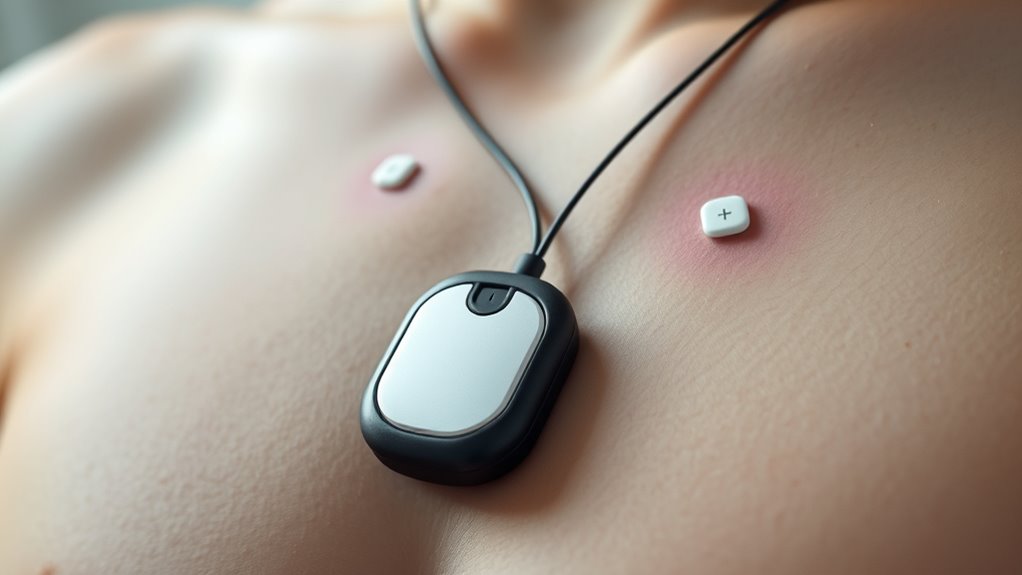

Using a TENS device with a pacemaker can be safe if you follow proper precautions. You should avoid placing electrodes directly over the device or near the leads, and keep the TENS away from your chest or upper body. Always consult your healthcare provider before use, as they can advise on safe settings and placement. Paying attention to these guidelines helps prevent interference, and there’s more essential info you should know to stay safe.

Get wellness gear delivered free with Prime
- Fast, free delivery on millions of items
- Prime Video, Amazon Music and more included
- Member-only deals all year
Key Takeaways
- TENS can interfere with pacemaker function if electrodes are placed near the device, especially over the chest or upper arm.
- Proper electrode placement away from the pacemaker reduces the risk of electrical interference.
- Always consult a healthcare provider before using TENS if you have a pacemaker for personalized safety guidance.
- Modern pacemakers have resistance to electrical signals, but risks remain, so cautious use is essential.
- Following medical advice and using appropriate settings minimizes potential risks of electotherapy devices with pacemakers.
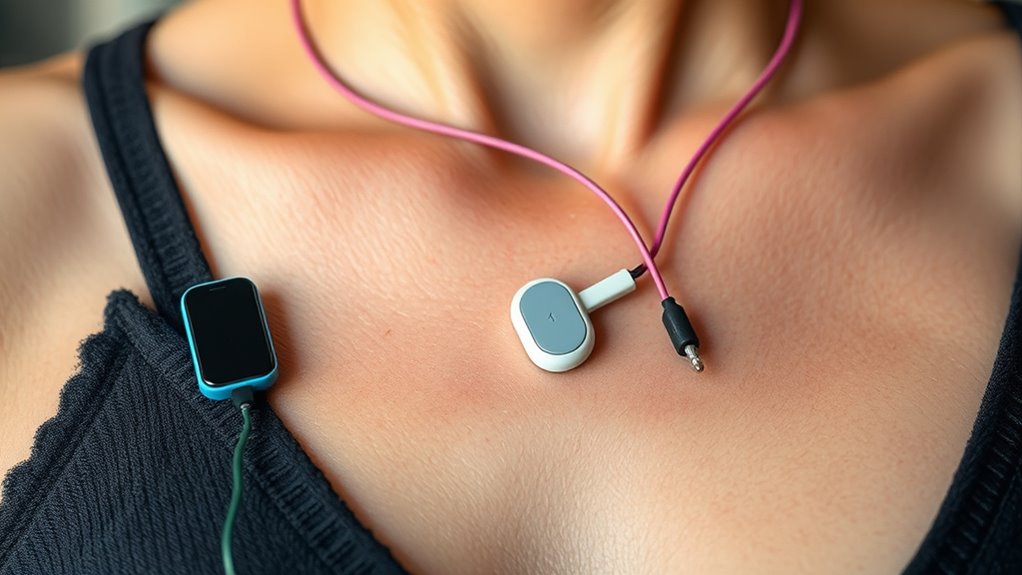
If you have a pacemaker, you might wonder whether using a TENS (Transcutaneous Electrical Nerve Stimulation) device is safe. The main concern revolves around electrode placement and the risk of device interference. TENS works by sending electrical impulses through electrodes placed on your skin to relieve pain, but these impulses can potentially disrupt your pacemaker’s function if not used carefully. The key to safety lies in understanding where you place the electrodes and how these electrical signals might interact with your device.
Electrode placement is essential. You should avoid placing electrodes directly over or near your pacemaker or its leads. Typically, your healthcare provider will advise placing the electrodes on areas far from your chest or the pacemaker pocket. For example, if your pacemaker is on the left side, avoid placing electrodes on your chest, shoulder, or upper arm on that side. Instead, opt for areas on your limbs or opposite side of your body, where electrical impulses are less likely to interfere with your device. Proper electrode placement minimizes the risk of electrical currents affecting your pacemaker’s sensing and pacing functions.
Avoid placing electrodes over or near your pacemaker to reduce interference risks.
Device interference is another significant aspect. TENS devices generate electrical signals that, if they reach your pacemaker, could be misinterpreted as heart signals, potentially causing inappropriate pacing or inhibition of pacing. While modern pacemakers are designed to resist some electrical interference, the risk isn’t zero. The strength of the electrical impulses, the proximity of the electrodes to the pacemaker, and the device’s shielding all influence the likelihood of interference. That’s why it’s essential to communicate with your cardiologist before using a TENS unit. They might recommend specific settings, such as lower intensities, or suggest avoiding TENS altogether in certain areas.
Additionally, TENS devices should be used with caution and under medical supervision if you have a pacemaker. Even with proper electrode placement, it’s possible for electrical signals to reach the device, so it’s safest not to use TENS without professional guidance. Your doctor may advise you to keep the device away from the chest and upper body, and to monitor your pacemaker’s function regularly if you do use TENS. Understanding the importance of electrode placement and being aware of potential device interference can help you decide whether TENS therapy is safe for you and how to use it properly, minimizing risks and ensuring your safety.
Furthermore, advancements in European cloud technology aim to enhance healthcare solutions through secure and innovative data management, contributing to safer medical device integration and monitoring.
Frequently Asked Questions
Can TENS Therapy Help With Chronic Pain in Pacemaker Patients?
TENS therapy can help with chronic pain in pacemaker patients if you undergo proper TENS adaptation and consult your doctor first. It may provide effective pain management strategies by stimulating nerves and reducing discomfort. However, you should always seek professional guidance to guarantee safety, as not all TENS devices are suitable for pacemaker users. Your healthcare provider can recommend the best approach tailored to your condition.
Are There Specific TENS Settings Safe for Pacemaker Users?
Think of a TENS device as a delicate dance partner for your pacemaker. You should use specific TENS settings designed for pacemaker compatibility, avoiding high-frequency or strong intensity modes. Always consult your healthcare provider for personalized guidance, as they can recommend safe parameters. Remember, safe TENS use guarantees your device works harmoniously without interference, much like a well-choreographed dance that keeps everyone in sync and safe.
How Does Electromagnetic Interference Affect Pacemaker Function?
Electromagnetic interference can disrupt your pacemaker’s normal function, causing it to misfire or stop working temporarily. When exposed to strong electromagnetic fields from devices like MRI machines, high-voltage equipment, or certain electrotherapy devices, you risk pacemaker disruption. To protect yourself, avoid close contact with such sources, and always consult your healthcare provider before using any electronic devices, ensuring safety and preventing potential interference.
What Precautions Should Pacemaker Patients Take During Electrotherapy Treatments?
You must prioritize electromagnetic safety and device compatibility during electrotherapy treatments. Always inform your healthcare provider about your pacemaker before starting any therapy. Keep a safe distance from electromagnetic sources, avoid placing electrodes near your device, and use only approved equipment. Never attempt treatment without professional guidance, as even minor interference can cause serious issues. Your vigilance guarantees your safety while enjoying potential benefits of electrotherapy.
Can Other Electrotherapy Devices Interfere With Pacemaker Operation?
Other electrotherapy devices can interfere with your pacemaker through electromagnetic interference, which may disrupt its operation. You should always check device compatibility and consult your healthcare provider before using any electrotherapy equipment. Avoid devices that aren’t specifically approved for pacemaker patients, and stay aware of potential risks. Proper precautions help guarantee your pacemaker functions correctly and reduces the risk of interference.
Conclusion
Remember, safety always comes first. While TENS units can be helpful, they may interfere with your pacemaker if not used properly. It’s better to be safe than sorry—so always consult your doctor before trying electrotherapy devices. Don’t let caution fall by the wayside; it’s better to prevent than to cure. By staying informed and following professional advice, you can enjoy relief without risking your health. Stay vigilant and prioritize your well-being.
Fall Picks
fall essentials
As an affiliate, we earn on qualifying purchases.