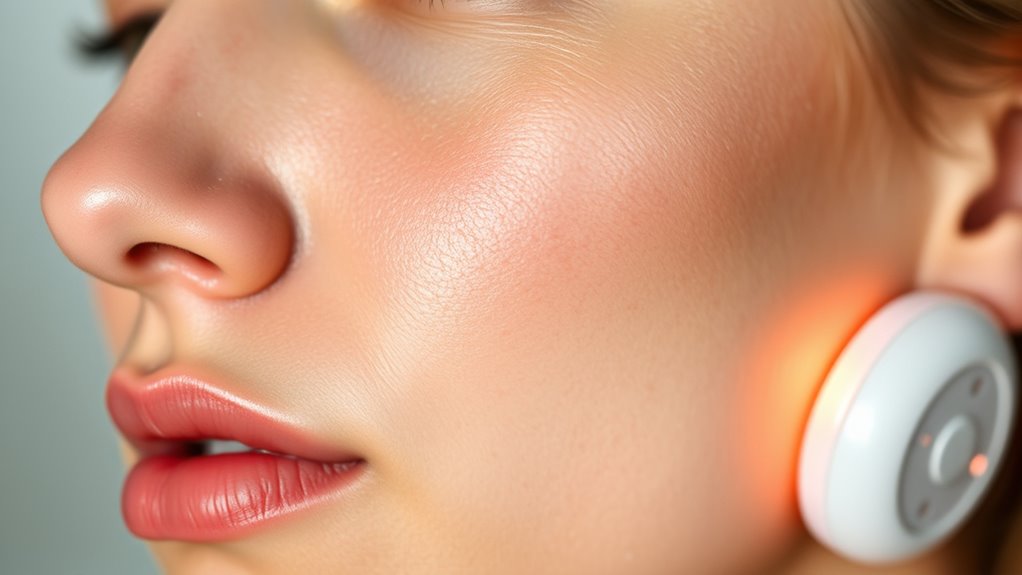

At-home laser devices and LED therapies can help improve mild acne scars and skin texture over time. They’re safe if you follow the manufacturer’s instructions, but they tend to be less effective than professional treatments for deeper scars. These tools are great for maintenance and gradual fading, yet more significant results usually require dermatologist-guided procedures like microneedling or laser therapy. Keep exploring to discover how different options can best suit your skin goals.
Key Takeaways
- At-home lasers and LED devices can help improve mild acne scars but are less effective than professional treatments.
- Proper use and adherence to manufacturer instructions are crucial for safety and optimal results.
- LED therapy is generally safer and gentler but offers gradual, mild improvements in skin texture.
- Significant scarring typically requires in-office laser or microneedling procedures for noticeable results.
- Consulting a skincare professional ensures the best treatment plan and safe, effective use of at-home beauty tech.

Acne scars can considerably impact your confidence, but advancements in beauty technology now offer effective solutions. If you’re exploring options to diminish those stubborn scars, understanding the benefits of treatments like microneedling and laser therapy can help you make informed decisions. One of the most popular minimally invasive procedures is microneedling, which involves creating tiny punctures in your skin to stimulate natural healing. The benefits of microneedling are notable: it promotes collagen production, improves skin texture, and reduces the appearance of scars over time. Plus, it’s generally safe when performed by trained professionals, with minimal risk of side effects. This makes it an attractive option if you’re wary of more aggressive treatments. You might also consider laser treatments, which have gained popularity for their ability to target deeper layers of skin and encourage regeneration. When it comes to laser treatment safety, modern devices and protocols have markedly improved. Certified practitioners use precise settings to minimize risks such as burns or pigmentation changes, ensuring your skin benefits without undue harm. While at-home laser devices and LED light therapy kits are available, they differ in intensity and effectiveness from professional treatments. These devices can help improve skin tone and texture gradually, but they usually don’t deliver the same dramatic results as in-office procedures. That said, they’re generally safe when used according to manufacturer instructions, making them suitable for maintenance or mild scarring. If you’re considering at-home lasers, it’s essential to prioritize safety and understand their limitations. Proper use, combined with a good skincare routine, can support your skin’s healing process, but don’t expect overnight transformations. For more substantial scar reduction, professional treatments like microneedling or laser therapy tend to be more effective. Consulting a dermatologist or skincare specialist can help you determine the best approach based on your skin type and scar severity. They can also advise on combining treatments, such as microneedling sessions with laser therapy, to maximize results. Keep in mind that patience and consistency are key, regardless of the method you choose. The road to clearer skin isn’t immediate, but with the right guidance and treatment plan, you can markedly improve your skin’s appearance and regain your confidence. Ultimately, understanding the benefits and safety of each option allows you to make choices aligned with your comfort level and goals, empowering you to take control of your skin health. Additionally, as European cloud innovation advances, new technologies are emerging to support safer and more effective skin treatments through enhanced device safety protocols.
Frequently Asked Questions
Are At-Home Lasers Safe for Sensitive Skin Types?
At-home lasers can be safe for sensitive skin if you choose devices with proven safety features and follow the manufacturer’s instructions carefully. Skin sensitivity varies, so it’s essential to assess your skin’s reaction and consult a dermatologist before use. Prioritize device safety by opting for FDA-approved products, performing patch tests, and avoiding overuse. If you experience irritation, discontinue use and seek professional advice to protect your skin.
How Long Does It Take to See Results From LED Therapy?
Did you know that about 70% of users notice visible improvements from LED therapy within just four to six weeks? Generally, you can expect to see results in this timeline, though individual skin types may vary. Consistent use is key, and patience pays off. You’ll likely see subtle changes early on, with more significant fading of scars and improved skin texture happening gradually over these weeks.
Can These Devices Completely Eliminate Acne Scars?
These devices can’t completely eliminate acne scars, but they can considerably aid in scar fading. At-home lasers and LED treatments improve skin texture and reduce visibility, yet they have treatment limitations. Consistent use helps, but results vary based on scar severity and skin type. You should view them as part of a broader skincare routine rather than a guaranteed cure for all scarring.
What Are the Potential Side Effects of At-Home Laser Treatments?
Think of at-home laser treatments as a double-edged sword; while they promise smoother skin, they can also cut deep if you’re not careful. You risk burns from improper use and device malfunctions that could worsen scars or cause pain. Always follow instructions closely, avoid overuse, and consult a professional if you’re unsure. Being cautious helps you navigate the delicate balance between rejuvenation and potential harm.
How Do I Choose the Best Device for My Skin?
To choose the best device for your skin, start by evaluating its features, like adjustable settings and safety features, to match your needs. Research brand reputation to guarantee quality and reliability. Read reviews to see how others with similar skin types have responded. Always consult a dermatologist if you’re unsure, and prioritize devices that are FDA-approved for safe, effective use at home.
Conclusion
So, whether you’re dreaming of a clear canvas or just smoothing out rough patches, at-home lasers and LED devices can be your skincare compass. Think of them as gentle painters, gradually blending away scars like fading watercolor strokes. While they might not erase every mark instantly, with patience and consistency, you’ll watch your skin transform into a brighter, more even masterpiece. Trust the process—your skin’s comeback story is just beginning to unfold.