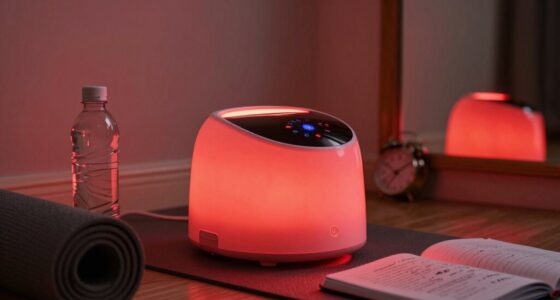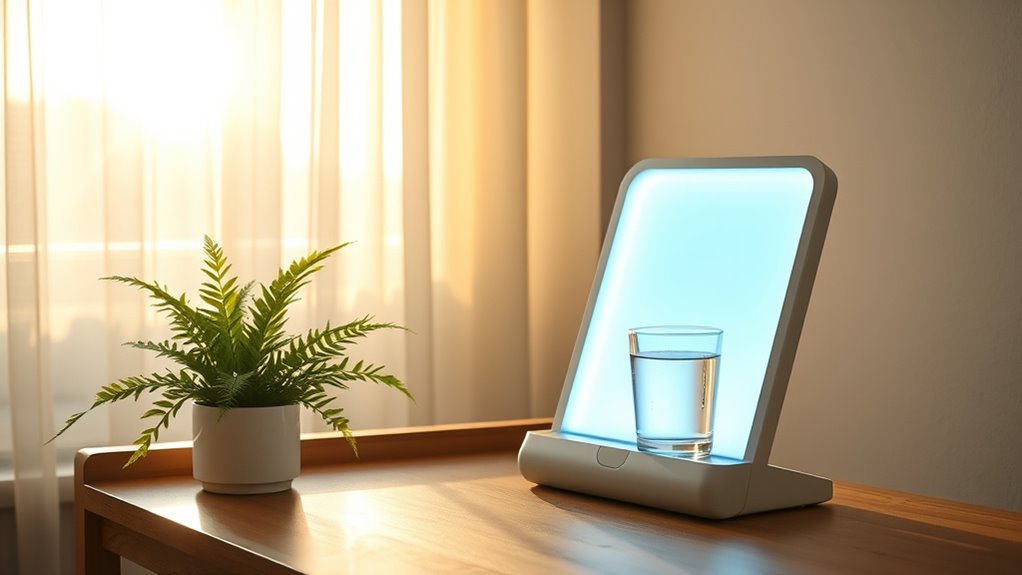

Light therapy devices can’t boost your vitamin D levels because they emit little to no UV rays needed for skin-based vitamin D production. While they help regulate mood and sleep, producing full-spectrum light similar to daylight, they don’t simulate the UV exposure necessary for your skin to make vitamin D. If you want to understand how UV exposure affects vitamin D synthesis and ways to maintain ideal levels, keep exploring further.

Get wellness gear delivered free — and shop member deals
- Fast, free delivery on millions of items
- Access to Prime Big Deal Days deals on October 6–7
- Prime Video, Amazon Music and more included
Key Takeaways
- Light therapy devices mimic daylight but emit little to no UV rays needed for vitamin D production.
- Sunlight exposure, especially UVB rays, is essential for the skin to synthesize vitamin D.
- Relying solely on light therapy does not significantly boost vitamin D levels.
- Combining safe sun exposure with dietary sources or supplements is most effective for maintaining vitamin D.
- Light therapy helps mood and circadian regulation but cannot replace sunlight for vitamin D synthesis.
Many people turn to light therapy and vitamin D to combat seasonal mood changes and boost overall well-being. You might wonder if light therapy can help increase your vitamin D levels or if you still need to spend time in the sun. The answer lies in understanding how UV exposure influences your skin synthesis process. When your skin is exposed to ultraviolet (UV) rays from sunlight, it triggers a chemical reaction that converts a form of cholesterol in your skin into vitamin D3. This process is efficient, which explains why sunlight is considered the most natural and effective source of vitamin D.
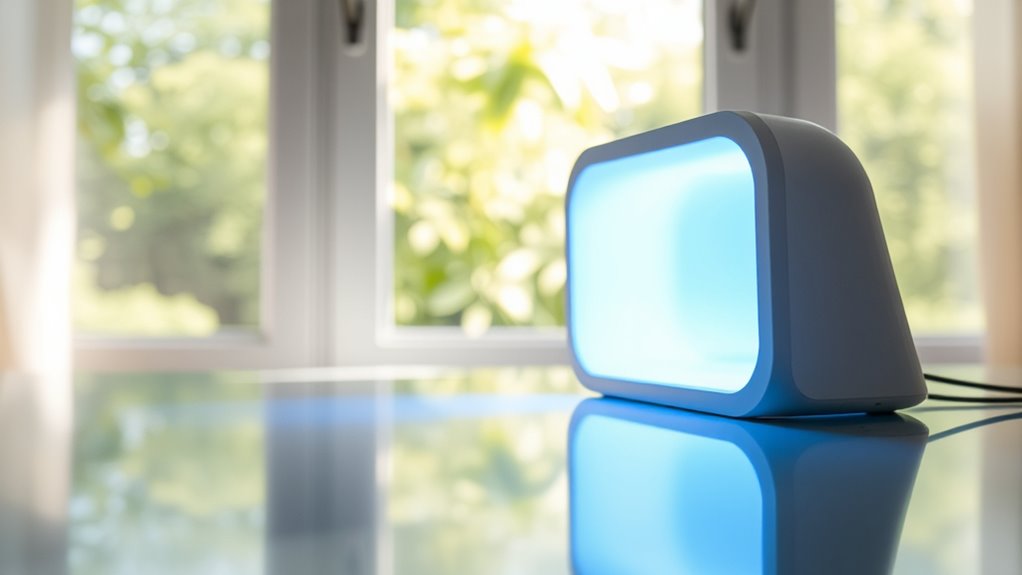
However, light therapy devices differ considerably from natural sunlight. Most light therapy lamps produce bright, full-spectrum light that mimics daylight but emit little to no UV rays. Because UV exposure is essential for skin synthesis of vitamin D, using a typical light therapy box won’t substantially boost your vitamin D levels. Instead, light therapy primarily works by influencing your circadian rhythms and regulating melatonin, helping improve mood and energy levels during darker months. It can be an excellent tool for combating seasonal affective disorder (SAD), but it doesn’t replace the need for sunlight when it comes to vitamin D production.
Light therapy devices mimic daylight but lack UV rays essential for vitamin D synthesis.
If your goal is to increase vitamin D levels, relying solely on light therapy isn’t enough. You’ll still need some sun exposure, ideally during midday when UVB rays are most intense. Just a few minutes of sun on your skin—without sunscreen—can stimulate skin synthesis of vitamin D. The amount of sun exposure needed varies depending on your skin type, location, and time of year, but generally, around 10 to 30 minutes a day is sufficient for most people. Keep in mind, excessive UV exposure can increase the risk of skin damage, so moderation and protection are key if you spend extended time outdoors. Additionally, light spectrum plays a crucial role in the effectiveness of light therapy devices, influencing how well they simulate natural light without UV rays.
Dietary sources and supplements also play an essential role in maintaining adequate vitamin D levels, especially if you’re limited in sun exposure or live in northern latitudes. Fatty fish, fortified foods, and vitamin D supplements can help fill the gaps. While light therapy is powerful for improving mood and regulating sleep, it doesn’t replace the benefits of natural UV exposure for skin synthesis of vitamin D. To optimize your vitamin D levels and overall well-being, combine safe sun habits with dietary intake and consider using light therapy for mood regulation, but don’t rely on it solely for vitamin D production.
UVB light therapy lamp for vitamin D
As an affiliate, we earn on qualifying purchases.
As an affiliate, we earn on qualifying purchases.
Frequently Asked Questions
Can Light Therapy Replace Natural Sunlight Entirely?
Light therapy can’t replace natural sunlight entirely because it mainly mimics certain wavelengths for mood and sleep regulation, not the full spectrum needed for vitamin D production. Artificial sunlight from light therapy devices doesn’t produce enough UVB rays to generate vitamin D in your skin. So, while light therapy helps with mood and circadian rhythms, you still need natural sunlight or supplements to maintain healthy vitamin D levels.
How Long Should I Use Light Therapy Daily?
You should use light therapy for about 20-30 minutes daily, depending on your device’s light intensity. Aim for the ideal timing in the morning, ideally within the first hour of waking, to maximize its benefits. Adjust the light duration if you notice eye strain or discomfort. Consistency is key, so stick with this routine daily to help regulate your mood and sleep patterns effectively.
Are There Risks Associated With Long-Term Light Therapy Use?
Long-term light therapy can be a double-edged sword if you’re not careful. You might experience increased skin sensitivity or compromise eye safety, turning your routine into a trap rather than relief. It is crucial to follow recommended durations and maintain regular eye check-ups. Always listen to your body, and consult a healthcare professional to minimize risks and ensure light therapy continues to benefit you without causing harm.
Does Light Therapy Work for All Skin Types?
Light therapy generally works for most skin types, but skin type considerations matter. People with darker skin have higher melanin absorption, which can reduce light therapy’s effectiveness compared to lighter skin. You might need longer or more frequent sessions, but it’s essential to consult a specialist. They can tailor the treatment to your skin’s melanin levels, ensuring safe and effective results without risking skin irritation or damage.
Can Light Therapy Help With Seasonal Affective Disorder?
Yes, light therapy can help with seasonal affective disorder by boosting your mood and regulating your circadian rhythms. It works by mimicking natural sunlight, which encourages Vitamin D synthesis in your skin, though it doesn’t replace the need for actual sunshine for Vitamin D production. Regular sessions can markedly improve your mood, especially during darker months, making you feel more energized and balanced.
full spectrum daylight lamp for mood
As an affiliate, we earn on qualifying purchases.
As an affiliate, we earn on qualifying purchases.
Conclusion
So, while light therapy can act like a gentle whisper from the sun, nudging your body to produce some vitamin D, it’s not quite the same as soaking up those warm rays directly. Think of it as a helpful guide, but sunshine remains the maestro of vitamin D production. To truly nourish your body’s garden, a little sunlight’s magic still does the trick—so don’t forget to step outside and bask in nature’s golden touch.
As an affiliate, we earn on qualifying purchases.
sunlight simulation light therapy device
As an affiliate, we earn on qualifying purchases.
As an affiliate, we earn on qualifying purchases.
Evergreen bestsellers Picks
bestsellers
As an affiliate, we earn on qualifying purchases.