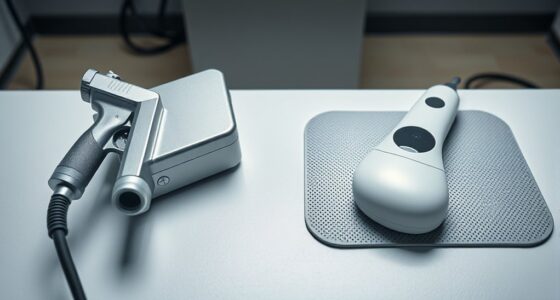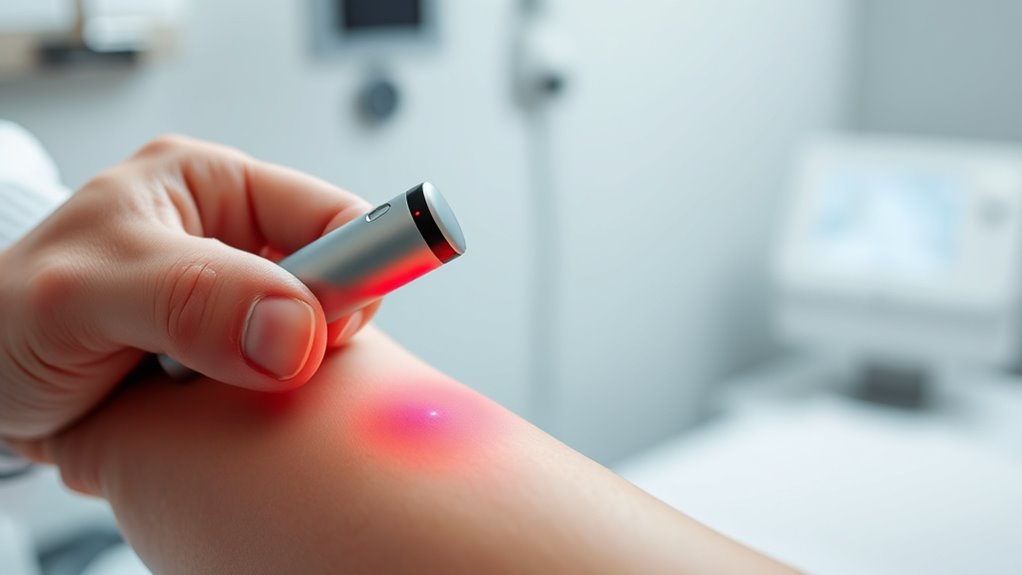

At-home laser pens can offer a convenient, non-invasive way to manage minor pain or inflammation, but their effectiveness varies. Proper use, following safety guidelines, is essential to prevent eye or skin injuries. These devices are less powerful than professional ones and may not work as well for serious conditions. When used correctly and combined with other treatments, they can be useful. To discover how to maximize safety and results, keep exploring further.
Key Takeaways
- At-home laser pens may provide limited pain relief but are generally less powerful than clinical devices.
- Proper use and safety precautions, like eye protection, are essential to prevent injury.
- Effectiveness varies based on the condition; they work best for minor aches and localized inflammation.
- Consulting a healthcare professional ensures at-home laser therapy is appropriate for your specific pain.
- Combining laser therapy with other treatments can enhance pain management outcomes.

Have you heard about cold laser therapy as a pain relief option? It’s gaining popularity because it offers a non-invasive way to reduce discomfort without the need for medication or surgery. Cold laser therapy involves using low-level lasers to stimulate cellular activity, which can help accelerate healing and decrease inflammation. When considering at-home laser pens, it’s natural to wonder if they’re effective and safe. While these devices promise convenience, it’s essential to understand the importance of laser safety and how they fit into broader pain management techniques.
At-home laser pens are designed to be user-friendly, but that doesn’t mean safety should be overlooked. Laser safety is critical because improper use can cause eye damage or skin irritation. Always follow the manufacturer’s instructions carefully, and avoid shining the laser directly into your eyes. Protecting your eyes with appropriate goggles is a good idea, especially if you’re unfamiliar with laser devices. Keep the device away from children and pets to prevent accidental exposure. It’s also wise to check whether the laser device has been tested for safety and has appropriate certifications. Remember, just because a device is marketed for home use doesn’t mean it’s free of risks. Being cautious ensures you won’t compromise your safety while trying to manage pain. Additionally, understanding the thermal behavior of laser devices can help prevent overheating and skin burns during use.
When it comes to pain management techniques, cold laser therapy can be a valuable addition, but it shouldn’t replace traditional methods without professional guidance. At-home lasers are typically less powerful than clinical-grade devices, which means results might vary. They can be effective for minor aches, muscle soreness, or localized inflammation if used consistently and correctly. However, they’re not a cure-all, and some pain conditions require more thorough treatment. Combining laser therapy with other pain management techniques—like stretching, physical therapy, or medication—can often produce better outcomes. Always consult your healthcare provider to determine whether at-home laser therapy is suitable for your specific condition and how to incorporate it into your pain relief plan.
Frequently Asked Questions
Are At-Home Laser Pens Fda-Approved for Pain Relief?
At-home laser pens aren’t FDA-approved specifically for pain relief. While some devices claim to be safe, you should be cautious about safety concerns and confirm if the product has FDA approval. Without FDA approval, there’s limited regulation, which means effectiveness and safety aren’t guaranteed. Always consult your healthcare provider before using any laser device for pain, and prioritize FDA-approved treatments to ensure you’re using safe, reliable options.
How Long Does It Take to See Results With Laser Pens?
You might see results in as little as a few days, but it varies by individual. The treatment duration and pain reduction timeline depend on your condition and how consistently you use the laser pen. Think of it as planting a seed—you need patience for it to grow. Regular use over a couple of weeks often leads to noticeable pain relief, though some people notice improvements sooner.
Can Laser Pens Be Used for All Types of Pain?
You can use laser pens for many types of pain, but they’re most effective for muscle relaxation and nerve regeneration. While they help with conditions like joint pain, inflammation, and nerve issues, they may not work as well for deep or complex injuries. Always consult your healthcare provider to guarantee you’re targeting the right area and using the device safely for your specific pain.
What Are the Risks or Side Effects of Using Laser Pens?
Using laser pens might seem harmless, but don’t underestimate the safety concerns; side effect risks are real if misused. You could experience skin irritation, eye damage, or burns if you shine the laser directly into your eyes or onto delicate skin. Always follow instructions carefully and avoid prolonged exposure. While generally safe when used properly, ignoring safety precautions can turn a simple device into a serious hazard.
How Do At-Home Laser Pens Compare to Professional Therapy?
At-home laser pens offer good user convenience and are more cost-effective than professional therapy, but they often lack the power and precision of clinical devices. While they can help manage minor pain, you might not see the same results as with professional treatments. Consider your pain level and consult a healthcare provider to decide if at-home laser therapy suits your needs, balancing ease of use and effectiveness.
Conclusion
So, while at-home laser pens might seem like a quick fix, they often fall short of the professional cold laser therapy used by doctors. Don’t rely solely on these gadgets—think of it as trusting a street magician rather than a seasoned wizard. For real relief, consult a healthcare professional who can guide you with proven treatments. Remember, even Merlin knew when to call in the experts—so don’t be a knight without armor when it comes to your health.