

Ultrasound therapy helps relieve sciatica pain by targeting the tissues around your sciatic nerve, not the nerve itself. The high-frequency sound waves generate gentle heat, relax muscles, and reduce inflammation, which eases nerve pressure and discomfort. While it doesn’t directly treat nerve pain, it can improve overall tissue health and flexibility, helping your body heal better. To discover how ultrasound therapy fits into an all-encompassing treatment plan, keep exploring your options.

Get wellness gear delivered free — and shop member deals
- Fast, free delivery on millions of items
- Access to Prime Big Deal Days deals on October 6–7
- Prime Video, Amazon Music and more included
Key Takeaways
- Ultrasound therapy reduces tissue inflammation and muscle tension, indirectly alleviating nerve pain associated with sciatica.
- It generates gentle heat that improves blood flow, supporting healing around the affected nerve area.
- The therapy mainly targets muscles and tissues; it does not directly reach or stimulate the nerve itself.
- When combined with other treatments, ultrasound can decrease nerve irritation and improve overall mobility.
- Effectiveness varies based on individual condition and should be part of a comprehensive treatment plan supervised by a healthcare professional.
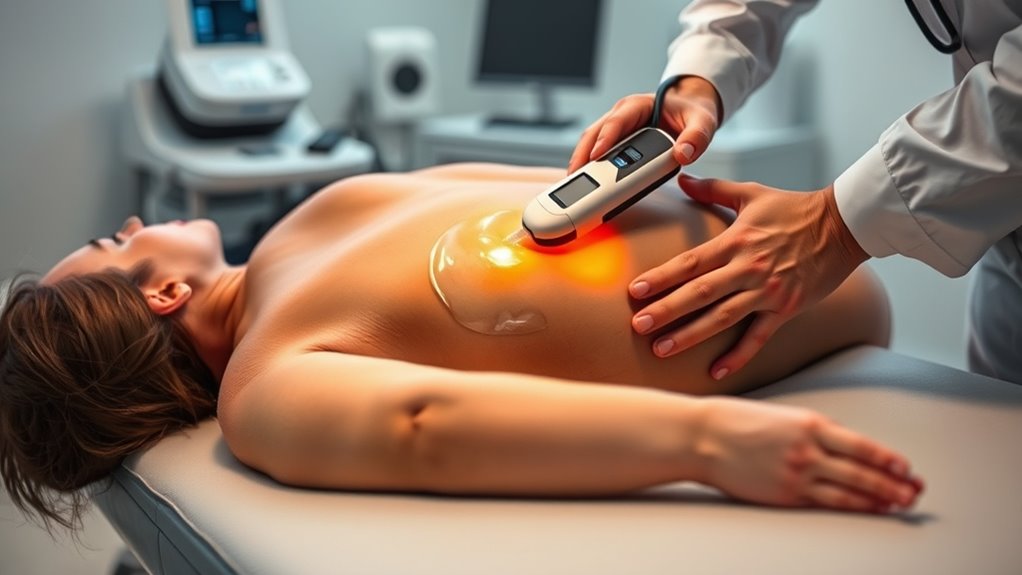
Are you exploring effective treatments for sciatica? If so, ultrasound therapy might catch your attention as a promising option. This non-invasive technique uses high-frequency sound waves to target affected areas, aiming to alleviate pain and promote healing. But how well does it reach nerve pain, and what benefits can it offer? Ultrasound therapy works primarily by encouraging muscle relaxation and reducing inflammation, which are key factors in easing sciatica symptoms. When muscles around the sciatic nerve tense up or become strained, they can aggravate nerve irritation, intensifying pain. By applying ultrasound, you stimulate deeper tissues, helping them loosen up and relax. This relaxation eases pressure on the nerve and can diminish the stabbing or burning sensations you might experience.
Ultrasound therapy relaxes muscles and reduces inflammation to ease sciatica pain.
Furthermore, ultrasound’s ability to reduce inflammation plays a significant role in managing sciatic pain. Inflammation along the sciatic nerve or surrounding tissues often contributes to swelling and heightened discomfort. When ultrasound waves penetrate the tissues, they generate gentle heat that promotes blood flow and accelerates the removal of inflammatory substances. As inflammation decreases, swelling subsides, and nerve irritation lessens, leading to a noticeable reduction in pain levels. This dual action—muscle relaxation combined with inflammation reduction—makes ultrasound a compelling treatment, especially for those looking to avoid medications or invasive procedures.
During a typical ultrasound session, a technician applies a gel to the affected area, then moves a handheld device over your skin. The device emits sound waves that penetrate deep into the tissues without harming the skin or underlying structures. You might feel a mild warming or tingling sensation during treatment, which usually lasts about 10 to 15 minutes per session. Over time, consistent therapy can lead to improved muscle flexibility, decreased nerve compression, and better overall function. Many patients notice their pain diminishing and their mobility improving after several sessions.
However, ultrasound isn’t a cure-all. Its effectiveness depends on individual factors like the severity of your sciatica and the underlying cause. It is vital to combine ultrasound therapy with other treatments, such as physical therapy, stretching exercises, or medication, as recommended by your healthcare provider. While ultrasound helps alleviate symptoms by tackling muscle tension and inflammation, addressing the root cause of your sciatica ensures a more holistic recovery. To conclude, ultrasound therapy can reach nerve pain indirectly by relaxing muscles and reducing inflammation, ultimately easing pressure on the sciatic nerve and improving your quality of life.
ultrasound therapy device for sciatica
As an affiliate, we earn on qualifying purchases.
As an affiliate, we earn on qualifying purchases.
Frequently Asked Questions
How Long Does It Take to See Results From Ultrasound Therapy?
You might start noticing symptom improvement from ultrasound therapy within a few sessions, typically after 1 to 2 weeks. The treatment duration varies depending on your condition, but consistent sessions are key. Keep in mind, some people experience quicker relief, while others may need several weeks. Regularly follow your healthcare provider’s advice to optimize the benefits and achieve the best results from ultrasound therapy.
Are There Any Risks or Side Effects Associated With Ultrasound Treatment?
Sure, ultrasound therapy’s risks are pretty minimal—potential risks and side effects are rare. You might experience slight discomfort or redness, but serious issues are uncommon. It’s almost as if the treatment promises relief without any real danger, which sounds too good to be true, right? Still, always discuss concerns with your healthcare provider to guarantee the benefits outweigh any potential side effects, and you stay safe.
Can Ultrasound Therapy Be Combined With Other Sciatica Treatments?
You can definitely combine ultrasound therapy with other sciatica treatments to enhance your recovery. Combining therapies, like physical therapy, medication, or chiropractic care, allows for treatment integration, targeting different aspects of your pain. This approach often provides more thorough relief and speeds up healing. Always consult your healthcare provider to ensure the therapies you choose are compatible and tailored to your specific condition for the best results.
Is Ultrasound Therapy Effective for Chronic Versus Acute Sciatic Nerve Pain?
Ultrasound therapy can be effective for both chronic and acute sciatic nerve pain. It promotes muscle relaxation and stimulates nerve regeneration, helping reduce inflammation and alleviate pain. For acute pain, it provides quick relief by calming irritated nerves. In chronic cases, it supports longer-term healing by encouraging tissue repair. Consistent sessions and proper application maximize its benefits, making ultrasound a versatile option for different stages of sciatic nerve discomfort.
How Often Should Ultrasound Sessions Be Scheduled for Optimal Relief?
You should schedule ultrasound therapy sessions 2 to 3 times weekly for ideal relief. Each session typically lasts about 15 minutes, allowing the treatment to effectively target nerve pain without overexposure. Maintaining consistent treatment frequency helps reduce inflammation and soothe sciatic nerve discomfort. Be sure to follow your healthcare provider’s recommendations for session duration and frequency to get the best results and avoid potential side effects.
muscle relaxation ultrasound machine
As an affiliate, we earn on qualifying purchases.
As an affiliate, we earn on qualifying purchases.
Conclusion
So, ultrasound therapy could be your secret weapon against sciatica, like a gentle wave easing your nerve pain. While it might not wipe out every ache, it’s a promising tool to add to your relief toolkit. Keep in mind, it’s not a magic bullet, but with the right guidance, it can help you ride out the storm of discomfort. Think of it as a friendly tide, gradually calming the rough seas of nerve pain.
inflammation reduction ultrasound treatment
As an affiliate, we earn on qualifying purchases.
As an affiliate, we earn on qualifying purchases.
portable ultrasound therapy for pain relief
As an affiliate, we earn on qualifying purchases.
As an affiliate, we earn on qualifying purchases.
Evergreen bestsellers Picks
bestsellers
As an affiliate, we earn on qualifying purchases.