
To reset your body clock as a shift worker, use sleep tech like light therapy boxes to expose yourself to bright light during your night shifts and blackout curtains or sleep masks during the day to block sunlight. Incorporate sleep trackers to monitor your patterns and guided relaxation apps to help you wind down. Combining these tools with consistent routines and strategic light exposure can markedly improve your rest—keep exploring for more effective tips.

Get wellness gear delivered free — and shop member deals
- Fast, free delivery on millions of items
- Access to Prime Big Deal Days deals on October 6–7
- Prime Video, Amazon Music and more included
Key Takeaways
- Use sleep trackers to monitor patterns and adjust strategies for optimal circadian alignment.
- Incorporate guided relaxation and white noise apps to ease sleep onset during daytime hours.
- Utilize sleep environment devices like blackout curtains and sleep masks to block light and promote rest.
- Combine light therapy with timing tools to reinforce circadian shifts and improve alertness during night shifts.
- Leverage apps and wearable tech to synchronize sleep schedules and reinforce consistent routines.
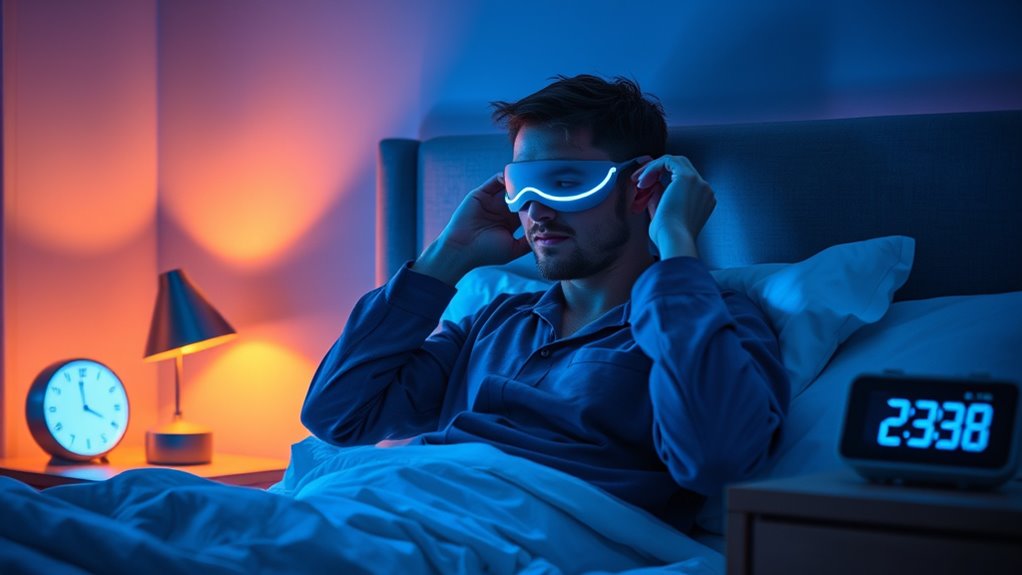
Ever wonder how shift workers manage to get restful sleep amid irregular hours? It’s a tricky challenge, but the right sleep tech and strategies can make a real difference. One effective tool is light therapy, which helps reset your internal body clock by exposing you to bright, carefully timed light. When you work night shifts, your natural sleep-wake cycle can get out of sync with the daytime world, causing fatigue and sleep issues. By using a light therapy box during your “day,” you can signal to your brain that it’s time to stay alert, helping you adapt to your unconventional schedule. Conversely, avoiding light in the morning after a night shift is just as essential; blackout curtains and sleep masks can block out sunlight, making it easier to fall asleep and stay asleep during daylight hours.
In addition to light therapy, melatonin supplements serve as another powerful tool. Melatonin is a hormone your body naturally produces to regulate sleep, and taking supplements can help promote sleep when your internal clock is misaligned. When used correctly, melatonin can help you fall asleep faster and improve sleep quality, especially if taken an hour before you want to rest. It’s important to note that melatonin works best when timed appropriately—taking it too early or too late can disrupt your circadian rhythm further. Combining melatonin supplements with a consistent sleep schedule, even on days off, enhances their effectiveness and helps stabilize your body clock.
To optimize your sleep schedule, consider establishing a pre-sleep routine that signals your body it’s time to wind down. Dimming the lights, turning off screens, and creating a cool, dark, quiet environment can reinforce your body’s readiness for sleep. Using sleep tech devices like sleep trackers can provide insights into your sleep patterns, helping you identify what strategies work best. Some apps also offer guided relaxation exercises or white noise to drown out daytime sounds, creating a more conducive sleep environment.
light therapy box for shift workers
As an affiliate, we earn on qualifying purchases.
As an affiliate, we earn on qualifying purchases.
Frequently Asked Questions
How Can Shift Workers Prevent Long-Term Health Issues Related to Sleep?
To prevent long-term health issues, you should prioritize sleep hygiene and aim for circadian alignment. Keep a consistent sleep schedule, even on days off, to stabilize your body clock. Use blackout curtains and minimize noise during sleep hours to improve sleep quality. Additionally, consider light therapy and strategic naps to reinforce your circadian rhythm. These habits help safeguard your health and ensure restorative sleep despite shift work challenges.
Are There Specific Foods That Enhance Sleep Quality for Night Shift Workers?
Think of your diet as the fuel that keeps your body running smoothly at night. You should focus on foods rich in magnesium and tryptophan, like nuts, seeds, and turkey, which promote better sleep. Timing your meals wisely and maintaining good hydration habits help your body wind down. Avoid heavy, spicy foods before your shift to prevent discomfort, and stay hydrated to support restful sleep during your off hours.
What Are the Best Natural Supplements to Improve Sleep During Irregular Hours?
You can improve sleep during irregular hours by trying natural supplements like melatonin supplements, which help regulate your body clock, and herbal remedies such as chamomile or valerian root, known for their calming effects. Take melatonin 30 to 60 minutes before your desired sleep time to signal your body it’s time to rest. Combining these with good sleep hygiene can make a noticeable difference in your sleep quality.
How Does Exposure to Light Impact the Effectiveness of Sleep Tech Devices?
Light exposure greatly influences how effective sleep tech devices are by affecting your circadian alignment. When you get the right amount of light at strategic times, it helps reinforce your body’s internal clock, making sleep aids more effective. Conversely, too much or too little light can disrupt your rhythm, reducing sleep quality. To optimize results, use light exposure intentionally, especially during wake periods and before sleeping to support your sleep tech strategies.
Can Nap Strategies Replace Full Night Sleep for Shift Workers?
They say, “A short nap is better than no rest.” Power naps can help shift workers temporarily recharge, but they can’t fully replace a full night’s sleep. Proper sleep scheduling remains essential for long-term health and alertness. While strategic naps boost performance, they should complement, not substitute, consistent, quality sleep. Relying solely on naps could leave you missing out on the deep restorative sleep your body needs.
blackout curtains for daytime sleep
As an affiliate, we earn on qualifying purchases.
As an affiliate, we earn on qualifying purchases.
Conclusion
By embracing sleep tech and implementing these strategies, you can better reset your body clock and improve your rest. It’s not just about surviving your shifts but truly thriving despite them. Are you ready to take control of your sleep and feel more energized? Remember, your health and well-being are worth the effort. With the right tools and mindset, you can conquer the challenges of shift work and wake up refreshed every day.
As an affiliate, we earn on qualifying purchases.
As an affiliate, we earn on qualifying purchases.
Fall Picks
fall essentials
As an affiliate, we earn on qualifying purchases.