To improve your sleep sanctuary, automate your lighting to mimic natural sunset and sunrise, creating calming environments that support relaxation and gentle waking. Use smart devices to control brightness and color temperature, while integrating with thermostats and noise machines for a thorough sleep setup. Voice commands or apps make adjustments effortless. By optimizing your environment, you’ll enjoy more restful sleep and a smoother routine—discover how smart home tech can transform your nights and mornings.

Get wellness gear delivered free — and shop member deals
- Fast, free delivery on millions of items
- Access to Prime Big Deal Days deals on October 6–7
- Prime Video, Amazon Music and more included
Key Takeaways
- Use smart lighting to simulate sunset and sunrise, creating natural cues for winding down and waking up.
- Integrate smart thermostats and blinds to optimize room temperature and light levels for better sleep conditions.
- Program automated routines via voice or app controls to effortlessly prepare your sleep environment each night.
- Combine lighting with noise machines and air purifiers for a comprehensive, restful sleep sanctuary.
- Customize lighting color temperature and brightness to support circadian rhythms and enhance sleep quality.

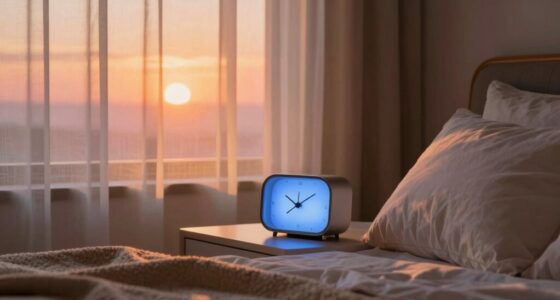
Getting a good night’s sleep can be easier than you think with the right smart home tools. One of the most effective ways to improve your sleep environment is through lighting automation. Imagine walking into your bedroom after a long day and having the lights gradually dimming to mimic sunset, signaling to your body that it’s time to wind down. Smart lighting systems allow you to set schedules or activate routines that adjust brightness and color temperature, creating a calming atmosphere designed specifically for sleep. You can program your lights to turn off automatically at bedtime or to soften in the hours leading up to it, helping you relax naturally. This type of sleep environment optimization not only promotes better rest but also reduces the stress of manual adjustments and forgotten switches.
Create a calming sleep environment with smart lighting that dims and adjusts color temperature automatically.
With lighting automation, you’re in control of your environment without lifting a finger. These systems can be integrated with voice assistants or smartphone apps, so you can activate your sleep mode with a simple command or tap. For example, saying, “Good night,” can trigger a preset routine that dims the lights, closes the blinds, and triggers other smart devices to prepare your room for sleep. This seamless control enhances your bedtime routine, making it easier to settle in and fall asleep faster. The right lighting setup can also help you wake up more naturally, simulating sunrise to gently rouse you from rest, which contributes to a more refreshed feeling in the morning.
Optimizing your sleep environment involves more than just lighting. When you combine lighting automation with other smart devices—such as climate controls, noise machines, or air purifiers—you create a holistic sanctuary tailored for restful sleep. For instance, setting your smart thermostat to lower the temperature at night and pairing it with your lighting routine ensures a cool, comfortable environment. Additionally, adaptive lighting can support your circadian rhythms by adjusting color temperatures throughout the day to promote alertness or relaxation. This attention to detail helps your body reach and maintain the ideal sleep conditions, reducing disruptions caused by uncomfortable temperatures or harsh lighting. Over time, these small adjustments add up, substantially enhancing your overall sleep quality.
In the end, automating your sleep sanctuary means you’re actively designing an environment that encourages rest and recovery. By leveraging lighting automation and smart home technology, you’re creating a space that supports your natural sleep rhythms, making bedtime less of a chore and more of a soothing transition. With these tools, better sleep becomes not just a goal but an achievable reality, night after night.
As an affiliate, we earn on qualifying purchases.
Frequently Asked Questions
How Can I Ensure My Smart Devices Don’t Interfere With Sleep?
You can prevent device interference and sleep disruption by setting your smart devices to “Do Not Disturb” mode or scheduling their activity times. Keep devices away from your bed and turn off unnecessary alerts or notifications at night. Regularly update firmware to reduce glitches, and choose devices with low EMF emissions. These steps help guarantee your smart devices won’t interfere with your sleep or cause unnecessary disruptions.
Are There Privacy Concerns With Smart Home Sleep Automation?
The bottom line is, privacy concerns with smart sleep automation are real, but you can keep them at bay. Make sure your devices use data encryption and always give clear user consent before sharing any information. Stay proactive, read privacy policies, and adjust settings to limit data collection. Don’t let your smart home become a open book — knowledge is power, and protecting your data is key.
How Do I Integrate New Smart Devices With Existing Systems?
To integrate new smart devices with your existing system, check their device compatibility first. Most devices offer compatibility lists or setup guides. Use a central hub or app that supports multiple systems to streamline system integration. Follow manufacturer instructions carefully, guaranteeing your Wi-Fi network is robust. Updating firmware and using compatible protocols like Zigbee or Z-Wave can also help ensure seamless integration for your sleep automation setup.
What Is the Cost Range for Setting up a Smart Sleep Sanctuary?
Your smart sleep sanctuary can cost anywhere from $300 to over $2,000, depending on your choices. Budget considerations matter, but equipment expenses add up quickly with high-end devices. You might start small, upgrading your lighting or sleep trackers, then expand over time. The key is balancing your desired features with affordability, ensuring you create a restful haven without breaking the bank. Ready to transform your sleep space?
Can Smart Home Technology Adapt to Different Sleep Schedules?
Yes, smart home technology can adapt to your different sleep schedules. With features like adaptive scheduling, your devices automatically adjust lighting, temperature, and sound to match your personalized routines. You can easily set multiple sleep and wake times, ensuring your environment supports your changing routines. This customization helps you rest better, no matter how your schedule shifts, creating a truly tailored sleep sanctuary that responds to your needs.
smart sleep light with sunrise sunset
As an affiliate, we earn on qualifying purchases.
As an affiliate, we earn on qualifying purchases.
Conclusion
By embracing smart home technology, you turn your bedroom into a peaceful oasis, guiding you gently into restful sleep like a lullaby. These tips help you create a sanctuary where comfort and convenience work hand in hand, making bedtime something to look forward to. With a few simple upgrades, you’ll find yourself drifting off easier and waking up refreshed—your perfect sleep haven is just a smart home away. Sweet dreams are within reach!
smart thermostat for sleep optimization
As an affiliate, we earn on qualifying purchases.
As an affiliate, we earn on qualifying purchases.
As an affiliate, we earn on qualifying purchases.
Fall Picks
fall essentials
As an affiliate, we earn on qualifying purchases.