Aromatherapy diffusers can help improve your sleep by dispersing calming essential oils like lavender and chamomile, which influence your emotional state and promote relaxation. Scientific studies show that certain scents can trigger calming brain responses and reduce anxiety, making it easier to fall asleep. Factors like the type of diffuser, oil quality, and room size play a role in their effectiveness. To discover how to optimize your sleep routine, explore the details below.

Get wellness gear delivered free with Prime
- Fast, free delivery on millions of items
- Prime Video, Amazon Music and more included
- Member-only deals all year
Key Takeaways
- Aromatherapy diffusers disperse relaxing essential oils like lavender, which may help reduce anxiety and improve sleep quality.
- Scientific studies show mixed results; some participants report subjective sleep benefits, while evidence varies.
- Effectiveness depends on factors such as oil quality, diffuser type, room size, and individual scent preferences.
- Proper use, including choosing suitable oils and maintaining diffusers, can enhance their calming effects.
- Aromatherapy diffusers support overall well-being and mood, potentially promoting better sleep through a calming environment.
How Aromatherapy Diffusers Work to Promote Relaxation

Aromatherapy diffusers work by dispersing essential oils into the air, creating a calming environment that can help you relax. When you breathe in the fragrant molecules, they provide sensory stimulation that can soothe your mind and body. This stimulation not only promotes relaxation but also contributes to mood enhancement, helping you feel more at ease. The gentle diffusion of scents influences your emotional state, reducing stress and fostering a sense of tranquility. By engaging your senses in this way, diffusers encourage your brain to associate certain aromas with calmness and comfort. This process sets the stage for relaxation, making it easier for you to unwind and prepare for restful sleep. Additionally, aromatherapy benefits can enhance overall well-being beyond just sleep, promoting a healthier lifestyle. Scientific studies support the idea that scent therapy can positively impact mental health and emotional resilience. Incorporating a diffuser into your nightly routine can create a relaxing atmosphere that signals your brain it’s time to unwind, further aiding in sleep quality. Ultimately, aromatherapy diffusers act as a simple yet effective tool for mood regulation.
The Science Behind Scents and Sleep Quality
Certain scents have a proven ability to influence sleep quality by affecting your brain’s chemistry. This is where fragrance psychology comes into play, showing how specific aromas can trigger calming responses or relaxation. Your scent memory—the link between smells and past experiences—also plays a role, as familiar or comforting scents can promote a sense of safety and ease. When you inhale these scents, they interact with receptors in your brain that regulate emotions and stress, helping to lower anxiety and prepare your body for sleep. Scientific studies suggest that these effects aren’t just placebo; they involve measurable changes in brain activity. Additionally, incorporating natural elements like specific plant-based fragrances can enhance the overall effectiveness of aromatherapy. Understanding the science behind scents and sleep highlights how powerful aroma can be in creating a restful environment, especially when combined with therapeutic techniques that support relaxation. For example, choosing the right projector technology can help create a calming visual environment that complements the sensory effects of aromatherapy. Incorporating aroma delivery methods such as diffusers ensures a consistent and effective dispersal of scents throughout your sleep space.
Common Essential Oils Used for Better Sleep
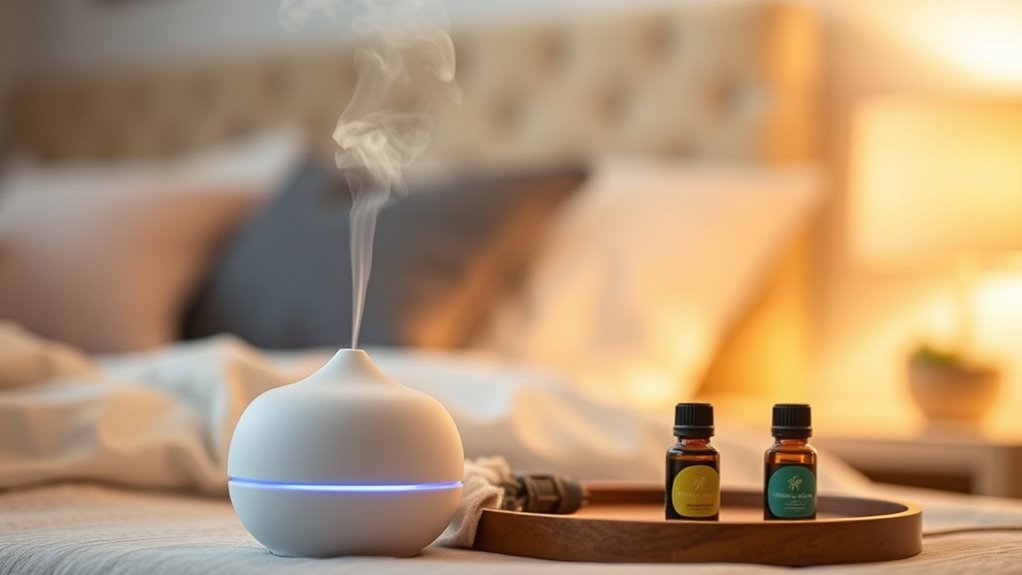
Many essential oils have been shown to promote better sleep by calming your mind and relaxing your body. Lavender is a popular choice, known for its soothing properties that reduce anxiety and improve sleep quality. Chamomile offers a gentle, calming scent that promotes relaxation, especially when used in fragrance layering with other oils. Valerian root and ylang-ylang are also common, helping to ease tension and promote restfulness. When choosing oils, consider your preferred scent intensity; some oils, like peppermint, may be too strong and disrupt sleep if overused. Balancing fragrance layering guarantees a gentle, calming atmosphere without overwhelming your senses. Using these oils thoughtfully can create a restful environment, supporting better sleep through calming aromas. Additionally, understanding the emotional well-being aspects associated with certain scents can enhance the effectiveness of aromatherapy for sleep. Incorporating aromatherapy techniques can further optimize your sleep environment and improve overall relaxation. Recognizing the science behind aromatherapy can help you select the most effective oils and methods for your sleep needs. Moreover, being aware of battery reconditioning warranties can help you make informed decisions about maintenance and product longevity. Establishing a proper storage routine ensures the oils maintain their potency and effectiveness over time.
Evidence Supporting the Effectiveness of Aromatherapy for Sleep
Research consistently shows that aromatherapy can improve sleep quality by reducing anxiety and promoting relaxation. However, some benefits may stem from the placebo effect or individual preferences rather than the oils themselves. Personal experiences vary, making it hard to generalize results. Scientific studies present mixed evidence; some show significant improvements, while others find minimal effects. Here’s a quick overview:
| Evidence Type | Findings |
|---|---|
| Clinical Trials | Mixed results; some show benefits, others don’t |
| Participant Surveys | Often report subjective improvements in sleep |
| Meta-Analyses | Suggests benefits may be partly due to placebo effect |
While some evidence supports aromatherapy’s effectiveness, individual responses play a *vital* role. Additionally, essential oils vary in composition and quality, which can influence their efficacy. The delivery method of aromatherapy—such as diffusers or topical application—also impacts outcomes and user experience. It is also important to consider the individual’s preferences and sensitivities, which can significantly affect the overall experience and results. Moreover, scalp care routines involving ingredients like glycolic acid have been studied for their potential to enhance skin and scalp health, indicating that combining different wellness approaches might be beneficial for some individuals. Furthermore, understanding the science behind aromatherapy can help users make more informed choices about its use.
Factors That Influence How Well Diffusers Enhance Rest
The effectiveness of your diffuser depends on several key factors, like making sure it’s suitable for your room size and choosing a quality device. The type of essential oil you use also plays a big role in how well you’ll sleep. Paying attention to these details can help you get the most relaxing and restorative experience. Additionally, selecting appropriate essential oils can significantly enhance the calming effects and improve your overall sleep quality. Ensuring proper air circulation within the space can also maximize the diffuser’s benefits. Moreover, considering the weight of the machine can influence ease of placement and mobility within your environment. Understanding product specifications can help in choosing a diffuser that fits your specific needs and preferences. Proper device maintenance is also important to keep the diffuser functioning effectively over time.
Room Size Compatibility
Choosing the right aromatherapy diffuser for your space depends largely on your room size, as larger rooms require stronger or more extensive diffusion to be effective. Your room size influences the diffuser capacity needed to evenly distribute essential oils. If your space is small, a compact diffuser with a lower capacity may suffice. For larger rooms, opt for a diffuser with a higher capacity to ensure the scent reaches every corner. Consider these factors to match your diffuser capacity with your room size:
- Room size (small, medium, large)
- Diffuser capacity (measured in milliliters or ounces)
- Coverage area (square footage recommended by the manufacturer)
Matching these elements helps guarantee ideal scent diffusion, promoting better sleep without overpowering your space. Additionally, understanding diffuser performance factors can help you select the most suitable device for your environment, ensuring optimal aroma dispersion for restful sleep. Recognizing room layout and airflow can also impact how effectively the scent permeates the space, further enhancing your sleep experience.
Diffuser Quality Factors
A high-quality diffuser can make a noticeable difference in how effectively your essential oils promote restful sleep. Factors like water quality and brand reputation directly impact diffuser performance. Poor water quality, such as mineral-rich tap water, can cause buildup and reduce mist output. Choosing reputable brands ensures reliable construction, durable materials, and consistent misting. Consider these key factors:
| Feature | Why It Matters | Tips |
|---|---|---|
| Water Quality | Affects mist clarity and diffuser lifespan | Use filtered or distilled water |
| Brand Reputation | Ensures quality and customer support | Read reviews and select trusted brands |
| Mist Output | Impacts how well oils disperse into room | Opt for models with adjustable mist |
| Material Durability | Prevents breakdown and leaks | Choose diffusers with sturdy materials |
Essential Oil Selection
Selecting the right essential oils can substantially influence how effectively your diffuser promotes restful sleep. Lavender is known to reduce stress and create a calming environment, making it a popular choice for sleep aid. Peppermint, on the other hand, can help you feel alert and refreshed, which might be useful during daytime or to counteract drowsiness. When choosing oils, take into account your specific needs: do you want to relax or stay alert? Quality matters too—opt for pure, therapeutic-grade oils to ensure maximum benefit. Factors to reflect on include:
- Purity and grade of the oil
- Your personal scent preferences
- The specific effects, like stress relief or alertness
Selecting oils thoughtfully helps tailor your diffuser experience toward better sleep.
Tips for Choosing the Right Diffuser and Oils

When selecting a diffuser, consider the size of your space and how much mist it produces to find the right fit. Next, choose essential oils that promote relaxation and are safe for sleep, like lavender or chamomile. Making these informed choices helps guarantee you get the most benefit from your aromatherapy routine.
Selecting Suitable Diffuser Types
Choosing the right aromatherapy diffuser depends on your specific preferences and needs. Consider the different diffuser styles available, such as ultrasonic, nebulizing, or heat diffusers, each offering unique scent dispersion methods. Ultrasonic diffusers use water and vibrations to spread scent softly, ideal for sleep. Nebulizers release pure essential oils directly into the air, providing a strong aroma for targeted relaxation. Heat diffusers gently warm oils, but may alter their properties. When selecting, think about factors like room size, noise level, and maintenance. Also, consider how the diffuser’s style complements your space. The right choice enhances your sleep environment by ensuring consistent scent dispersion without disruption, helping you create a calming atmosphere tailored to your preferences.
Choosing Effective Essential Oils
Picking the right essential oils can markedly enhance your sleep experience with aromatherapy diffusers. To improve your sleep environment, choose oils known for promoting relaxation, like lavender, chamomile, or ylang-ylang. These oils help reduce stress and calm your mind, making it easier to fall asleep. When selecting oils, consider your relaxation techniques—if you prefer a soothing routine, lavender’s gentle scent is ideal. For a more invigorating yet calming effect, try a blend of chamomile and bergamot. Always use pure, high-quality oils to avoid irritation and ensure effectiveness. Keep your sleep environment free of distractions, and incorporate your chosen oils into your relaxation routine. With the right oils, your aromatherapy diffuser can become a powerful tool for restful nights.
Do Aromatherapy Diffusers Really Make a Difference?
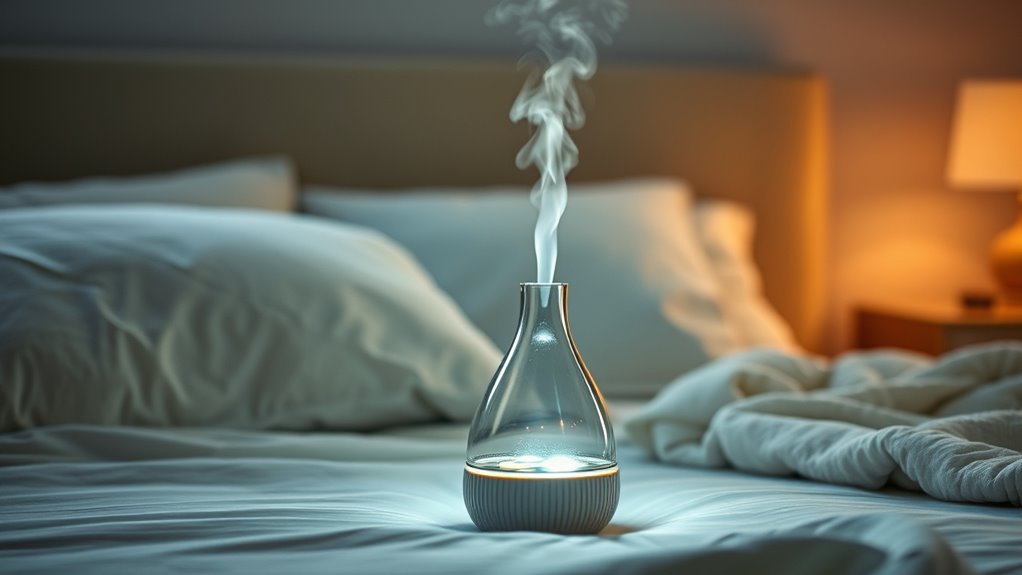
Aromatherapy diffusers can genuinely enhance your sleep, but their effectiveness often depends on individual preferences and the quality of the device. To ensure positive results, it’s important to consider factors like aromatherapy safety and proper diffuser maintenance. When used correctly, diffusers disperse calming scents that may promote relaxation and better sleep quality. However, if you neglect diffuser maintenance, such as regular cleaning, buildup can affect scent distribution and device function. Additionally, choosing high-quality essential oils and following safety guidelines helps prevent adverse reactions. Keep in mind that some people may not respond to certain scents, so personal experimentation is key. Overall, a well-maintained diffuser can make a noticeable difference, but success depends on individual needs and responsible usage.
Frequently Asked Questions
Are There Any Health Risks Associated With Using Aromatherapy Diffusers?
Yes, there are health risks associated with using aromatherapy diffusers. You might face air quality concerns if you overuse them or choose low-quality oils, which can lead to respiratory irritation. Additionally, allergic reactions are possible if you’re sensitive to certain essential oils. To stay safe, use diffusers in well-ventilated areas, opt for pure oils, and monitor for any adverse reactions.
How Long Should I Run My Diffuser for Optimal Sleep Benefits?
Like a good knight’s tale, your diffuser’s duration matters. For ideal sleep benefits, run your diffuser for about 30 to 60 minutes before bed, then turn it off. This window allows the scent to enhance sleep quality without becoming overwhelming. Consistent diffuser duration supports better sleep enhancement, helping you relax and unwind. Adjust as needed based on your preferences, and enjoy a peaceful, aromatic night.
Can Aromatherapy Diffusers Help With Sleep Disorders Like Insomnia?
Aromatherapy diffusers can help with sleep disorders like insomnia by promoting relaxation and improving your sleep environment. When combined with alternative relaxation methods, such as deep breathing or meditation, they may enhance your ability to fall asleep. To maximize benefits, optimize your sleep environment by keeping your space dark, cool, and quiet. While diffusers aren’t a cure-all, they’re a natural way to support better sleep.
Are There Specific Oils Better Suited for Children or Sensitive Individuals?
Yes, you should select child-safe oils and sensitive skin options when choosing aromas for children or sensitive individuals. Lavender and chamomile are gentle, calming choices that are generally safe, but always dilute properly and consult a healthcare professional. Avoid strong or irritating scents like peppermint or eucalyptus. Using these gentle, child-safe oils guarantees a soothing experience without causing discomfort or adverse reactions.
How Often Should I Replace or Clean My Diffuser for Best Results?
You should clean your diffuser at least once a week to maintain ideal scent longevity and prevent buildup. Regular maintenance routines include emptying the water, wiping the interior with a soft cloth, and using mild soap if needed. Replace the diffuser’s filter or parts as recommended by the manufacturer. Doing so ensures your diffuser operates efficiently, delivers consistent aroma, and extends its lifespan, so you enjoy calming scents every night.
Conclusion
So, imagine your bedroom filled with the gentle glow of your diffuser, releasing calming scents that drift through the air like a soothing breeze. While aromatherapy can create a tranquil environment, its effectiveness varies from person to person. Think of it as a cozy, fragrant hug that helps you unwind. Give it a try, choose the right oils, and see if these fragrant whispers guide you into a restful, peaceful sleep.
Fall Picks
fall essentials
As an affiliate, we earn on qualifying purchases.