When choosing between gadgets and supplements, consider what suits your sleep habits. Gadgets can track your sleep stages, provide insights, and help you adjust behaviors naturally, while melatonin supplements target sleep onset directly. Gadgets are great for understanding your patterns, but supplements might offer quick relief for irregular schedules. To find the best approach for you, explore how combining both options could improve your sleep—more details await if you continue exploring.
Key Takeaways
- Sleep gadgets provide detailed tracking and behavioral insights, helping improve sleep hygiene without relying solely on supplements.
- Melatonin supplements can aid sleep onset but may overlook underlying lifestyle factors affecting sleep quality.
- Combining sleep tracking technology with behavioral adjustments enhances overall sleep cycle stability and efficiency.
- Caffeine’s impact on sleep can be monitored via gadgets, allowing for personalized intake adjustments.
- The choice between gadgets and supplements depends on individual needs, with integrated approaches often yielding the best results.
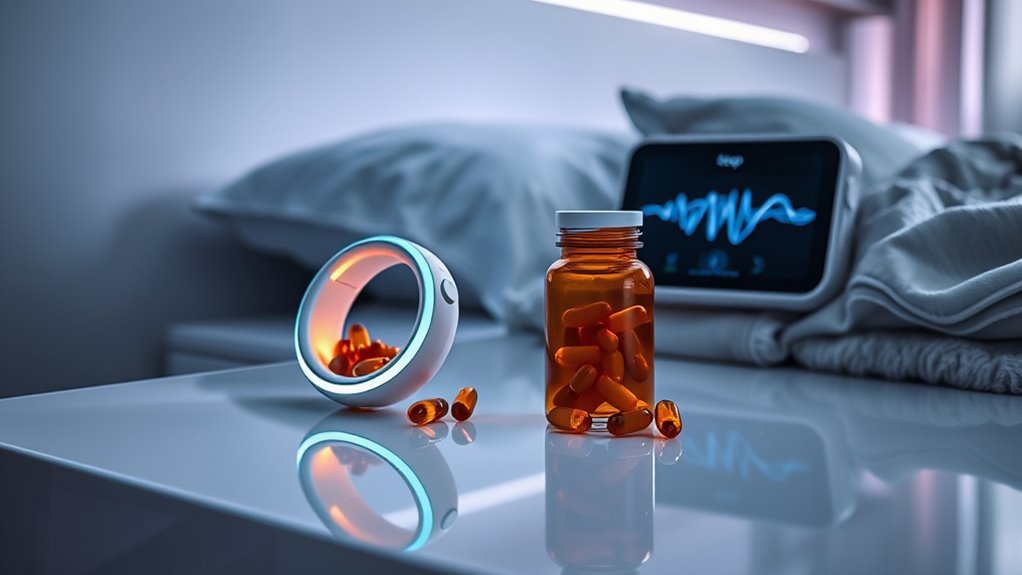
When it comes to enhancing your health and well-being, you often face a choice between gadgets and supplements. You might wonder if investing in a tech device or trying a supplement like melatonin will better support your sleep. Understanding how these options influence your sleep cycle can help you make an informed decision. Your sleep cycle, which includes REM and non-REM stages, is vital for feeling rested and alert. Disruptions here can lead to fatigue, mood swings, and decreased productivity. To optimize it, you need to take into account factors like caffeine intake and the tools you use to improve sleep quality. Incorporating precise sleep tracking technology can help you better understand your unique sleep patterns and tailor your habits accordingly.
Choosing between gadgets and supplements can help optimize your sleep cycle and overall well-being.
Caffeine intake plays a significant role in how easily you fall asleep and how well you stay asleep. Consuming caffeine too late in the day can delay your sleep onset, reducing your overall sleep quality. Many people underestimate how long caffeine stays in their system—sometimes up to six hours—so it’s wise to cut back in the afternoon. On the other hand, some gadgets are designed to help you manage and track your caffeine consumption, giving you insight into how it affects your sleep patterns. Devices that monitor sleep stages can show you if caffeine is causing frequent awakenings or lighter sleep, prompting you to adjust your habits.
Gadgets like sleep trackers or smart mattresses can provide detailed data about your sleep cycle, helping you identify patterns and disturbances. If you notice frequent awakenings or shallow sleep, these devices can guide you to make behavioral changes, like reducing caffeine or adjusting your bedtime routines. Some tech tools even include features that emit gentle sounds or use light therapy to cue your body to fall asleep more naturally, aligning your sleep cycle with your daily schedule. These gadgets offer a proactive way to manage your sleep hygiene without relying solely on supplements.
Frequently Asked Questions
Are There Any Long-Term Risks Associated With Sleep Gadgets?
There are potential long-term risks with sleep gadgets, especially if you develop device dependency, making it hard to fall asleep without them. While many gadgets are safe short-term, their long-term safety isn’t fully established, and overuse might disrupt your natural sleep patterns. It’s best to use them judiciously, monitor your sleep quality, and consult a healthcare professional if you notice persistent issues or concerns about long-term effects.
How Do Natural Supplements Compare to Pharmaceutical Sleep Aids?
Natural remedies and herbal alternatives often have fewer side effects than pharmaceutical sleep aids. You might find that herbal options like valerian root or chamomile help you relax and improve sleep quality naturally. Unlike prescription meds, these supplements typically pose less risk of dependency or long-term health issues. However, it’s wise to consult a healthcare professional before starting any new supplement, especially if you’re on other medications or have health concerns.
Can Combining Gadgets and Supplements Improve Sleep Quality?
Yes, combining gadgets and supplements can boost your sleep benefits. You might use blue light filters on devices or wear blue light glasses to reduce exposure, while sound therapy creates calming conditions. Pairing these with natural supplements like melatonin helps synchronize your sleep cycle. This dynamic duo can deepen relaxation, diminish disruptions, and deliver a more restful, rejuvenating night’s sleep.
Are Sleep Gadgets Safe for Children and Pregnant Women?
Sleep gadgets are generally not recommended for children and pregnant women due to safety concerns. For child safety, gadgets may emit light or sound that disrupt sleep or cause harm if mishandled. During pregnancy, some devices could interfere with health or safety considerations. Always consult your healthcare provider before using any sleep aids, and prioritize proven, safe methods like good sleep hygiene for children and pregnant women.
What Are the Latest Innovations in Sleep Technology?
Imagine slipping into a dreamlike state—latest sleep tech makes this possible. Wearable devices now offer advanced sleep tracking, monitoring your heart rate, movement, and breathing patterns in real time. Innovations include AI-powered sleep coaches that analyze data to improve your rest, and smart mattresses that adapt to your body’s needs. These breakthroughs bring a new level of insight and comfort, transforming your nightly routine into a science of perfect rest.
Conclusion
When it comes to improving sleep, you have options like gadgets and supplements. Remarkably, a recent study found that 60% of adults use sleep aids, but only 30% prefer tech devices over melatonin. Ultimately, it’s about what works best for you. Whether you choose a calming app or a natural supplement, prioritize what helps you get quality rest. After all, better sleep leads to better days—so explore your options and find your perfect match.