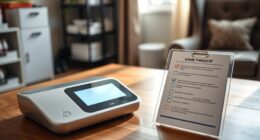
Using white noise sleep gadgets for your baby can be safe if you choose devices designed specifically for infants, with low volume controls and automatic shut-off features. It’s essential to monitor device placement, keep the volume below 50 decibels, and check regularly for damage. When used responsibly, white noise can soothe your baby and promote healthy sleep. To guarantee you’re making safe choices, keep exploring expert advice and safety tips.
Key Takeaways
- Choose baby-specific white noise devices with safety certifications and low volume settings to ensure safe audio levels.
- Keep devices at a safe distance from the crib and avoid direct proximity to prevent overexposure.
- Regularly inspect devices for damage, malfunction, or overheating, and turn off when not in use.
- Monitor your baby’s reactions to white noise and adjust volume to prevent hearing discomfort or sensitivity.
- Always supervise usage and prioritize devices designed for infants to create a safe, soothing sleep environment.

White noise has become a popular tool for soothing babies and helping them sleep more soundly. You might have noticed how some parents rely on white noise machines or apps to create a consistent, calming environment for their little ones. While these devices can be effective, it’s essential to consider potential concerns like sound sensitivity and device safety. Babies are more vulnerable to loud or prolonged noise exposure because their hearing is still developing, and excessive sound levels can cause discomfort or even damage. That’s why it’s crucial to keep the volume at a safe level—generally below 50 decibels, which is about the noise level of a quiet conversation. If you’re using a white noise device, always check the volume controls and avoid placing the device directly next to your baby’s crib. Maintaining a safe distance helps prevent any accidental exposure to overly loud sounds, which could lead to sound sensitivity issues later on. Additionally, understanding the importance of sound sensitivity can help caregivers better monitor their baby’s reactions to white noise and adjust usage accordingly.
Device safety is another critical aspect to keep in mind. Not all white noise gadgets are created equal, and some might pose risks if not used properly. Look for devices that are specifically designed for babies or children, as they often come with built-in safety features like automatic shut-off timers, low volume settings, and sturdy, non-toxic materials. Avoid cheap or poorly made devices that could overheat or malfunction, as these can be safety hazards. Additionally, be cautious about using devices that require Wi-Fi or Bluetooth connectivity without proper security measures, as they could potentially be vulnerable to hacking or interference.
When choosing a white noise device, read reviews and do some research to ensure it’s reputable and safe. It’s best to opt for models with clear safety certifications and those that meet relevant safety standards. Remember, the goal is to create a calming environment without risking your baby’s health or comfort. Always supervise your infant’s exposure to white noise, especially if they’re sensitive to sounds or tend to become distressed by sudden noises. Regularly check the device for any signs of damage or malfunction, and keep it out of reach when it’s not in use to prevent accidental tampering.
In the end, white noise can be a helpful sleep aid when used responsibly. By paying close attention to sound sensitivity issues and prioritizing device safety, you can create a soothing, safe sleep environment that benefits your baby’s health and development.
Frequently Asked Questions
Can White Noise Cause Hearing Damage in Babies?
Yes, white noise can cause hearing loss if your baby is exposed to loud volumes or prolonged noise exposure. To protect their hearing, keep the volume at a safe level—preferably below 50 decibels—and avoid having the device run all night. Always monitor your baby’s response and make sure the white noise is not too close to their ears, reducing the risk of noise-induced hearing damage.
How Loud Should White Noise Be for Safe Use?
You should keep the volume levels of white noise devices at or below 50 decibels to guarantee safety. Place the device at a safe distance from your baby’s crib, ideally several feet away, to prevent direct exposure to loud sound. Regularly check the volume and device placement to maintain safe listening levels, reducing the risk of hearing damage while helping your baby sleep peacefully.
Are There Natural Alternatives to Electronic White Noise Gadgets?
Yes, there are natural alternatives to electronic white noise gadgets. You can use natural remedies like a gentle fan, a ticking clock, or soft acoustic stimulation from nature sounds, such as birds or flowing water. These options create a calming environment without the potential risks of loud electronic devices. Incorporating these natural sounds can help soothe your baby and promote better sleep while keeping safety in mind.
How Long Is It Safe to Use White Noise During Sleep?
You should limit white noise exposure to about 1 to 2 hours during sleep, as prolonged noise exposure can affect your baby’s sleep duration and hearing health. Keep the volume low, ideally under 50 decibels, to reduce risks. It’s best to turn off the noise once your baby falls asleep or after a short period, ensuring they enjoy restful sleep without unnecessary noise exposure that could impact their overall sleep quality.
Can White Noise Dependency Affect a Child’s Sleep Patterns?
Think of white noise as a gentle tide that can soothe or drown out your child’s natural sleep signals. Yes, dependency on it can lead to sound habituation, making your child struggle without the consistent hum. This may cause sleep disruption when the noise stops unexpectedly, leaving your child restless. To prevent this, gradually reduce exposure and encourage other calming routines, helping your little one develop independent sleep habits.
Conclusion
In the end, white noise can be a helpful sleep tool, but it’s important to use it safely. For example, a parent once kept a white noise machine on all night, causing their baby’s hearing to become sensitive. Always keep the volume low, place machines at a safe distance, and monitor your baby’s response. When used correctly, white noise can help your little one sleep peacefully without risking their safety.