Many wellness devices aren’t FDA approved because they often fall into low-risk categories like fitness trackers that make minimal health claims. If a device claims to diagnose, treat, or prevent conditions, it’s more likely to need FDA approval or clearance. Understanding whether a device is regulated depends on its purpose and claims. As regulations evolve, it’s important to know which devices are approved and how safety is guaranteed—discover more if you keep exploring this topic.
Key Takeaways
- Not all wellness devices require FDA approval; only those claiming medical benefits or diagnosing health conditions do.
- FDA classifies devices into risk categories, with higher-risk devices needing formal clearance or approval before marketing.
- Many simple fitness trackers are exempt from approval unless they make specific health or diagnostic claims.
- Devices involving biometric data collection or medical claims are subject to regulatory pathways like 510(k) clearance or PMA.
- Always verify manufacturer claims and check for FDA approval or clearance to ensure safety and reliability.
The Role of the FDA in Medical and Wellness Devices

The FDA plays a crucial role in guaranteeing the safety and effectiveness of medical and wellness devices. When you use these devices, the FDA evaluates their claims to prevent misleading marketing claims that could overstate benefits. They also consider privacy concerns, making sure your personal health data remains protected and secure. Although some wellness devices are exempt from strict approval before market entry, the FDA still monitors their safety and performance. This ongoing oversight helps prevent false advertising and ensures manufacturers provide accurate information. Your safety depends on the FDA’s vigilance, especially as devices become more integrated with personal data. Additionally, ear wax odor detection and other sensory indicators are sometimes used informally to assess health, highlighting the importance of accurate device regulation in safeguarding well-being. Proper regulatory oversight ensures that consumers can trust the claims made by wellness device manufacturers, fostering confidence in their use. As technology advances, the FDA continues to adapt its approval processes to keep pace with innovative health solutions, ensuring they meet safety standards. These processes involve evaluating device safety and manufacturing quality, which are essential for consumer protection. Furthermore, the FDA’s compliance enforcement helps ensure that companies adhere to safety standards and correct any issues promptly. By regulating these products, the FDA aims to foster trust and ensure that wellness devices deliver genuine benefits without compromising your privacy.
What Types of Wellness Devices Are Regulated?
While many wellness devices are designed for personal use, only certain types fall under FDA regulation. These include wearable technology and fitness trackers that claim to diagnose, treat, or prevent medical conditions. If your device measures essential signs, monitors health data for medical purposes, or provides diagnostic information, it’s likely regulated by the FDA. Devices that focus solely on general wellness, like step counters or calorie counters, usually aren’t regulated. However, if a fitness tracker claims to detect irregular heart rhythms or diagnose sleep disorders, it crosses into medical device territory and requires FDA oversight. Understanding these distinctions helps you know which devices are governed by regulations and which are primarily for personal motivation or activity tracking. Additionally, some wellness devices incorporate medical claims that may subject them to regulatory review. For example, devices that are marketed with claims of preventing or diagnosing specific health conditions are more likely to require FDA approval. Moreover, the level of regulation can depend on device functionality and the specific claims made by manufacturers. It is also important to recognize that the regulatory landscape can evolve as new devices emerge and technology advances. Furthermore, emerging technologies in the wellness device industry may lead to new regulatory classifications in the future.
When Does FDA Approval Become Necessary?
You need FDA approval when your wellness device is classified as a medical device, which depends on its intended use, risk level, and functionality. Understanding the device’s classification helps determine if approval is required before marketing. The more the device functions like a medical tool, the more likely you’ll need to seek FDA clearance. Additionally, factors such as ventilation considerations and sanitation features can influence classification and regulatory requirements. Regular assessment of auditory processing features can also impact whether a device falls under regulatory oversight. Incorporating European cloud innovation can support compliance with international data security standards, especially for connected health devices, and staying informed about evolving regulatory frameworks can help ensure ongoing compliance. Being aware of risk management strategies is essential for ensuring safety and adherence to regulations in the development of wellness devices.
Medical Device Classification
Understanding when FDA approval is necessary depends on how a wellness device is categorized. The FDA categorizes devices into classes based on risk, with Class I being low risk and Class III high risk. Most wellness devices that affect device efficacy or monitor user health receive a Class II or III designation, requiring approval before marketing. These classifications guarantee the device’s safety and effectiveness. If your device collects sensitive data or impacts user privacy, it’s more likely to fall into a higher class, necessitating FDA clearance. Conversely, simple fitness trackers with minimal health claims may not need approval. Knowing your device’s classification helps you determine if FDA approval is necessary and ensures compliance with regulations, protecting both consumers and your business. Additionally, understanding the power tools and heavy‑duty equipment used in device manufacturing can help ensure quality and safety standards are met during production. Proper quality control processes are essential to meet regulatory standards and maintain consumer trust. Recognizing the device classification system can also aid in designing products that meet regulatory requirements from the outset. Furthermore, considering the health and safety concerns associated with various device types can guide developers in seeking proper approval pathways. Being aware of regulatory pathways can streamline the approval process and reduce time to market.
Intended Use Determination
Determining whether your wellness device needs FDA approval hinges on its intended use. If your device claims to diagnose, treat, or prevent health conditions, it’s more likely to require FDA clearance. Consider these points:
- Your device’s purpose—whether it’s for general wellness or specific medical claims—guides approval needs.
- How the device handles consumer privacy—sensitive health data may trigger stricter regulations.
- Manufacturing standards—products adhering to rigorous quality controls often need FDA oversight to guarantee safety and effectiveness.
- Implementing simple organizational strategies can help ensure your device complies with relevant regulations and stays on track with necessary approvals.
Risk and Functionality
When a wellness device poses significant risks to users or performs functions that directly influence health outcomes, FDA approval becomes necessary. If your device affects diagnosis, treatment, or disease management, the FDA considers it a medical device, requiring regulatory review. High-risk devices must also address data privacy concerns, ensuring user information remains protected. Additionally, if your device relies on user compliance for accurate results, regulators want to ensure it’s safe and effective. Devices that monitor wellness without impacting health status usually don’t need approval, but those with more direct health implications do. Evaluating the risk level helps determine if FDA oversight applies, especially when the device’s functionality could influence critical health decisions or user safety.
The Difference Between Clearance and Approval
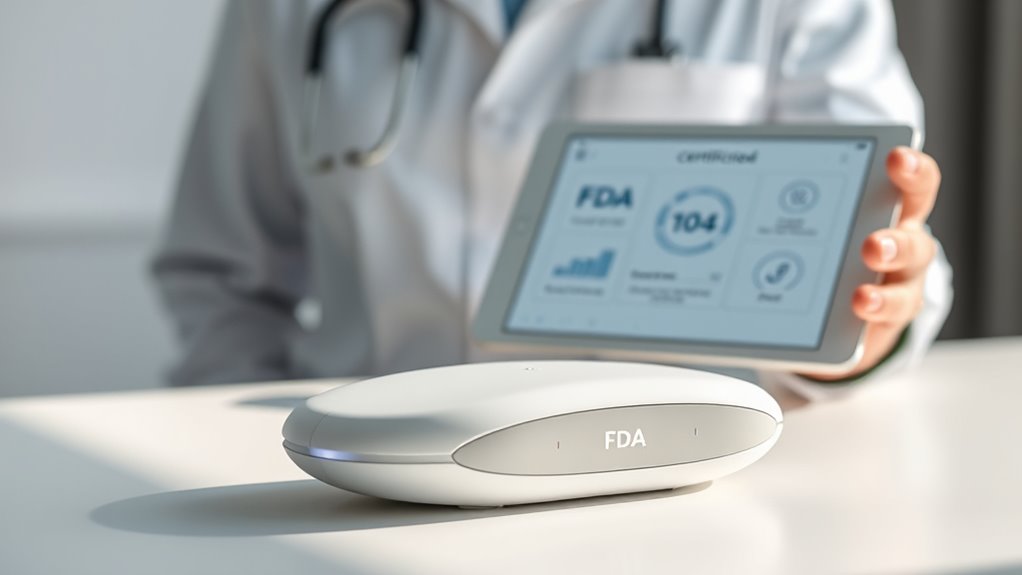
While both FDA clearance and approval are essential steps in bringing wellness devices to market, they serve different purposes and involve distinct processes. Clearance typically applies to devices that are similar to existing ones, requiring you to demonstrate safety and effectiveness through existing data. Approval is more rigorous, involving extensive review, often for novel devices, focusing on safety, effectiveness, and data privacy. Additionally, the classification of the device—such as whether it is a Free Floating device—can influence the regulatory pathway it must follow. To understand the difference, consider these points:
- Clearance involves a 510(k) process, showing your device is substantially equivalent to a predicate device.
- Approval demands a premarket approval (PMA), with exhaustive clinical data.
- The user interface and data privacy are critical factors evaluated differently during each process, impacting how you meet regulatory standards.
- Understanding the regulatory pathway is crucial for navigating compliance effectively and ensuring your device reaches consumers safely.
- The device’s intended use and design complexity can also significantly influence the applicable regulatory requirements. Moreover, understanding the classification of your device helps determine the necessary steps for approval or clearance.
How the FDA Classifies Wellness Devices

The FDA uses a device classification system to categorize wellness devices based on risk levels. You’ll find that regulatory pathways vary depending on the intended use and classification, guiding how devices are reviewed. Understanding these criteria helps you see why some devices require approval, while others only need clearance.
Device Classification System
The FDA classifies wellness devices into different categories based on their intended use and potential risk. This classification determines how the device is regulated and what standards it must meet. The three main classes are:
- Class I devices pose minimal risk, often exempt from premarket review, but still need to guarantee consumer privacy and device interoperability.
- Class II devices carry moderate risk, requiring more rigorous controls, including safety and effectiveness testing.
- Class III devices are high-risk, often needing FDA approval before marketing, especially when they impact health or involve sensitive data.
Understanding these categories helps you grasp how the FDA manages device safety, privacy concerns, and functionality, ensuring wellness devices meet necessary standards.
Regulatory Pathways Defined
Ever wondered how the FDA determines the approval process for wellness devices? The agency classifies devices based on their risk level, which guides the market entry pathway. Low-risk wellness devices often qualify for the 510(k) clearance, requiring you to demonstrate substantial equivalence to a legally marketed device. Moderate- to high-risk devices may need a premarket approval (PMA), involving rigorous clinical trials to verify safety and effectiveness. The classification influences the regulatory pathway you follow, making it essential to understand where your device fits. For wellness devices that pose minimal risk, the process can be quicker, while higher-risk devices demand all-encompassing clinical data. Knowing these pathways helps you prepare the right documentation and meet FDA requirements efficiently.
Intended Use Criteria
Understanding how the FDA classifies wellness devices starts with knowing their intended use. This intent determines whether a device is regulated as a medical device or a general wellness product. To classify a device, the FDA looks at:
- The labeling requirements that clearly specify its purpose and how it should be used.
- The marketing claims made by the manufacturer, such as health benefits or medical claims.
- The device’s functionality and whether it’s intended to diagnose, treat, or prevent specific conditions.
Your marketing claims and labeling must align with the intended use to avoid misclassification. If the intended use suggests medical benefits, the FDA will likely regulate it more strictly. Conversely, general wellness devices with broad claims often face lighter regulation.
Understanding the Regulatory Pathways for Devices

How do medical devices gain approval from the FDA? The process varies based on the device’s risk level and complexity. For innovative technology innovations, you’ll typically go through the Premarket Notification (510(k)) process, demonstrating your device is substantially equivalent to an approved one. More complex or high-risk devices require a Premarket Approval (PMA), which involves extensive clinical testing to guarantee consumer safety. The FDA reviews data on safety and effectiveness before granting clearance or approval. This pathway helps balance innovation with protection, making certain new wellness devices meet strict standards. Understanding these pathways is essential so you can navigate the regulatory landscape confidently, especially when evaluating the safety and efficacy of wellness devices in the market.
Risks and Benefits of Non-Approved Wellness Devices
Are non-approved wellness devices a safe choice? Not necessarily. These devices often lack rigorous testing, raising concerns about device accuracy and data privacy. Without FDA oversight, you risk relying on inaccurate readings that could mislead your health decisions. Consider these points:
- Data privacy may be compromised, exposing sensitive health information.
- Device accuracy isn’t guaranteed, possibly resulting in false health insights.
- Lack of regulation means fewer safeguards against malfunction or misuse.
While some non-approved devices may offer convenience, you might face unreliable data and privacy risks. It’s important to weigh these factors carefully before trusting devices that haven’t undergone proper evaluation. Remember, safety and accuracy are key to making informed wellness choices.
Tips for Consumers to Make Informed Choices

To make informed choices about wellness devices, it’s important to evaluate each product carefully before bringing it into your health routine. Start by researching the manufacturer’s claims and checking if the device has any FDA approval or clearances, which adds credibility. Prioritize consumer education by reading reviews, understanding how the device works, and knowing what scientific evidence supports its benefits. Be cautious of devices that rely heavily on technological innovation without proven safety or effectiveness. Look for transparent information about the device’s purpose, limitations, and regulatory status. Staying informed helps you avoid unnecessary risks and makes confident decisions. Remember, informed consumers can better navigate the market, ensuring that the wellness devices you choose genuinely support your health goals.
Future Trends in Wellness Device Regulation
As wellness devices become more advanced and widespread, regulatory frameworks are expected to evolve to keep pace with innovation. Future regulations will likely focus on ensuring safety and accuracy as smart sensors and biometric tracking become more sophisticated. You can expect:
- Stricter validation standards for biometric data accuracy, ensuring devices reliably monitor health metrics.
- Clearer guidelines for integrating smart sensors, emphasizing data security and privacy protections.
- Increased oversight on AI-driven wellness algorithms to prevent misinformation and ensure user safety.
These trends aim to balance innovation with consumer protection, so you’ll see more transparent and reliable wellness devices. As technology advances, regulations will adapt to safeguard your health data while fostering responsible innovation.
Frequently Asked Questions
Can Wellness Devices Be Marketed Without FDA Approval?
You can market wellness devices without FDA approval if they’re classified as low-risk, like general wellness products. However, making specific marketing claims about health benefits can trigger FDA scrutiny, especially if the device is classified as a medical device. Always guarantee your claims are truthful and compliant with regulations. Proper device classification helps determine whether you need FDA approval, so understanding this is vital before marketing your wellness device.
How Can Consumers Verify if a Device Is FDA Approved?
You can’t judge a book by its cover, so don’t assume a wellness device is approved without verifying. To verify, visit the FDA’s official database and search for the device’s certification or approval status. Look for the device’s registration number or approval letter, which indicates it has gone through the approval process. This way, you confidently ensure the device meets safety standards before making a purchase.
Do All Fda-Approved Wellness Devices Guarantee Safety?
Not all FDA-approved wellness devices guarantee safety, but they do meet certification standards that guarantee a certain level of safety assurance. You should understand that approval indicates the device has been evaluated for safety and effectiveness, but it doesn’t eliminate all risks. Always follow manufacturer instructions, consult healthcare professionals, and stay informed about potential side effects to maximize your safety when using these devices.
Are There International Regulations Similar to the FDA?
Yes, there are international regulations similar to the FDA. You should know that many countries follow international standards and engage in regulatory harmonization to guarantee safety and effectiveness. Organizations like the ISO and CE mark in Europe set standards for wellness devices. While these regulations aim to align globally, always check local requirements, since compliance varies by country. This way, you can confidently choose products that meet international safety benchmarks.
How Often Are Wellness Device Regulations Updated?
Wellness device regulations are updated periodically, often every few years, to keep pace with technological advances and safety concerns. You should stay informed about regulatory updates, as they can influence the approval processes and compliance requirements. Manufacturers and consumers alike benefit from these updates, ensuring devices are safe and effective. Regularly checking official sources helps you understand the latest standards and how new regulations may impact your use or development of wellness devices.
Conclusion
Remember, knowledge is power—especially when it comes to wellness devices. While not all products need FDA approval, understanding the regulations helps you make safer choices. Don’t put all your eggs in one basket; do your research and consult professionals if unsure. As the saying goes, “Forewarned is forearmed.” Stay informed, stay safe, and prioritize your health above all else. Your well-being is worth the effort.