
In 2025, at-home wellness tech is booming because personalized devices now seamlessly track your health, from genetics to daily activity, offering tailored insights. Smart meditation and immersive VR experiences help you relax and focus, while AI-driven fitness adapts to your needs. Wearables combine with smart home systems to create a holistic wellness ecosystem. This trend continues to evolve, making high-tech self-care more accessible and effective—discover how these innovations can transform your routines.
Key Takeaways
- Integration of advanced wearables and genetic testing enables real-time, comprehensive health monitoring at home.
- Personalized AI-driven solutions adapt to user behavior, promoting sustainable and effective self-care routines.
- Immersive virtual environments and neurofeedback enhance mindfulness and stress management experiences.
- Seamless device interoperability and smart home integration streamline wellness ecosystems for proactive health management.
- Increasing accessibility and automation make high-tech self-care more intuitive, effective, and embedded in daily life by 2025.
The Rise of Personalized Health Monitoring Devices

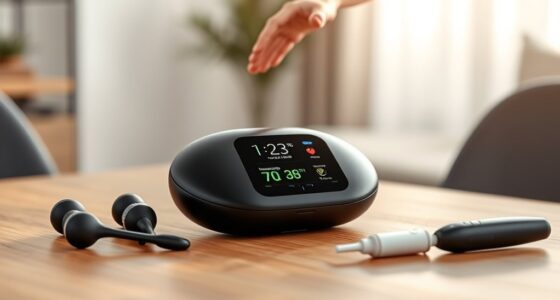
As technology advances, personalized health monitoring devices are becoming more accessible and essential for at-home wellness. Genetic testing now allows you to gain insights into your unique health risks and nutritional needs without visiting a doctor’s office. Paired with nutritional sensors, these devices can analyze your blood, saliva, or sweat to provide real-time data on nutrient levels, hydration, and metabolic health. This innovative technology enables more precise health assessments and tailored recommendations. This personalized information helps you tailor your diet, supplement intake, and lifestyle choices for ideal well-being. With continuous updates and user-friendly interfaces, these tools empower you to actively manage your health daily. Additionally, Free Floating solutions can seamlessly integrate with other smart home wellness devices to create a comprehensive at-home health ecosystem. The integration of personalized health data enhances the ability to detect early warning signs and optimize health strategies. Furthermore, advancements in sensor technology have improved the accuracy and reliability of these monitoring tools, making them an indispensable part of modern self-care routines. Recent innovations also include wearable devices that monitor vital signs and activity levels in real time, further supporting personalized health management.
Smart Meditation and Mindfulness Solutions

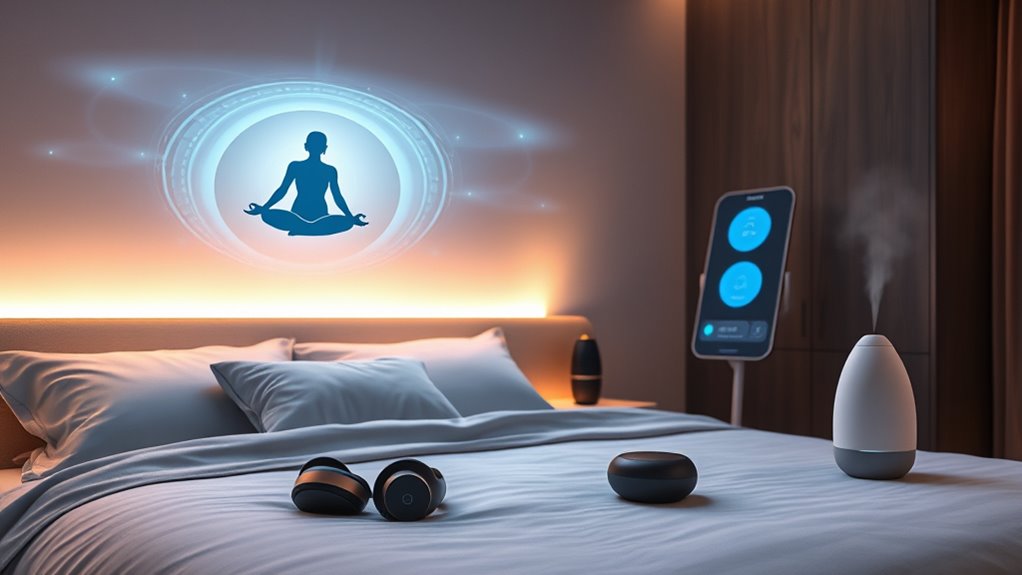
Smart meditation and mindfulness solutions are transforming how you cultivate mental well-being at home by integrating technology into daily practices. With mindful AI, these tools personalize your meditation sessions, adapting to your mood and stress levels in real time. Calming apps offer guided meditations, breathing exercises, and soothing soundscapes designed to reduce anxiety and improve focus. You can set up routines that fit your schedule, making mindfulness accessible anytime. These solutions help you develop greater self-awareness and resilience, all from the comfort of your space. The combination of AI-driven insights and user-friendly interfaces ensures your mental health journey is engaging and effective. As these high-tech options become more intuitive, maintaining mental wellness at home has never been easier or more personalized. Additionally, many of these solutions leverage connected devices to track your progress and provide real-time feedback, enhancing your self-care routine. Furthermore, advancements in neurofeedback technology are enabling more precise monitoring of brain activity to optimize meditation practices and deepen mental clarity. Incorporating evidence-based methods into these tools helps ensure that your self-care practices are grounded in scientific research and proven techniques.
AI-Driven Fitness Equipment at Home

AI-driven fitness equipment at home is revolutionizing the way you train by providing personalized workout guidance and real-time feedback. With virtual coaching, these devices adapt to your fitness level, ensuring you perform exercises safely and effectively. They analyze your movements, suggest modifications, and track progress, making workouts smarter and more efficient. Many systems incorporate AI nutrition, offering tailored meal plans and hydration tips based on your activity and goals. This integration helps you optimize recovery and performance without the need for external trainers or nutritionists. Additionally, these devices often utilize connected equipment that seamlessly syncs with other smart home fitness tools to create a comprehensive workout environment. As a result, you get an all-encompassing, high-tech fitness experience that’s customized to your needs, all from the comfort of your home. This trend empowers you to stay motivated and achieve your health goals more effectively. Incorporating outdoor wisdom into your fitness routine can also enhance your overall well-being and resilience.
Virtual Reality for Immersive Wellness Experiences

Building on the personalized fitness experiences offered by at-home AI equipment, Virtual Reality (VR) introduces an immersive dimension to wellness routines. With VR, you step into virtual environments designed for relaxation, meditation, or mental clarity, enhancing your self-care practice. The technology creates sensory immersion that transports you away from daily stressors, helping you achieve a deeper sense of calm or focus. Whether it’s a peaceful forest, a serene beach, or a guided meditation space, VR makes wellness experiences vivid and engaging. This level of immersion isn’t just visual; it often includes sound and haptic feedback, amplifying the feeling of presence. As a result, VR transforms simple routines into powerful, immersive self-care sessions right from your home.
Integrating Wearables for Holistic Wellbeing

Integrating wearables helps you track personalized health metrics like heart rate, sleep quality, and activity levels in real time. With seamless device integration, your data flows effortlessly across platforms, giving you a complete view of your wellbeing. This connectivity empowers you to make informed decisions and stay proactive about your health goals. Additionally, understanding device functionality ensures you can interpret the data correctly and avoid potential misuse or overreliance. Recognizing smart device capabilities can further enhance your ability to optimize your health routines effectively. Being aware of reliable sensor accuracy helps ensure that your health insights are trustworthy and meaningful. As technology advances, staying informed about wearable device updates can help you maximize their benefits and prevent obsolescence. Paying attention to health data security is also crucial to protect your personal information as you integrate more devices into your wellness routine.
Personalized Health Metrics
Personalized health metrics are transforming how you monitor and improve your wellbeing by providing tailored insights based on real-time data. By integrating wearables, you can track your diet, optimize sleep, and manage stress more effectively. These devices analyze your activity levels, heart rate, and sleep patterns to give you clear, actionable feedback. Here’s a look at how these metrics work:
| Metric | How It Helps | Key Benefit |
|---|---|---|
| Diet Tracking | Monitors calorie intake and nutrition | Supports balanced eating |
| Sleep Optimization | Tracks sleep cycles for quality sleep | Improves rest quality |
| Heart Rate | Measures stress and recovery | Enhances overall health |
With personalized data, you make smarter choices daily, boosting your holistic wellbeing. Additionally, data privacy considerations are increasingly integrated into these technologies to ensure your sensitive health information remains secure.
Seamless Device Integration
Seamless device integration is transforming your wellness routine by connecting multiple wearables into a unified system. With smart home technology and improved device interoperability, your fitness tracker, sleep monitor, and health apps now work together effortlessly. This integration provides a holistic view of your wellbeing, making it easier to track progress and adjust habits. Instead of juggling separate devices, you get real-time insights from a centralized platform, empowering you to make informed decisions. Your smart home can also sync with your wearables, automating adjustments like lighting or climate based on your activity or sleep patterns. This interconnected setup simplifies self-care, saves time, and enhances your overall wellness experience, making high-tech self-care more accessible and effective in 2025. Additionally, device compatibility plays a crucial role in ensuring all your wellness gadgets work seamlessly together, maximizing their benefits. As technology advances, interoperability standards are becoming more widespread, further streamlining your health ecosystem.
The Role of Data Analytics in Customizing Self-Care Routines
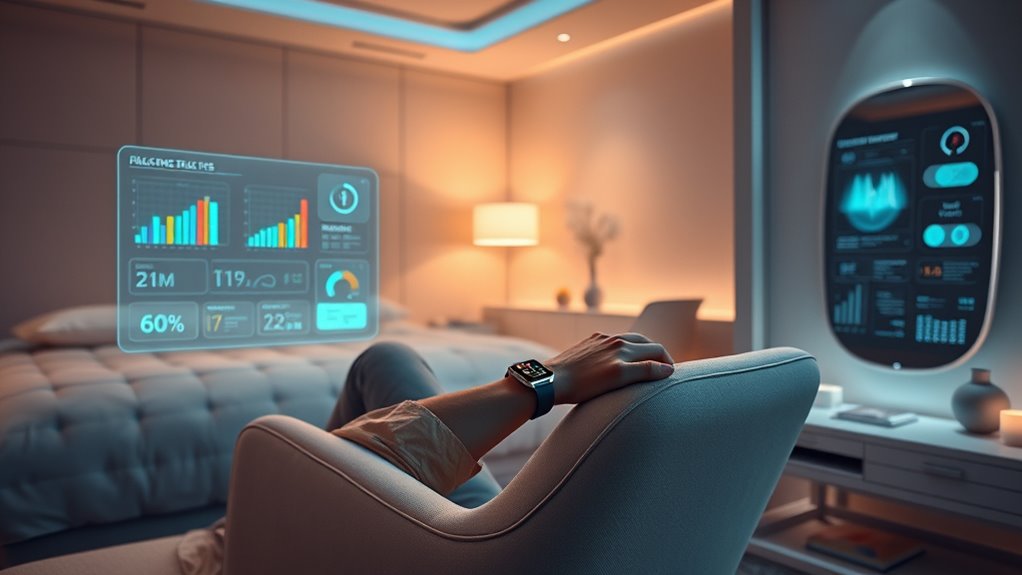
Data analytics helps you gain personalized wellness insights by analyzing your activity and health data. It recognizes behavior patterns over time, allowing your routines to evolve naturally. With adaptive care strategies, your self-care becomes more effective and tailored to your changing needs.
Personalized Wellness Insights
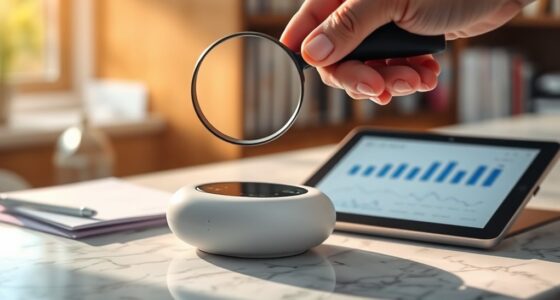
Advanced data analytics are transforming how you approach self-care by offering tailored wellness insights. By analyzing your health data, these tools help you make smarter choices, whether it’s fine-tuning your mindful nutrition or optimizing your sleep patterns. For example, sensors track your nutrient intake and suggest adjustments to improve energy and mood. Sleep optimization tools analyze your sleep stages and provide personalized tips to enhance rest quality. This real-time feedback enables you to understand what works best for your body, making self-care more effective and sustainable. With personalized insights, you gain a clearer picture of your wellness journey, empowering you to take proactive steps tailored specifically to your needs. High-tech self-care becomes more intuitive and responsive, helping you stay healthier and more balanced.
Behavior Pattern Recognition
Behavior pattern recognition takes personalized wellness insights a step further by analyzing your daily routines and habits to tailor self-care routines more effectively. By leveraging data from mood tracking, these systems identify patterns in your emotional states and connect them to specific activities or times of day. Similarly, analyzing your sleep cycle helps detect irregularities or disruptions that could impact your overall health. With this information, your wellness devices can suggest targeted adjustments, like optimizing bedtime routines or managing stress triggers. This proactive approach allows you to fine-tune your self-care based on real-world behavior, rather than guesswork. As a result, you gain a deeper understanding of how your habits influence your well-being, empowering you to make smarter, more personalized health choices every day.
Adaptive Care Strategies
By harnessing insights from data analytics, personalized wellness systems can adapt self-care routines in real time to better meet your unique needs. This allows you to optimize your approach to mindful nutrition and stress management, making your routines more effective and responsive. For example, if your data shows elevated stress levels, your system might suggest breathing exercises or relaxation techniques. Similarly, it can recommend tailored meal plans based on your nutritional preferences and health goals. These adaptive care strategies help you stay balanced and proactive in your wellness journey. You’ll also receive personalized notifications to encourage healthier choices. With this technology, your self-care becomes smarter, more dynamic, and aligned with your changing body and lifestyle. It’s self-care that evolves with you, not against you.
Future Innovations Shaping the At-Home Wellness Landscape
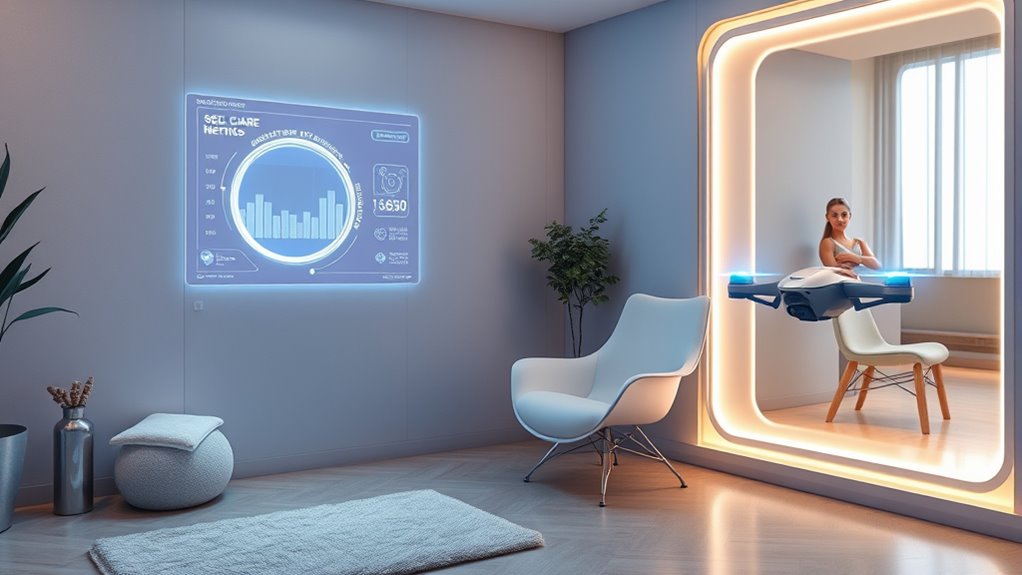
As technology continues to evolve, new innovations are set to transform the at-home wellness experience in exciting ways. Expect smarter devices that seamlessly integrate with daily routines, like advanced meditation apps offering personalized guided sessions and real-time feedback. Nutritional tracking will become more sophisticated, providing tailored meal suggestions based on your health data. Future devices may even monitor your stress levels or hydration status, prompting timely interventions.
| Innovation | Benefit |
|---|---|
| AI-powered meditation guides | Personalized mental health support |
| Smart nutritional trackers | Precise dietary recommendations |
| Biometric stress monitors | Early detection of stress or fatigue |
These innovations will make high-tech self-care more accessible, intuitive, and effective in shaping your wellness journey.
Frequently Asked Questions
How Secure Is My Personal Health Data With These New Devices?
Your personal health data is generally secure with these new devices, but privacy concerns remain. Manufacturers use data encryption to protect your information, making it harder for unauthorized access. However, always review the privacy policies and settings to guarantee your data stays private. Stay informed about how your data is handled and consider choosing devices with robust security features to better safeguard your sensitive health information.
Can These Technologies Replace Traditional Healthcare Providers Effectively?
These technologies, like AI diagnostics and remote monitoring, can’t fully replace traditional healthcare providers yet. They’re great for early detection and ongoing monitoring, but you still need doctors for complex diagnoses and personalized treatment plans. Rely on them as tools to enhance your care, not replace your healthcare team. Combining high-tech self-care with professional guidance offers the best outcomes for your health.
Are These Wellness Gadgets Suitable for All Age Groups?
Wellness gadgets aren’t suitable for all age groups, as age appropriateness and tech adaptability vary. Younger users often easily navigate new devices, but older adults might face challenges due to limited tech familiarity. It’s crucial to choose gadgets designed with user-friendly interfaces and adjustable features to accommodate different needs. Always consider individual comfort and capabilities, ensuring each person can benefit from these innovations without feeling overwhelmed or excluded.
What Are the Costs Associated With Adopting High-Tech Self-Care Tools?
Think of adopting high-tech self-care tools as planting seeds for your health garden. Costs vary with device affordability, ranging from budget-friendly options to premium gadgets. Insurance costs may sometimes offset expenses, especially for devices prescribed by healthcare providers. While initial investments can seem steep, many find these tools save money long-term by reducing healthcare visits. Ultimately, your costs depend on your chosen devices and coverage, making it a personalized journey.
How Accurate Are Virtual Reality Wellness Experiences Compared to In-Person Sessions?
Virtual reality wellness experiences can be quite accurate, especially in providing virtual immersion and sensory accuracy, but they might not fully match in-person sessions. You’ll find that VR can effectively simulate calming environments and guided meditation, yet subtle cues or tactile feedback may still fall short. While VR offers a convenient, immersive alternative, for some, the richness of real-world interactions remains unmatched.
Conclusion
As you embrace these cutting-edge wellness tools, think of yourself as the hero in a modern myth, wielding technology like a compass guiding you through uncharted self-care domains. With every device and app, you’re forging a path toward a healthier, more balanced life—your own odyssey of transformation. In this new era, the future’s bright horizon beckons, inviting you to access the secrets of well-being written in the stars of innovation.