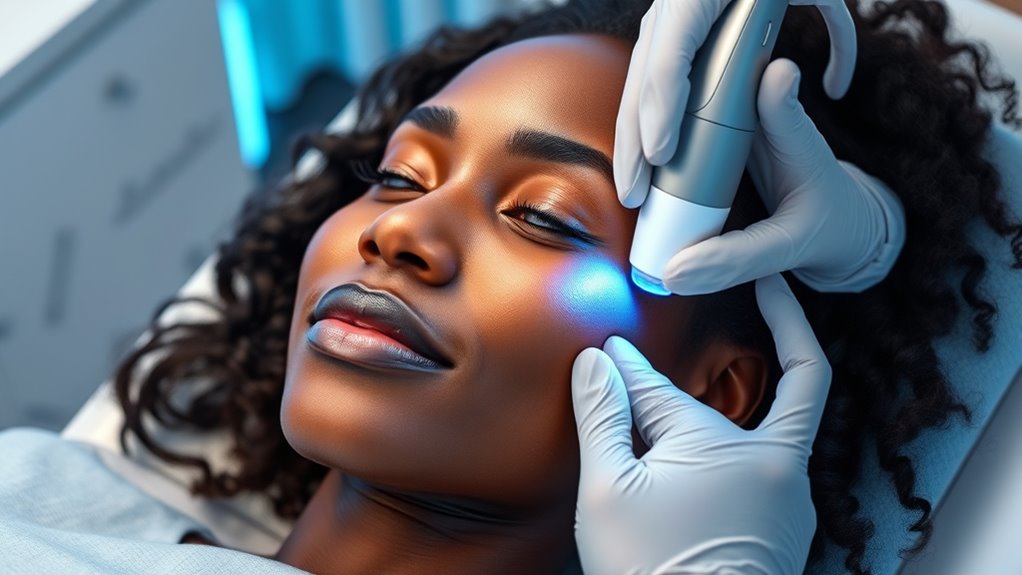

At-home laser treatments are generally not safe for dark skin tones because higher melanin levels increase the risk of burns, hyperpigmentation, and uneven skin reactions. Many devices aren’t designed for darker skin and may cause lasting damage if misused. To guarantee safety and effectiveness, it’s best to consult a professional and choose devices specifically made for darker skin. Keep going to discover how to protect your skin while considering treatment options.
Key Takeaways
- Many at-home devices are not designed for darker skin and may increase risk of pigmentation issues.
- Devices with safety features like skin sensors are safer options for darker skin tones.
- Proper patch testing and following instructions reduce the risk of adverse effects on dark skin.
- Professional consultation helps determine suitable treatments and minimizes potential skin damage.
- Overall, at-home laser treatments carry higher risks for dark skin; professional advice is recommended.
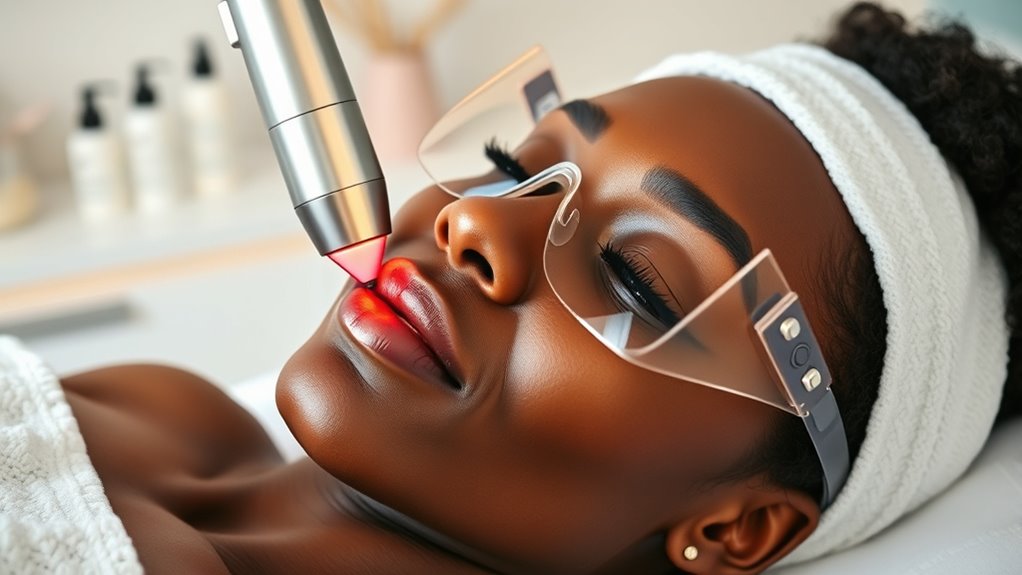
Many people with dark skin tones wonder whether at-home laser treatments are safe and effective for their skin type. The answer depends on several factors, but understanding laser safety and skin pigmentation is essential before making a decision. Darker skin contains more melanin, which can absorb laser energy more readily. This makes selecting the right device critical, as improper use could lead to burns, hyperpigmentation, or hypopigmentation. Unlike professional treatments performed by trained clinicians, most at-home devices lack the power and precision needed for safe, effective results on darker skin. They often operate at lower intensities to minimize risk, but this also means they may not deliver noticeable results or could require prolonged use.
Laser safety is a primary concern because inappropriate laser settings or device misuse can cause lasting damage. For darker skin, the risk of adverse effects increases because the excess melanin in the skin can absorb laser energy, leading to unintended pigmentation changes. Many at-home devices are designed primarily for lighter skin tones, with adjustable settings that may not be suitable for darker complexions. If you decide to try an at-home laser, it’s important to research devices specifically labeled as safe for skin of your pigmentation level. Look for ones with built-in safety features, such as skin sensors that prevent the laser from firing if your skin tone is too dark. This helps reduce the risk of adverse effects and ensures the device adapts to your skin’s characteristics.
However, even with a device deemed safe for your skin tone, you need to follow all instructions meticulously. Overuse, incorrect settings, or skipping patch tests can lead to unpredictable results. It’s always recommended to perform a patch test on a small area first and wait several days to monitor for any adverse reactions. Consulting a dermatologist before starting at-home laser treatments is a smart move. They can evaluate your skin’s pigmentation and advise you on whether such treatments are appropriate or if professional options might be safer and more effective. Additionally, understanding laser safety principles helps you make informed decisions and minimizes potential risks.
Ultimately, while at-home laser treatments can be convenient and cost-effective, they aren’t a one-size-fits-all solution, especially for darker skin tones. The key lies in understanding laser safety principles and ensuring your device is designed with your skin pigmentation in mind. If you’re serious about treating skin concerns safely, seeking professional guidance ensures you get targeted treatment with minimal risk of side effects. Protecting your skin’s health should always come first, so take the time to educate yourself and choose the right approach.
Frequently Asked Questions
Can At-Home Lasers Cause Skin Discoloration on Dark Skin?
Yes, at-home lasers can cause skin discoloration on dark skin if you’re not careful. To guarantee laser device safety, follow the manufacturer’s instructions carefully and avoid overuse. Use appropriate settings for your skin tone and perform a patch test first. Proper skin discoloration prevention involves consulting a dermatologist beforehand, especially if you have darker skin, to minimize risks and achieve safe, effective results.
What Precautions Should Dark Skin Tones Take Before Using Laser Devices?
Think of your skin as a delicate garden needing careful tending. Before you use a laser device, do a skin patch test to spot any reactions. Make sure the device is compatible with dark skin tones to avoid discoloration. Always follow manufacturer instructions and consult a professional if unsure. Taking these precautions helps protect your skin’s health while achieving the best results safely.
Are There Specific Laser Wavelengths Safer for Darker Skin?
Yes, certain laser wavelengths are safer for darker skin because they target hair follicles without affecting the surrounding skin. Look for devices that use longer wavelengths, like Nd:YAG lasers, which penetrate deeper and minimize skin safety risks. Always check the device specifications and consult a professional before use. Choosing the right wavelength helps protect your skin while effectively treating unwanted hair, ensuring safer at-home laser treatments.
How Do At-Home Laser Risks Compare to Professional Treatments for Dark Skin?
Think of at-home laser risks for dark skin like using a delicate brush on fragile glass—you might cause cracks if you’re not careful. Professional treatments are safer because experts tailor the procedure and use specialized equipment, but they cost more. At-home devices are more affordable, yet they carry higher risks of burns or hyperpigmentation if misused. Your safety depends on understanding these differences and choosing wisely.
What Are Signs of Adverse Reactions in Dark Skin After Laser Use?
You should watch for signs of adverse reactions like hyperpigmentation concerns or skin barrier reactions after using at-home laser treatments on dark skin. If you notice uneven darkening, redness, swelling, or increased sensitivity, stop treatment immediately. These signs indicate your skin isn’t tolerating the procedure well and may need professional evaluation. Always follow safety guidelines and consider consulting a dermatologist to prevent lasting damage.
Conclusion
Think of your skin as a delicate garden, needing careful tending. At-home laser treatments can be like gentle rain—if used correctly, they nurture your beauty without harm. But rushing or ignoring your unique soil can cause weeds to grow. Trust the process, follow expert advice, and treat your skin with kindness. When you do, you’ll see your confidence bloom like a vibrant flower, shining brightly in its own natural beauty.