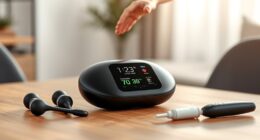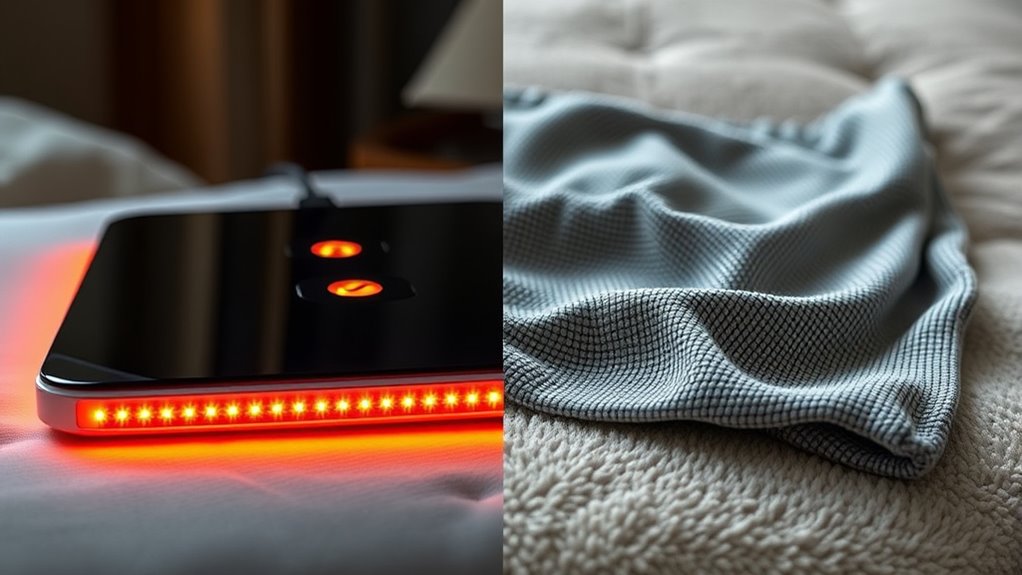

High-tech heating pads offer better pain relief because they provide precise temperature control, customizable settings, and smart features that automatically adjust for comfort and safety. These advanced options help you target pain more effectively and reduce risks like overheating. Traditional pads are simpler and more affordable but lack these personalized benefits. If you want to discover how these features can make a difference for your pain, there’s more to explore below.
Key Takeaways
- High-tech heating pads offer customizable, precise heat settings that can improve pain relief effectiveness.
- Smart features like automatic shut-off and personalized programs enhance safety and consistent comfort.
- Traditional pads are simpler, more affordable, but lack adjustable settings for tailored pain management.
- Advanced devices may provide better long-term durability and consistent performance, reducing the need for replacements.
- The choice depends on user preference for control and budget; high-tech pads suit those seeking advanced relief.

When choosing a heating solution, understanding the differences between high-tech heating pads and traditional ones can help you make an informed decision. High-tech heating pads come equipped with smart technology that allows for more precise temperature control, customizable settings, and even app-based management. Unlike traditional pads, which often rely on simple on/off switches and basic heat settings, these advanced devices offer features like automatic shut-off, timers, and personalized heating programs. This smart technology not only enhances comfort but also improves safety by reducing the risk of overheating or accidental burns. Additionally, many high-tech options incorporate Vetted safety features**** to ensure reliable operation and user protection.
Smart heating pads offer precise control, safety features, and customizable settings for enhanced comfort.
In terms of cost comparison, high-tech heating pads tend to be more expensive initially. They often come with a higher price tag due to their sophisticated features and electronic components. However, you might find that their durability and advanced functionalities make them a worthwhile investment over the long run. Traditional heating pads, on the other hand, are generally more budget-friendly upfront, with simple designs that provide reliable warmth without bells and whistles. But keep in mind, they might lack the safety features and convenience offered by smart technology, which could lead to higher costs if replacement or repairs become necessary.
The smart technology integrated into high-tech heating pads offers a level of control that traditional pads simply can’t match. You can tailor the heat intensity and duration to your specific needs, which is especially beneficial if you have persistent or chronic pain. Some smart pads even learn your preferences over time, automatically adjusting settings for maximum comfort. This personalized approach can lead to better pain relief, as you’re able to maintain consistent, ideal heat without constantly fiddling with manual controls.
While traditional heating pads are straightforward and easy to use, they often lack the versatility that high-tech options provide. If you’re someone who values convenience and customization, the enhanced features of a smart heating pad could be a game-changer. Plus, many smart pads come with safety features like automatic shut-off after a certain period, which adds peace of mind. When weighing the cost comparison, consider not just the initial purchase price but also the long-term benefits in terms of safety, comfort, and durability. If you frequently rely on heat therapy, investing in a high-tech pad may save you money and hassle down the line by reducing the need for replacements or repairs.
Ultimately, your choice depends on your budget, preferences, and specific needs. If you prioritize advanced control, safety features, and a more tailored pain relief experience, the higher upfront cost of a high-tech heating pad could be justified. Conversely, if you’re looking for a simple, affordable solution and don’t mind sacrificing some of the smart features, a traditional pad might suffice. Understanding these differences helps you pick a heating method that not only fits your budget but also delivers the most effective relief for your pain.
Frequently Asked Questions
Are High-Tech Heating Pads Safe for Sensitive Skin?
Yes, high-tech heating pads are generally safe for sensitive skin, but you should be cautious. They often have adjustable settings to prevent skin irritation, and many are made with hypoallergenic materials to reduce allergy risks. However, if you notice redness, itching, or discomfort, stop use immediately. Always follow the manufacturer’s guidelines, and consider doing a patch test beforehand to confirm your skin reacts well to the device.
How Long Does a High-Tech Heating Pad’s Battery Last?
A high-tech heating pad’s battery typically lasts between 2 to 6 hours, depending on the device and settings. You can expect a battery longevity of around 3 to 4 hours during continuous use. Charging time usually takes about 2 to 4 hours to fully recharge. To maximize its lifespan, avoid overcharging, and follow the manufacturer’s guidelines for ideal performance.
Can Traditional Heating Pads Be Used for Deep Tissue Therapy?
You can use traditional heating pads for deep tissue therapy, as they provide gentle heat penetration deep into muscles, like a warm wave soothing tension. Imagine the heat slowly melting away knots and stiffness, reaching deep layers. While high-tech pads may offer adjustable settings, traditional pads still effectively deliver deep tissue heat, easing soreness and promoting circulation. Just make certain you use them safely to avoid burns or discomfort.
Do High-Tech Heating Pads Require Special Maintenance or Cleaning?
High-tech heating pads do require special maintenance and cleaning protocols. You should regularly unplug the device and follow the manufacturer’s instructions for cleaning, typically using a damp cloth to wipe surfaces. Avoid submerging the pad or using harsh chemicals, which can damage electronic components. Proper maintenance guarantees safety and prolongs the device’s lifespan, so always check your user manual for specific cleaning and maintenance requirements to keep it functioning effectively.
Which Option Is More Cost-Effective Over Time?
You’ll find that traditional heating pads are more cost-effective upfront, but high-tech options offer better long-term savings due to durability and advanced features. Studies show that over five years, investing in a high-tech pad can save you up to 30% compared to replacing traditional models frequently. So, if you’re looking for better cost comparison and long-term savings, a high-tech heating pad might be the smarter choice.
Conclusion
Ultimately, choosing between high-tech and traditional heating pads is like selecting a trusted lighthouse or a guiding star—both illuminate your path to relief, but each offers a unique glow. The high-tech pad symbolizes innovation and precision, while the traditional embodies comfort and familiarity. Trust your instincts to find which beacon best guides you through pain’s darkness, knowing that whether modern or classic, your comfort is the true destination. Let your choice be the light that leads you back to ease.