Using electronics before bed isn’t ideal for restful sleep. The blue light from screens suppresses melatonin, making it harder to fall asleep and disrupting your sleep cycle. Plus, notifications and alerts keep your brain engaged, delaying relaxation. To improve your sleep quality, limit screen time an hour before bed, engage in calming activities, and create a cozy, tech-free environment. Keep exploring to discover simple strategies that can help you sleep better and wake refreshed.
Key Takeaways
- Using electronics before bed suppresses melatonin production due to blue light, delaying sleep onset and reducing sleep quality.
- Limiting screen time an hour before bed helps promote natural relaxation and supports a consistent sleep routine.
- Engaging in screen-free activities like reading or meditation enhances sleep readiness and reduces mental stimulation.
- Managing device notifications and keeping electronics out of the bedroom minimize disruptions and improve sleep continuity.
- Developing healthy tech habits, including dim lighting and outdoor darkness exposure, fosters better circadian regulation and restorative sleep.
The Impact of Screen Time on Sleep Quality
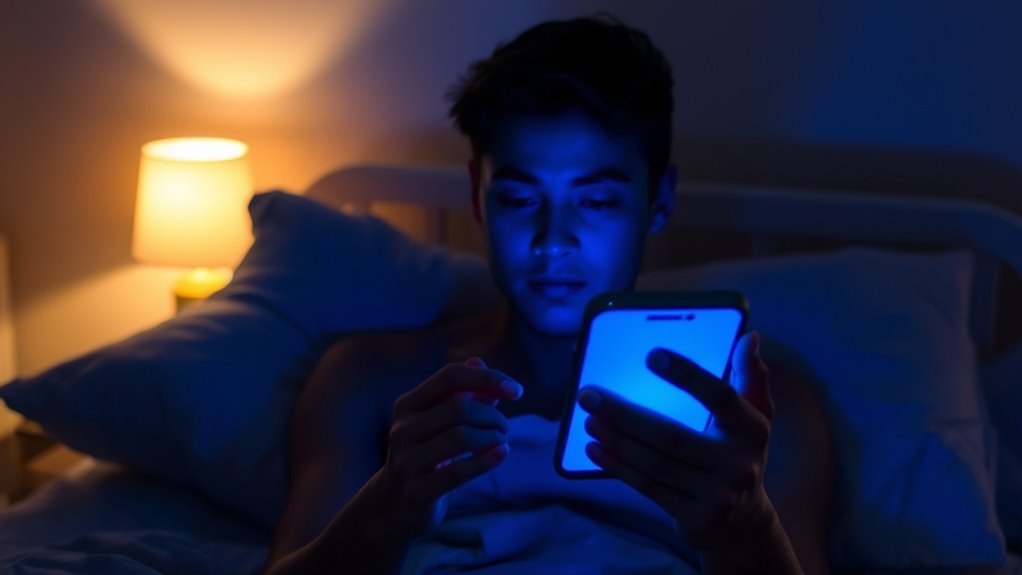
Using screens before bed can markedly disrupt your sleep quality. The blue light emitted from smartphones, tablets, and computers interferes with your body’s production of melatonin, the hormone responsible for regulating sleep. This disruption makes it harder to fall asleep and reduces REM sleep, leaving you tired and less refreshed. To improve sleep hygiene, consider a digital detox at least an hour before bedtime. Removing electronic devices from your nightly routine helps your mind relax and signals to your body that it’s time to wind down. By limiting screen time in the evening, you support healthier sleep patterns and enhance overall sleep quality. Establishing these habits is essential for restoring your natural sleep cycle and waking up feeling more energized. Incorporating sleep-friendly technology, such as blue light filters or smart alarms, can further support better rest and optimize your nightly routine. Additionally, reducing exposure to bright screens in the hours before sleep can significantly improve your sleep onset and quality. Being mindful of your environment and choosing digital wellness practices can further promote restful sleep and overall well-being. Implementing consistent bedtime routines can also help regulate your internal clock and improve sleep continuity.
How Electronic Devices Disrupt Your Natural Sleep Cycle
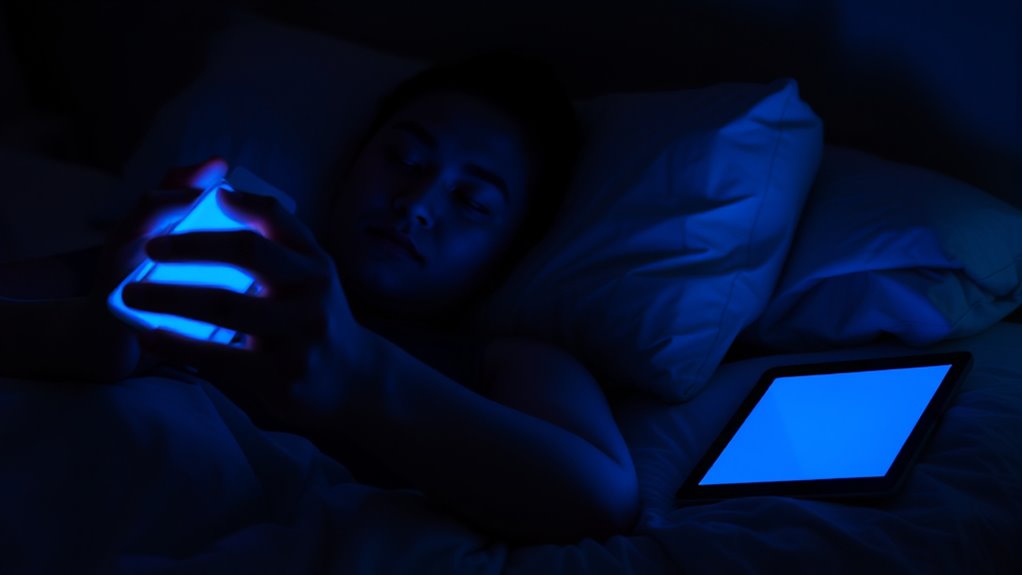
Electronic devices interfere with your body’s natural sleep cycle by sending signals that can delay the onset of sleep and alter its quality. Digital distractions, like notifications and alerts, keep your brain engaged when it should be winding down. Electromagnetic interference from screens disrupts the electrical activity in your brain, making it harder to shift into restful sleep. These signals confuse your circadian rhythm, the internal clock that regulates sleep and wakefulness. As a result, you may find yourself lying awake longer or experiencing lighter, less restorative sleep. The constant stimulation prevents your body from producing enough melatonin, the hormone responsible for sleep. Additionally, improper air purifier maintenance can lead to poor indoor air quality, which may further disrupt sleep by causing allergies or respiratory issues. Maintaining proper indoor air quality is crucial for restful sleep, as pollutants can exacerbate sleep disturbances. Implementing a tech-free wind-down routine can help your body transition smoothly into sleep mode and improve overall sleep quality. Properly managing digital device use before bed can significantly enhance your ability to fall asleep quickly and enjoy deeper, more restorative rest.
The Blue Light Effect and Its Consequences
Because screens emit blue light that closely mimics daylight, they can profoundly disrupt your sleep when used before bed. Blue light affects your circadian rhythm, leading to circadian disruption that makes it harder to fall asleep and reduces sleep quality. When you expose yourself to blue light late at night, you interfere with melatonin production—the hormone responsible for signaling sleep. Additionally, the blue light effect can cause your body to stay alert longer, making it more difficult to wind down. Incorporating sleep hygiene practices such as limiting screen time before bed can help mitigate these effects. Recognizing the impact on melatonin underscores the importance of managing blue light exposure. Research also suggests that light spectrum management—using warmer, dimmer lighting in the evening—can further support your sleep cycle. The circadian rhythm is influenced not only by light exposure but also by other environmental cues, which is why creating a sleep-friendly environment is essential. Key consequences include:
Blue light from screens disrupts melatonin, delaying sleep and reducing sleep quality.
- Delayed sleep onset
- Reduced REM sleep
- Increased alertness at bedtime
- Poor sleep quality
These effects can leave you feeling groggy and less refreshed. Understanding the blue light effect helps you recognize why limiting screen time before bed is vital for maintaining a healthy sleep cycle and overall well-being.
Benefits of Reducing Screen Use Before Bed
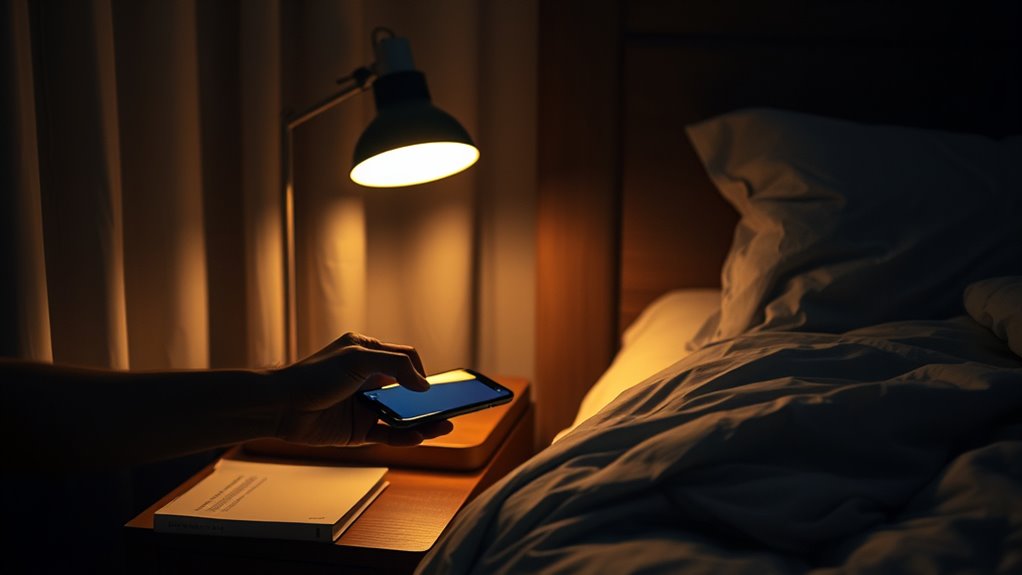
Reducing your screen time before bed can naturally lower your stress levels, helping you feel calmer and more relaxed. It also boosts melatonin production, making it easier to fall asleep and stay asleep throughout the night. As a result, your overall sleep quality improves, leaving you refreshed and ready for the day ahead. Incorporating simple routines to limit electronics can create a more calm home environment that supports better rest. Embracing mindfulness practices can further enhance your relaxation and improve sleep quality. Additionally, using outdoor wisdom techniques like spending time in natural darkness before bed can help reset your circadian rhythm and promote better sleep patterns. Being mindful of your blue light exposure is another effective way to protect your melatonin levels and support healthy sleep. Understanding family photoshoot fails and how to handle unexpected moments can also make your bedtime routines more enjoyable and stress-free.
Melts Stress Levels Naturally
Turning off screens before bed can considerably lower your stress levels naturally. Engaging in a digital detox helps your mind unwind, reducing the mental clutter caused by constant notifications and information overload. When you avoid screens, you create space for stress relief, making it easier to relax and prepare for restful sleep. Additionally, disconnecting from devices supports the development of your inner guidance, promoting a more balanced mental state. Incorporating practices like mindfulness techniques can further enhance this relaxation. Here are some ways reducing screen time promotes stress relief: – Lowers cortisol levels, the stress hormone – Enhances mental clarity and calmness – Creates a peaceful environment free from blue light – Encourages mindful activities like reading or meditation – Understanding Youngster Choice can help you make more informed decisions about your tech habits. Integrating digital boundaries can also establish healthier sleep routines and improve overall well-being.
Enhances Melatonin Production
Did you know that limiting screen time before bed can markedly boost your body’s natural production of melatonin? Exposure to blue light from devices suppresses melatonin production, which is essential for hormone regulation and signaling your body that it’s time to sleep. When you reduce screen use in the evening, your brain recognizes the darkness and increases melatonin levels naturally. Higher melatonin production helps synchronize your sleep-wake cycle, making it easier to fall asleep and stay asleep. Without the interference of artificial light, your body can better regulate its hormones related to sleep, leading to more restorative rest. Cutting back on electronics before bed isn’t just about avoiding distractions—it actively supports your body’s ability to produce the sleep hormone naturally. Additionally, practicing environmentally conscious habits such as reducing light pollution can further enhance your sleep environment.
Improves Sleep Quality
When you limit screen time before bed, you give your brain and body a better chance to relax fully, which directly enhances your sleep quality. Reducing exposure to blue light helps create a calmer sleep environment, making it easier to fall asleep and stay asleep throughout the night. It also promotes consistent bedtime routines**, reinforcing your body’s natural sleep-wake cycle. Incorporating sleep hygiene** practices can further improve your overall sleep health. To improve sleep quality, consider: – Creating a dark, quiet sleep environment – Establishing a regular bedtime schedule – Avoiding stimulating activities on screens right before bed – Using relaxing activities like reading or meditation instead of electronics
Practical Strategies to Limit Evening Electronics

Implementing practical strategies to limit your evening electronics use can markedly improve your sleep quality. Start by planning your evening rituals in advance, focusing on screen-free hobbies like reading, journaling, or gentle stretching. Set a specific time to disconnect from devices, ideally an hour before bed, and stick to it daily. Create a relaxing environment that encourages unwinding without screens, such as dim lighting or soothing music. Keep devices out of reach or in another room to reduce temptation. By establishing a consistent routine with screen-free activities, you’ll signal to your brain that it’s time to relax, making it easier to fall asleep naturally. These small but effective changes can markedly enhance your overall sleep experience.
Alternatives to Screen Time for Relaxation

Instead of screens, you can pick up a physical book to unwind, helping your mind relax without blue light. Meditation and breathing exercises are also effective ways to calm your body and prepare for sleep. Listening to calm music creates a soothing atmosphere that promotes relaxation without the stimulation of screens.
Reading Physical Books
Reading physical books offers a calming alternative to screen time before bed, helping you unwind without the distractions of notifications or blue light. Engaging in reading habits with physical books creates a peaceful environment that signals your body it’s time to relax. It reduces eye strain and mental overstimulation, making it easier to fall asleep. Plus, physical books allow you to disconnect completely from digital devices.
Consider these benefits:
- Limits blue light exposure
- Promotes better sleep quality
- Enhances focus and comprehension
- Builds a relaxing bedtime routine
Meditation and Breathing Exercises
If you’re looking for a peaceful way to unwind before bed, meditation and breathing exercises offer effective alternatives to screen time. Practicing mindful breathing helps you focus on each breath, calming your mind and reducing stress. As you breathe slowly and deeply, you promote body relaxation, easing tension built up during the day. You can start with simple exercises like inhaling for four seconds, holding for four, then exhaling for four. These techniques help slow your heart rate and quiet racing thoughts, making it easier to shift into sleep. Incorporating meditation or breathing routines into your nightly schedule creates a soothing ritual that prepares your body and mind for rest without screens or electronic distractions.
Listening to Calm Music
Listening to calm music can be a soothing way to wind down without screens. It helps you relax by reducing stress and calming your mind with gentle melodies and ambient sounds. Instead of scrolling through your phone or watching videos, try playing soft, instrumental music or nature sounds to prepare for sleep. This quiet activity signals your brain that it’s time to rest, making it easier to drift off. To enhance your relaxation, consider these options:
- Play calming instrumental music or ambient sounds
- Use a sleep playlist with slow tempos
- Incorporate nature sounds like rain or ocean waves
- Choose music without lyrics to avoid distraction
Listening to calm music creates a peaceful environment that promotes better sleep hygiene and reduces exposure to blue light from screens.
Creating a Bedtime Routine That Promotes Rest

To create a bedtime routine that promotes rest, start by establishing a consistent schedule. Going to bed and waking up at the same time each day helps regulate your internal clock, making it easier to fall asleep naturally. Incorporate calming sleep rituals, like reading a book or practicing deep breathing, to signal your body that it’s time to wind down. Keep your bedtime consistent, even on weekends, to reinforce this habit. Avoid stimulating activities or screens close to bedtime, as they can disrupt your sleep cycle. Instead, create a relaxing environment that encourages rest. By sticking to these routines, you’ll train your body to associate certain activities with sleep, improving your overall sleep quality and making it easier to drift off each night.
Long-term Benefits of Tech-Free Bedtime Habits

Eliminating screens from your bedtime routine can lead to lasting improvements in your sleep health. A consistent digital detox enhances sleep hygiene, making it easier to fall asleep and stay asleep. Over time, you’ll notice better sleep quality and increased daytime energy. Prioritizing tech-free habits helps regulate your circadian rhythm naturally. You’ll also reduce exposure to blue light, which can interfere with melatonin production. Incorporate relaxing activities like reading or meditation to reinforce these habits. The long-term benefits include reduced sleep disruptions, improved mood, and better overall health. Establishing a tech-free bedtime routine cultivates a healthier relationship with electronics and fosters better sleep habits. Committing to this shift guarantees you experience sustained sleep benefits and a more restful, rejuvenating night.
Frequently Asked Questions
Can Using Electronic Devices Before Bed Cause Long-Term Sleep Disorders?
Using electronic devices before bed can indeed cause long-term sleep disorders. The blue light emitted by screens disrupts your melatonin production, making it harder to fall asleep. Over time, this sleep disruption can lead to persistent issues like insomnia or poor sleep quality. To protect your sleep health, try limiting screen time before bed and using blue light filters or glasses to reduce exposure.
Are There Specific Types of Electronics That Are Worse for Sleep Than Others?
Think of electronic devices as sleep saboteurs, with some being worse than others. Blue light exposure from screens like smartphones and tablets suppresses melatonin more than e-readers or TVs. Social media use on smartphones can also keep your mind active, making it harder to unwind. To protect your sleep, limit blue light exposure and avoid social media right before bed, choosing calmer activities instead.
How Does Electronics Use Before Bed Affect Children and Teenagers Differently?
You may notice that screen time before bed affects children and teenagers differently, often disrupting their sleep patterns more. Their developing brains are more sensitive to blue light, which hampers melatonin production. You should encourage healthy bedtime routines by limiting electronics use beforehand, helping them wind down naturally. Reducing screen time before sleep improves sleep quality, mood, and overall health, making it easier for kids and teens to wake refreshed and ready for the day.
Is It Better to Replace Screen Time With Physical Activity or Relaxation Techniques?
Replacing screen time with physical activity or relaxation techniques is a smart choice. Physical activity benefits your sleep by reducing stress and tiring your body naturally, making it easier to fall asleep. Relaxation techniques, like deep breathing or meditation, help calm your mind and lower anxiety. Both options improve sleep quality, so choose what suits you best. Incorporating them into your routine can lead to more restful, rejuvenating sleep.
Can Adjusting Device Brightness Settings Improve Sleep Quality?
Adjusting your device’s screen brightness can substantially improve your sleep quality. Lowering the screen brightness reduces eye strain, making it easier for your eyes to relax before bed. When your eyes aren’t strained, it’s easier for your body to wind down and produce melatonin, helping you fall asleep faster. So, take a moment to dim your screen; it’s a simple step toward better sleep and less eye discomfort.
Conclusion
By gently steering clear of your devices before bed, you give your body the chance to unwind naturally. Embracing quiet moments and calming routines can turn bedtime into a peaceful retreat rather than a busy deadline. When you prioritize these small changes, you’ll find yourself drifting into restful sleep more easily. Remember, creating a harmonious nighttime environment isn’t just about avoiding screens—it’s about nurturing your well-being for brighter mornings ahead.