
White noise machines truly help improve sleep by masking disruptive sounds, calming your brain, and promoting longer, more restful sleep cycles. They create a steady auditory environment that reduces sudden awakenings and helps you fall asleep faster. Scientific studies support their effectiveness for many users, especially in noisy environments. If you want to discover how these devices work and find tips to maximize their benefits, there’s more to explore.
Key Takeaways
- White noise masks disruptive external sounds, creating a stable environment that promotes easier sleep onset and fewer awakenings.
- Scientific studies show white noise improves sleep quality by reducing disruptions and helping stabilize sleep cycles.
- It facilitates brain wave synchronization, aiding relaxation and deepening restorative sleep stages.
- Proper use and environment maintenance enhance its effectiveness, making it a practical sleep aid.
- White noise is non-invasive, safe, and effective for many people, especially those sensitive to noise or in noisy environments.
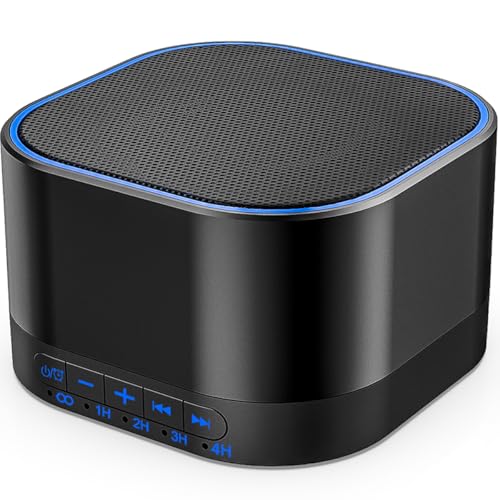
Magicteam Sound White Noise Machine with 20 Non Looping Natural Soothing Sounds and Memory Function 32 Levels of Volume Powered by AC or USB and Sleep Sound Timer Therapy for Baby Kids Adults
- 20 Non-Looping Soothing Sounds: Includes white, pink, brown, blue noise, and nature sounds
- Adjustable Volume and Timer: 32 volume levels and multiple timer options
- Portable Compact Design: Small size for home, office, or travel
As an affiliate, we earn on qualifying purchases.
As an affiliate, we earn on qualifying purchases.
How White Noise Affects the Brain and Sleep Cycles
White noise influences the brain by masking disruptive sounds and creating a consistent auditory environment, which can help you fall asleep faster. When exposed to white noise, your brain engages in brain wave synchronization, aligning its electrical activity to promote relaxation. This process enhances neural response modulation, reducing the likelihood of abrupt awakenings caused by sudden noises. As your brain adjusts to a steady soundscape, it shifts into a more restful state, supporting the progression into sleep. This calming effect helps stabilize your sleep cycles, making it easier to enter deep sleep stages. Additionally, the presence of white noise can reduce stress levels, further aiding the transition into sleep. By promoting a stable, predictable auditory environment, white noise helps your brain stay relaxed and receptive to sleep cues, improving overall sleep quality. Incorporating innovative European cloud servers into sleep research could further advance understanding of auditory environment impacts on sleep quality. Moreover, ongoing research suggests that individual differences in brain wave synchronization may influence how effectively white noise improves sleep for each person.
Magicteam Sound White Noise Machine with 20 Non Looping Natural Soothing Sounds and Memory Function 32 Levels of Volume Powered by AC or USB and Sleep Sound Timer Therapy for Baby Kids Adults
- 20 Non-Looping Soothing Sounds: Includes white, pink, brown, blue noise, and nature sounds
- Adjustable Volume and Timer: 32 volume levels and multiple timer options
- Portable Compact Design: Small size for home, office, or travel
As an affiliate, we earn on qualifying purchases.
As an affiliate, we earn on qualifying purchases.
Scientific Studies on White Noise and Sleep Quality
Research shows that white noise can positively influence sleep cycles by reducing disruptions. Clinical trials provide evidence that consistent use of white noise improves sleep quality for many people. Understanding these studies helps you see how white noise might benefit your own sleep routine. Additionally, incorporating proper maintenance of your sleep environment, such as eliminating other noise sources, can further enhance sleep quality. The research also indicates that the weight of wind turbine blades, which varies based on design and materials, is less relevant to sleep but highlights the importance of understanding factors that influence system performance. Moreover, studies on sound masking demonstrate its effectiveness in creating a stable auditory environment conducive to restful sleep. An awareness of noise levels in your bedroom can help you optimize your sleep environment for maximum comfort. Recognizing ear wax odor or other environmental odors can also be beneficial, as they may disrupt sleep if present in the sleep setting.
Impact on Sleep Cycles
Numerous scientific studies have shown that white noise can considerably influence sleep cycles by promoting more stable and uninterrupted sleep patterns. The sound frequency of white noise helps mask disruptive external sounds, reducing arousals during sleep. Additionally, white noise may facilitate brainwave entrainment, guiding your brain into calmer, sleep-ready states. By aligning certain sound frequencies with natural brainwave patterns, white noise can deepen sleep stages and extend periods of restorative sleep. This stabilization helps prevent frequent awakenings and encourages a smoother passage between sleep cycles. As a result, your overall sleep quality improves, leaving you more rested and refreshed. The evidence suggests that white noise’s impact on sleep cycles is rooted in its ability to create a consistent auditory environment that supports natural sleep rhythms. Free Floating environments can further enhance sleep by minimizing environmental disruptions. Furthermore, the use of white noise can help establish a consistent sleep environment, which is vital for maintaining healthy sleep patterns over time. Studies also indicate that white noise can promote sleep continuity, leading to fewer disturbances throughout the night. Additionally, the calming effect of white noise may help facilitate brainwave entrainment, making it easier to transition into and stay in deep sleep stages. Incorporating white noise into a sleep routine can further reinforce its benefits and help establish a healthy sleep habit.
Evidence From Clinical Trials
Clinical trials provide compelling evidence that white noise can enhance sleep quality. Researchers have tested sound therapy in various settings, showing improvements in sleep onset and duration. For example, a study found that participants using white noise reported fewer awakenings and better sleep satisfaction. These findings support incorporating sound therapy into your sleep hygiene routine. To illustrate, here’s a quick comparison:
| Study Focus | Key Findings |
|---|---|
| White Noise & Sleep Onset | Reduced time to fall asleep |
| White Noise & Sleep Maintenance | Fewer night awakenings |
| Sound Therapy & Anxiety | Lowered pre-sleep anxiety levels |
| Clinical Trial Results | Consistent improvements in sleep quality |
These trials demonstrate white noise’s potential as an effective sleep aid. Additionally, the scientific evidence underscores its safety and efficacy for long-term use, especially considering the sound therapy techniques used in these studies. Furthermore, research has shown that the calming effects of white noise may also help reduce pre-sleep anxiety, making it a versatile tool for better sleep. Recent studies also highlight its role in enhancing sleep environment, which can contribute to overall sleep quality. Moreover, understanding the benefits of sound therapy can help seniors and their caregivers make informed decisions about sleep improvement strategies.
Magicteam Sound White Noise Machine with 20 Non Looping Natural Soothing Sounds and Memory Function 32 Levels of Volume Powered by AC or USB and Sleep Sound Timer Therapy for Baby Kids Adults
- 20 Non-Looping Soothing Sounds: Includes white, pink, brown, blue noise, and nature sounds
- Adjustable Volume and Timer: 32 volume levels and multiple timer options
- Portable Compact Design: Small size for home, office, or travel
As an affiliate, we earn on qualifying purchases.
As an affiliate, we earn on qualifying purchases.
The Different Types of White Noise Machines

White noise machines come in several types, each designed to suit different preferences and environments. Some models focus on delivering high sound quality, providing a richer, more natural noise that can mask background sounds effectively. Others emphasize device portability, making it easy to carry your white noise machine wherever you go, whether it’s your bedside table or a hotel room. There are machines with multiple sound options, like rain, fan, or ocean sounds, allowing you to choose what’s most soothing. Some are compact and battery-powered, ideal for travel, while larger, plug-in models are better for home use. By understanding these differences, you can select a machine that fits your lifestyle and enhances your sleep environment. Additionally, choosing a model with smart-home integrations can allow for more convenient control and customization. Incorporating sound masking technology can further improve the effectiveness of the white noise in blocking disruptive sounds, and selecting a machine with adjustable volume controls can help tailor the sound level to your comfort. Moreover, some models feature automatic timers to help you fall asleep without the noise playing all night, and considering the noise spectrum can help you find a sound that is most effective for your needs.

Dreamegg Portable Noise Machine for Baby Adult, Features Powerful Battery, 21 Soothing Sound, Noise Canceling for Office & Sleeping, Sound Therapy for Home, Travel, Registry Gift, Classic White
- Powerful rechargeable battery: Long-lasting 1800mAh battery for portability
- 21 soothing sounds: Includes white noise, lullabies, and nature sounds
- Customizable timers and volume: Adjustable settings for personalized comfort
As an affiliate, we earn on qualifying purchases.
As an affiliate, we earn on qualifying purchases.
Benefits of Using White Noise for Sleep
Using white noise can help mask disruptive sounds that might wake you up during the night, promoting a more restful sleep. It creates a consistent auditory environment, making it easier to fall asleep and stay asleep longer. With regular use, white noise can improve your overall sleep quality and help establish a steady sleep routine. Additionally, incorporating white noise into your sleep environment can be particularly beneficial for those sensitive to noise or living in noisy areas. Consistent exposure to white noise may also reduce sleep disturbances, leading to a more restorative night’s rest.
Masking Disruptive Sounds
Disruptive sounds like sirens, barking dogs, or traffic can easily wake you up or prevent you from falling asleep in the first place. White noise acts as a sound masking tool, blending background sounds to make disruptive noises less noticeable. Unlike noise cancellation technology, which actively blocks sounds, sound masking simply covers them with a steady sound, helping you stay asleep. This can be especially effective if external noises vary or are unpredictable.
| Disruptive sound | White noise response | Result |
|---|---|---|
| Siren | Masked with steady hum | Reduced chances of waking |
| Barking dog | Blended into background | Easier to stay asleep |
| Traffic noise | Overpowered by white noise | Improved sleep quality |
| Snoring neighbor | Drowned out by sound masking | Less disturbance |
Promoting Sleep Consistency
Consistent sleep schedules are essential for overall health, but external noises can easily disrupt your nightly routine. White noise machines help promote sleep consistency by providing a steady sound frequency that masks sudden noises, reducing sleep disruption. When external sounds are predictable and constant, your brain is less likely to respond to them, making it easier to fall asleep and stay asleep throughout the night. This consistent auditory environment helps your body recognize cues for sleep, reinforcing your routine. Over time, using white noise can train your brain to associate the sound with sleep, encouraging more regular sleep patterns. As a result, you’re more likely to enjoy restorative sleep, wake feeling refreshed, and maintain better overall health.
Potential Drawbacks and Limitations
While white noise machines can enhance sleep for many, they also have potential drawbacks that you should consider. If you’re noise sensitive, the constant sound might become irritating or disruptive instead of soothing. Device portability can be an issue if you prefer a permanent setup or travel frequently; some models aren’t easy to carry. Additionally, prolonged exposure to white noise might cause dependence, making it hard to sleep without it. Some machines produce sounds that could be too loud or inconsistent, disturbing your rest. To conclude, certain devices may generate background noise or static, reducing their effectiveness and causing frustration. Be aware of these limitations to decide if a white noise machine suits your sleep needs without unintended drawbacks.
Comparing White Noise to Other Sleep Aids
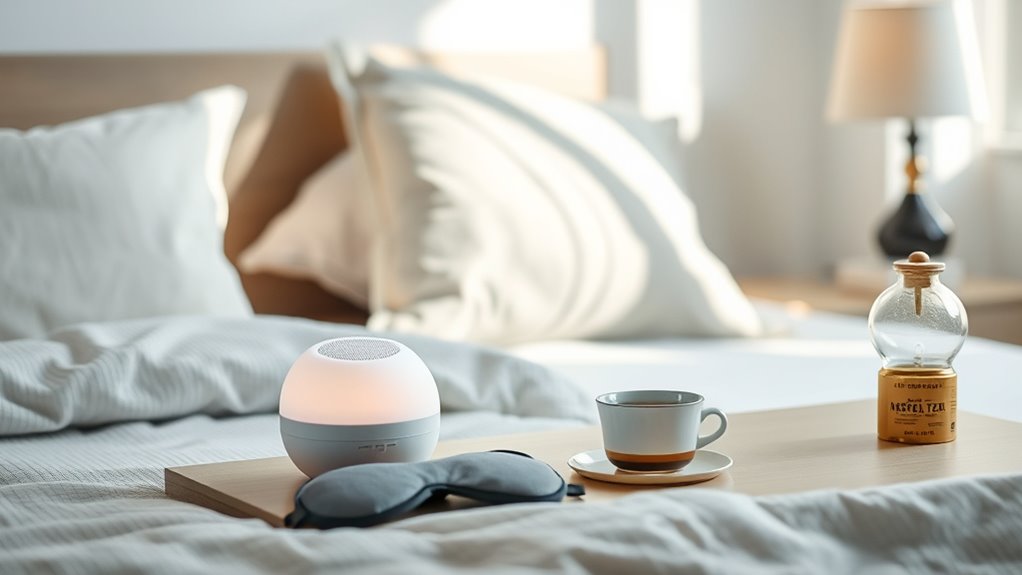
When comparing white noise machines to other sleep aids, it’s important to contemplate how they each influence your sleep quality and convenience. White noise can improve sleep hygiene by masking disruptive sounds, especially if you’re noise-sensitive. Unlike medications or herbal remedies, it offers a non-invasive, easy-to-adjust option that doesn’t interfere with your natural sleep cycle. Earplugs or blackout curtains can also help, but they might be less convenient or uncomfortable. If noise sensitivity is high, white noise provides a consistent background that helps your brain ignore sudden sounds, promoting a calmer environment. However, other aids might be more effective for specific issues, like insomnia or anxiety. Ultimately, choosing the right sleep aid depends on your preferences, lifestyle, and how each method impacts your overall sleep quality.
Tips for Maximizing the Effectiveness of White Noise
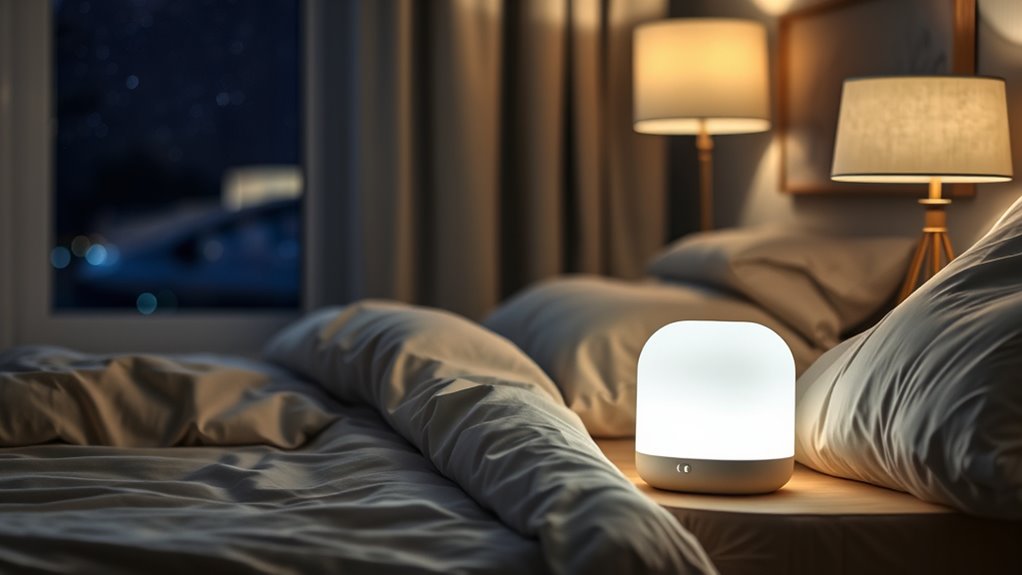
To get the most out of your white noise machine, it’s essential to optimize its placement and settings. Position the device close to your bed, but not directly against your head, to ensure even sound distribution. Adjust the sound frequency to a consistent, soothing level that masks disruptive noises without being overwhelming. Consider a portable device with good sound quality; its portability allows you to move it easily between rooms or take it with you. Keep the volume at a comfortable level—loud enough to drown out background noise but not so loud that it causes discomfort. Use a timer if available to prevent sound fatigue. Ultimately, experiment with different sound profiles to find what relaxes you best for a restful night.
Who Can Benefit Most From White Noise Devices
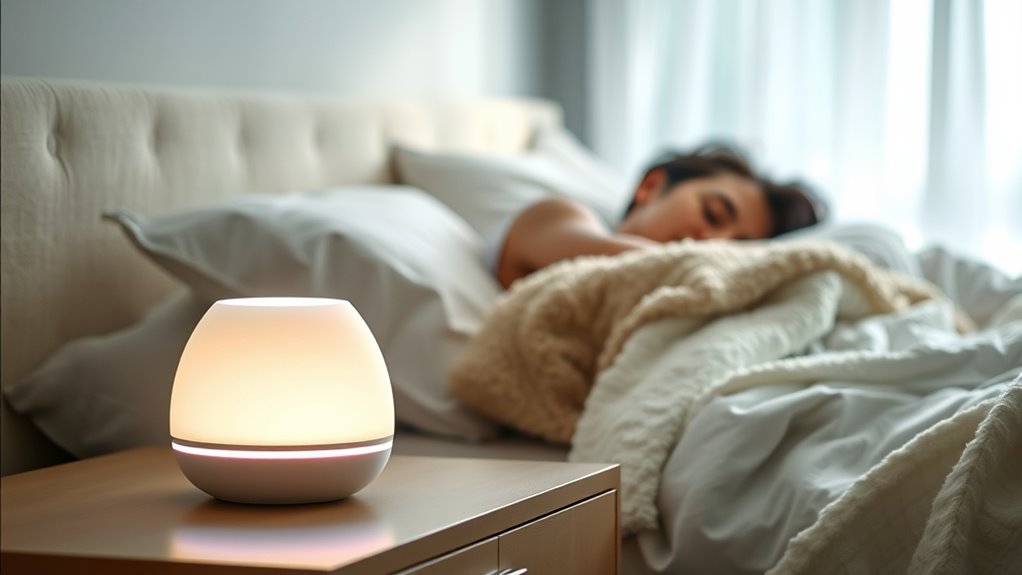
Anyone struggling with sleep disruptions or noise sensitivities can benefit greatly from white noise devices. If you have sleep disorders that cause frequent awakenings or difficulty falling asleep, white noise can create a consistent auditory environment, masking disruptive sounds. People with noise sensitivity, who are easily disturbed by environmental sounds, often find relief in the steady background noise that white noise provides. Whether you’re dealing with tinnitus, restless leg syndrome, or general anxiety that interferes with sleep, these devices can help create a calming atmosphere. White noise helps by reducing abrupt sounds that might wake you up or prevent you from falling asleep. If you find yourself easily disturbed by environmental noise, a white noise machine could make a noticeable difference in your sleep quality.
Making an Informed Decision: Is a White Noise Machine Right for You?

Deciding whether a white noise machine is right for you depends on your specific sleep needs and environment. Consider if the device’s sound frequency effectively masks background noise and whether it produces a soothing, consistent sound. Think about portability—if you travel often or move rooms frequently, a compact, portable device could be ideal. Evaluate if ambient noise levels in your space interfere with your sleep and whether a noise machine can help create a calming atmosphere. Additionally, check if the device offers customizable sound options to match your preferences. If you value flexibility and control over your sleep environment, a white noise machine might be a good fit. Ultimately, understanding your sound frequency requirements and portability needs will help you make an informed decision.
Frequently Asked Questions
Can White Noise Replace Traditional Sleep Aids Effectively?
White noise machines can effectively replace traditional sleep aids if you prefer a consistent, calming sleep environment and have noise preferences for background sound. They create ambient noise that masks disruptive sounds, helping you fall asleep faster and stay asleep longer. While they might not work for everyone, many find them a natural alternative to medication or sleep pills, making them a safe, non-invasive option for improving sleep quality.
How Loud Should White Noise Be for Optimal Sleep?
You should set your white noise machine to around 60 decibels, roughly the volume of a soft conversation, for ideal sleep. Research shows that sound levels above 70 decibels can disturb your sleep, so keeping the volume moderate helps. Focus on sound quality too; clear, consistent sounds create a calming environment. Adjust the volume to find what’s soothing for you without overwhelming your senses or causing disruptions.
Are There Any Health Risks Associated With Long-Term White Noise Use?
Long-term white noise exposure generally poses minimal health concerns if used at a safe volume. However, prolonged noise exposure can potentially lead to hearing issues or disrupt your sleep patterns. You should monitor your noise levels and avoid very loud settings. If you notice any discomfort, headaches, or hearing problems, it’s best to reduce the volume or take breaks from white noise use to protect your health.
Do Different Types of White Noise Impact Sleep Differently?
Different types of white noise can impact your sleep differently because of their sound frequency and ambient noise levels. Higher frequencies might be more stimulating, making it harder to fall asleep, while lower frequencies tend to be more soothing. You should experiment with various sound frequencies and ambient noise patterns to find the one that best masks disruptive sounds and helps you relax, ensuring a more restful sleep environment.
Is White Noise Suitable for Children or Infants?
White noise can be suitable for children and infants if used correctly, offering benefits for babies by soothing them and reducing sleep disruptions. However, you should follow safety precautions, like keeping the volume at a safe level and maintaining a distance from their sleeping area. Always monitor your child’s response and consult with a pediatrician if you’re unsure, ensuring a safe and comfortable sleep environment.
Conclusion
So, if you’re tired of playing hide-and-seek with your nocturnal insomnia, a white noise machine might just be your new best friend—like a soothing, constant hum of a spaceship engine or a gentle rainstorm that never ends. Just remember, it’s not magic; it’s more like turning your bedroom into a cozy, noise-filled cocoon. Give it a try, and maybe, just maybe, you’ll finally drift off before your alarm clock starts judging you.