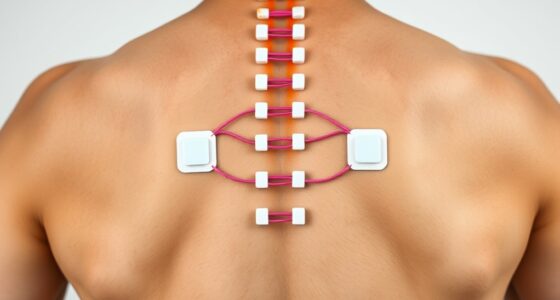

A TENS unit is a handheld device that delivers low-voltage electrical impulses through skin electrodes to help relieve pain. It works by interfering with pain signals sent to your brain and releasing natural painkillers called endorphins. This process can relax muscles, improve blood flow, and reduce discomfort without drugs. If you want to understand how to use a TENS unit effectively and maximize its benefits, there’s more to explore.
Key Takeaways
- A TENS unit delivers low-voltage electrical impulses through skin electrodes to target pain nerves.
- It disrupts pain signal transmission and stimulates the release of natural painkillers called endorphins.
- Proper electrode placement near pain sites enhances effectiveness and comfort during treatment.
- The device offers a non-invasive, drug-free method suitable for various muscle and nerve pains.
- Adjusting the stimulation settings optimizes pain relief and promotes healing.
Understanding TENS Technology
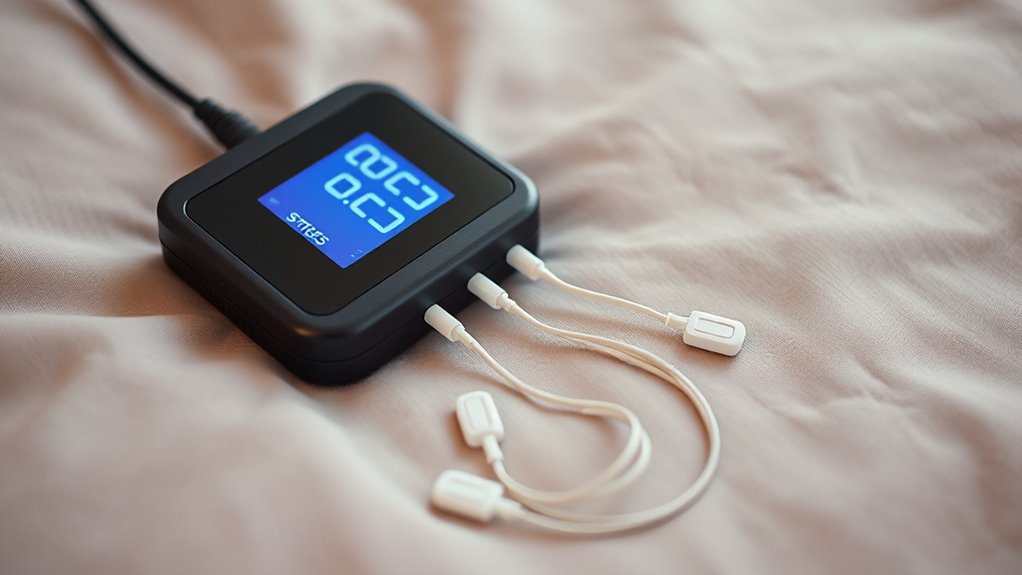
TENS technology, or Transcutaneous Electrical Nerve Stimulation, works by sending low-voltage electrical impulses through electrodes placed on your skin. This electrical stimulation targets nerves near the pain area, helping to block or reduce pain signals sent to your brain. When you use a TENS unit, the electrical impulses interfere with the transmission of pain messages, providing relief without medication. This method is a common approach in pain management, especially for chronic conditions or localized pain. The electrical stimulation also encourages your body to produce endorphins, which are natural painkillers. By applying controlled impulses, TENS technology offers a non-invasive, drug-free way to manage pain, giving you a sense of control and relief. Electric stimulation is a key aspect of how TENS units work, and understanding this can help optimize their effectiveness. Additionally, proper placement of electrodes and adjustable settings can enhance the treatment outcomes for individual needs. Recognizing the importance of pain signal transmission can further improve the benefits experienced from TENS therapy.
How TENS Units Are Used for Pain Relief
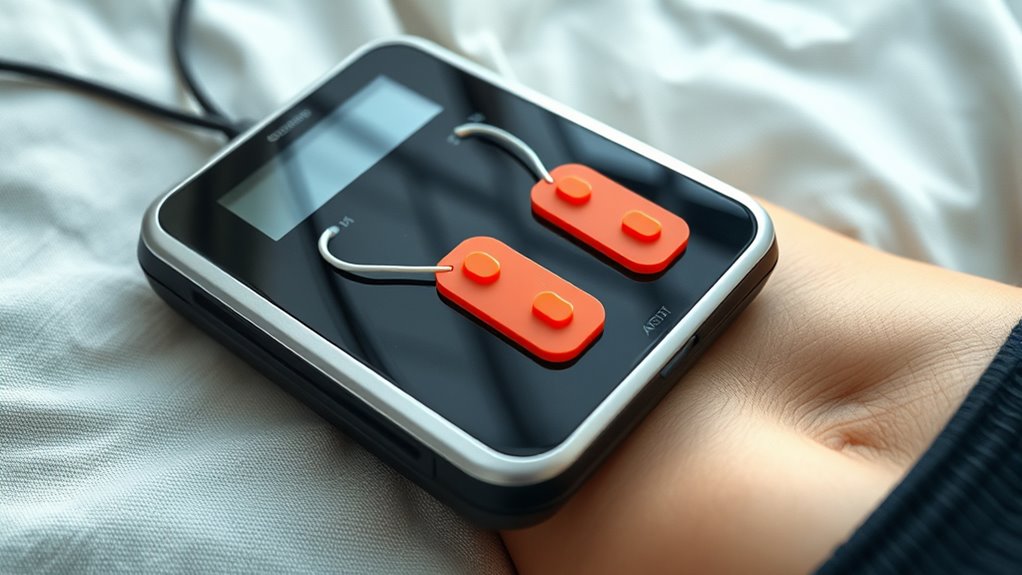
You can use a TENS unit by applying the electrodes to specific pain areas and adjusting the settings for comfort. Proper placement and correct settings are key to effective relief. By targeting the right spots, you maximize the unit’s pain-relieving benefits. Additionally, understanding how to create a healthy environment with air purifiers can contribute to overall well-being and pain management. Ensuring your space has good air quality can help reduce inflammation and promote faster recovery. Maintaining a clean and properly ventilated environment can further enhance comfort and healing, especially since air circulation plays a crucial role in reducing airborne irritants that may exacerbate discomfort. Incorporating air purification systems can also help eliminate allergens that might worsen pain or inflammation.
Application Techniques and Settings
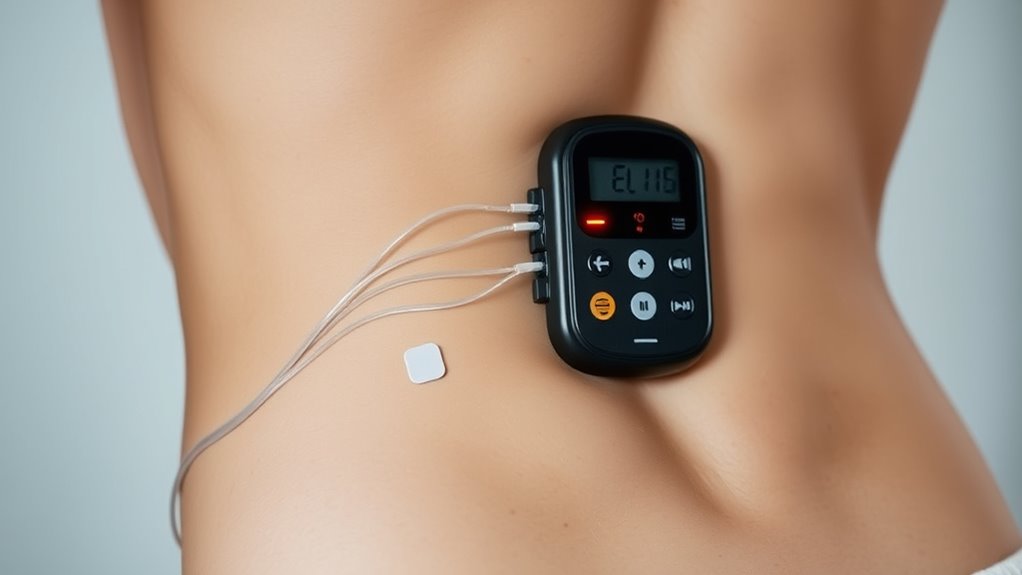
To effectively use a TENS unit for pain relief, it’s important to understand proper application techniques and settings. Start by carefully positioning the electrodes, focusing on correct sensor placement to target the affected area without causing discomfort. Ensuring good skin contact is vital for effective stimulation. Next, calibrate the device correctly—adjust the intensity and pulse width to a comfortable level, avoiding pain or numbness. Use the device’s preset modes if available, or customize settings based on your needs. Always follow manufacturer instructions for electrode placement and device calibration. Keep track of what settings work best for your pain, and adjust as needed for maximum relief. Proper application and precise settings maximize the benefits of your TENS therapy. Understanding modern technology can also help optimize device performance and safety. Additionally, becoming familiar with safe usage practices can help prevent skin irritation and ensure effective treatment, especially when considering the importance of device quality from top-rated models and proper maintenance. Incorporating proper device maintenance can extend the lifespan of your TENS unit and maintain its effectiveness over time.
Targeted Pain Areas
Targeted pain relief with a TENS unit depends on accurately placing electrodes over the specific areas where you experience discomfort. Proper placement helps target muscles that need relaxation and reduces chronic tension. For muscle relaxation, position electrodes near the affected muscles, such as your lower back or shoulders. If you suffer from chronic tension, focus on areas where tightness persists, like neck or leg muscles. Precise placement ensures the electrical impulses penetrate deeply enough to disrupt pain signals and promote relaxation. This targeted approach can help alleviate pain more effectively than general treatment. Remember, adjusting electrode positions based on your pain points maximizes relief and encourages muscle relaxation, making your TENS therapy more efficient and comfortable. Additionally, understanding essential oils for muscle relief can complement your treatment by providing soothing effects and reducing inflammation. Incorporating accurate electrode placement techniques enhances the effectiveness of your therapy by ensuring the electrical impulses reach the intended nerves and muscles, especially when combined with proper device settings for optimal results. Proper electrode placement is crucial for achieving consistent and effective pain relief, as it ensures the therapy targets the correct nerves and muscle groups. Using additional pain management strategies, such as stretching and hydration, can further improve your recovery and comfort.
The Mechanism Behind Electrical Stimulation

When you use a TENS unit, it sends electrical signals that interfere with your nerve signals, reducing the pain you feel. This stimulation also prompts your body to release endorphins, which are natural painkillers. Together, these processes help provide effective pain relief. Additionally, the electrical stimulation can improve blood flow to the affected area, promoting healing and further reducing discomfort. Incorporating connected equipment can enhance the effectiveness of treatment by enabling more precise control and monitoring of stimulation parameters. Understanding how TENS units work can help users optimize their pain management strategies for better results. Proper sizing and load‑planning tools ensure the device delivers appropriate stimulation levels for individual needs, maximizing relief. Modern smart home technology can even assist in tracking and adjusting treatment routines for improved outcomes.
Nerve Signal Interference
Electrical stimulation from a TENS unit works by interfering with nerve signals that transmit pain sensations. When you turn on the device, electrical impulses disrupt nerve signal transmission along pain pathways, preventing these signals from reaching your brain effectively. This nerve signal disruption helps modulate the pain pathway, reducing the intensity of pain you feel. Instead of allowing pain signals to travel uninterrupted, the TENS unit creates a competing electrical signal that confuses or overrides the pain message. This process doesn’t eliminate pain but makes it less noticeable. By targeting specific nerve fibers, the electrical stimulation alters how your nervous system processes pain, providing relief without medication. This nerve signal interference is a key part of how TENS units help manage chronic and acute pain. Additionally, the device can be adjusted to target different electrical stimulation parameters, optimizing pain relief for individual needs. Understanding the underlying nerve signal transmission can help users better appreciate how TENS therapy provides pain relief through targeted electrical interference. The effectiveness of this process depends on the precise nerve pathways involved in pain perception.
Endorphin Release Activation
Building on how electrical stimulation interferes with nerve signals, TENS units also activate your body’s natural pain-fighting mechanisms by prompting the release of endorphins. This endorphin boost enhances pain modulation, helping you feel relief without medication. When the TENS unit delivers pulses, your nervous system responds by releasing these natural opioids, which bind to pain receptors and reduce your perception of discomfort. This process not only alleviates pain directly but also supports your body’s ability to manage ongoing discomfort more effectively. The combination of nerve signal interference and increased endorphin production makes TENS therapy a powerful tool for pain relief. By tapping into your body’s own pain control systems, you benefit from a drug-free, holistic approach to managing chronic or acute pain.
Types of Pain Suitable for TENS Therapy
TENS therapy is most effective for certain types of pain, particularly those involving muscles, nerves, and soft tissues. If you’re dealing with pain, consider these common cases where TENS can help:
TENS therapy effectively relieves muscle, nerve, and soft tissue pain.
- Chronic pain, such as back or joint pain, that persists over time and affects daily life.
- Acute pain from recent injuries or surgeries that require immediate relief.
- Nerve pain, including tingling or burning sensations caused by nerve damage or conditions like sciatica.
While TENS isn’t suitable for all pain types, it’s especially useful for managing ongoing (chronic) discomfort or sudden (acute) injuries. It can also provide relief for nerve-related pain, helping you regain mobility and comfort.
Advantages and Limitations of TENS Devices

While TENS therapy offers targeted relief for many types of pain, understanding its advantages and limitations helps you decide if it’s right for you. One major advantage is its cost efficiency; once purchased, it’s a one-time investment that can be used repeatedly. Its portability features mean you can use it anywhere—at work, home, or while traveling—making pain management flexible. However, TENS devices may not work for everyone or all pain types, and some users might experience skin irritation or discomfort. Additionally, effectiveness depends on correct application and settings. Here’s a quick comparison:
| Advantages | Limitations |
|---|---|
| Cost efficiency | Not suitable for all pain types |
| Portability features | Requires proper usage |
| Non-invasive | Possible skin irritation |
| Easy to operate | May need ongoing adjustments |
| Drug-free approach | Limited long-term evidence |
Tips for Using a TENS Unit Effectively

To get the most relief from your TENS unit, it’s essential to use it correctly and consistently. Proper device maintenance ensures excellent performance and safety. Keep your device clean and check the electrodes regularly for wear. Follow the manufacturer’s instructions for battery replacement and storage. Listening to patient testimonials can provide helpful tips for effective usage. Here are three key tips:
- Set the right intensity—start low and gradually increase until you feel a comfortable tingling.
- Use consistent timing—apply the unit as recommended, usually 15-30 minutes per session.
- Position electrodes correctly—place them near the pain site, but avoid bony areas or skin folds.
These practices maximize pain relief and prolong your device’s lifespan.
Frequently Asked Questions
Can TENS Units Be Used for Chronic Pain Management?
Yes, TENS units can be used for chronic pain management, but their long-term effectiveness varies by individual. You should consider your condition and consult a healthcare professional to determine if you’re a suitable patient for TENS therapy. While some find relief with regular use, others may not experience significant benefits. Always follow medical guidance to guarantee safe and effective pain management with a TENS unit.
Are There Any Side Effects of Using a TENS Device?
Using a TENS device is like a gentle tide calming your pain, but it can cause potential skin irritation where electrodes touch your skin or, rarely, device malfunction. You might notice redness or itching, which usually subsides quickly. To stay safe, follow instructions carefully, check your device regularly, and avoid placing electrodes on broken skin. If you experience persistent discomfort or device issues, consult your healthcare provider promptly.
How Long Should a TENS Session Last for Optimal Relief?
For ideal relief, you should aim for a TENS session duration of about 15 to 30 minutes, depending on your pain level. Start with shorter sessions to see how your body responds, then adjust the timing as needed. Consistency is key; try to incorporate sessions into your routine at regular intervals to maintain pain relief. Always follow your healthcare provider’s recommendations for the best results.
Is a Prescription Necessary to Buy a TENS Unit?
You don’t need a prescription to buy a TENS unit; it’s as easy as grabbing over-the-counter options! While some insurance plans might cover certain models, most are available directly from stores or online without needing a doctor’s note. This means you can start pain relief instantly, without waiting for prescriptions or visits. Just choose the right device, and you’re set to experience relief whenever you need it!
Can TENS Therapy Be Combined With Other Pain Treatments?
Yes, you can combine TENS therapy with other pain treatments. Many people find that integrating TENS with alternative therapies like acupuncture or massage enhances relief. It also complements holistic approaches such as physical therapy or medication management. Always consult your healthcare provider before combining treatments to guarantee safety and effectiveness, but in general, using TENS alongside other methods can provide a more thorough pain management plan.
Conclusion
A TENS unit is like a gentle lighthouse guiding your pain away. By sending electrical signals, it blocks pain signals and boosts your body’s natural painkillers. With proper use, it can become a reliable ally in your pain management toolkit. Just remember, like any tool, it works best when you understand how to wield it properly. Embrace TENS therapy, and let it help you navigate back to smoother sailing.