Choosing between white noise and pink noise for sleep depends on your preferences and needs. White noise offers a consistent, broad-spectrum sound that masks disruptive noises but can feel harsh or sharp. Pink noise emphasizes lower frequencies, creating a softer, more soothing environment that may promote deeper, more restful sleep. If you’re curious about which sound suits your sleep environment best and how to get the most benefit, there’s more to discover.
Key Takeaways
- Pink noise emphasizes lower frequencies, creating a softer, more soothing sound compared to the harsher, flat spectrum of white noise.
- Pink noise reduces sleep fluctuations and promotes longer, more restorative sleep cycles.
- White noise masks a broader range of disruptive sounds with a consistent, hissing sound, aiding in falling asleep quickly.
- Pink noise’s balanced spectrum makes it less intrusive and more comfortable for sensitive sleepers.
- The choice depends on personal preference; pink noise often provides a calmer, more natural sleep environment.
Understanding White Noise and Pink Noise
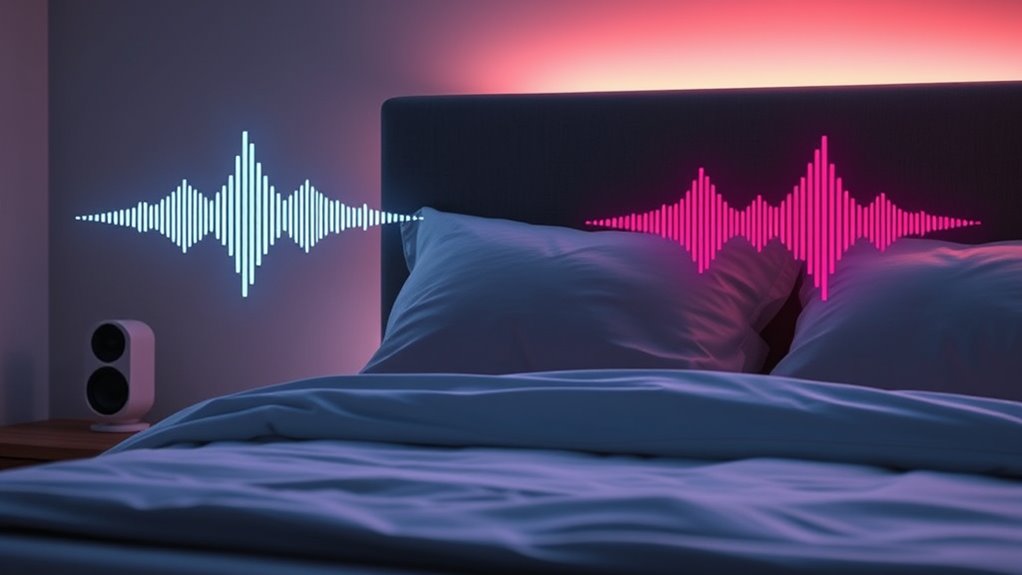
White noise and pink noise are both types of sound signals used for various purposes like masking background noise or aiding relaxation. They differ mainly in their sound frequency distribution, which affects how your auditory perception interprets them. White noise contains a broad range of frequencies played at equal intensity, creating a consistent, static-like sound. This uniform distribution can make it easier to block out other sounds. Pink noise, however, emphasizes lower frequencies more than higher ones, resulting in a deeper, softer sound. Your auditory perception perceives pink noise as more natural and less harsh than white noise, making it often more soothing for sleep or relaxation. Additionally, sound frequency distribution plays a significant role in how these noises are experienced and utilized for sleep. When choosing between them, consider how your auditory perception responds to different sound profiles, as individual preferences can influence effectiveness. Understanding these differences helps you choose the right type of noise to suit your needs, especially since sound quality can vary based on the environment and individual hearing sensitivity. Recognizing different sound profiles can also assist in selecting the most effective noise type for your personal comfort, particularly through tailoring sound environments to your preferences.
The Acoustic Differences Between White and Pink Noise

While both white and pink noise are used to mask sounds and promote relaxation, their acoustic characteristics differ markedly. White noise has a flat acoustic spectrum, meaning it contains equal energy across all frequencies, resulting in a consistent, hissing sound. Its sound coloration is neutral but can feel harsh or sharp to some listeners. Pink noise, on the other hand, emphasizes lower frequencies, with energy decreasing by about 3 dB per octave. This creates a more balanced sound with less high-frequency brightness, giving it a warmer, smoother quality. The sound coloration of pink noise makes it less intrusive and more soothing, which many find better suited for sleep. Additionally, pink noise’s spectral balance makes it more effective at promoting relaxation without causing discomfort. Its frequency distribution contributes to a more natural and comforting listening experience, making pink noise a popular choice for sleep aids. The acoustic profile of pink noise tends to blend better with ambient sounds, enhancing its effectiveness. A harmonic structure in pink noise further reduces harshness, making it more pleasant for extended listening sessions. Understanding these acoustic differences helps you choose the noise type that best supports your relaxation and rest.
How White Noise Affects Sleep Quality

White noise helps you sleep better by masking sudden, disruptive sounds that can wake you up. It creates a steady background that keeps your sleep more continuous throughout the night. As a result, you may experience deeper, more restorative sleep with fewer interruptions. Using consistent sound patterns can further enhance sleep quality by promoting a stable auditory environment. Additionally, choosing high-quality air purifiers can reduce indoor pollutants, creating a healthier sleeping environment that complements the benefits of white noise. Incorporating sound masking techniques can also help establish a calming sleep routine, especially when combined with natural elements like Free Floating features such as outdoor water features or gentle breezes. Maintaining a steady auditory environment is essential for consistent sleep, and understanding how sound influences your sleep cycle can lead to better overall rest.
Masking Disruptive Sounds
Disruptive sounds can easily disturb your sleep, making it harder to fall asleep or stay asleep through the night. White noise therapy helps mask these sounds by providing a consistent background hum that blocks out interruptions. Its broad spectrum covers a wide range of frequencies, effectively covering sudden noises like door slams or sirens. Additionally, understanding deep-sky imaging concepts can help you optimize your setup for clearer results, much like selecting the right noise environment can enhance sleep quality. Incorporating diversification strategies into your sleep environment, such as varying sound types or sources, can further improve your rest. Using performance cookies to analyze how different sounds impact your sleep patterns can help tailor your environment more effectively. Consistent use of white noise can also foster habit formation, making it easier to establish a regular sleep routine. Exploring the use of sound masking devices tailored for sleep can provide even more personalized comfort and effectiveness.
Enhancing Sleep Continuity
Masking disruptive sounds with white noise not only helps you fall asleep faster but also promotes more consistent sleep throughout the night. A stable sleep environment is essential for uninterrupted rest, and white noise provides a steady, masking sound that prevents sudden noise disturbances from waking you. This form of noise therapy creates a calming auditory backdrop, reducing the likelihood of sleep disruptions caused by environmental noise. By maintaining a uniform sound level, white noise helps you stay in deeper sleep stages longer, improving overall sleep continuity. Understanding sound masking is key to recognizing how consistent auditory environments support better sleep quality. Consistent sound levels help maintain a stable environment that encourages longer periods of restorative sleep. Incorporating white noise into your sleep environment can be a simple, effective way to enhance your sleep quality and promote uninterrupted rest. Additionally, sound masking techniques like white noise can be tailored to individual preferences, further optimizing sleep conditions and individual sleep needs. Using sound masking devices designed specifically for sleep can provide more reliable and customizable options to suit your personal comfort.
The Impact of Pink Noise on Restful Sleep
Pink noise has gained attention for its potential to improve sleep quality by providing a consistent, soothing background sound. Unlike white noise, pink noise emphasizes lower frequencies, creating a more natural and calming environment. This makes it ideal for blending into ambient soundscapes that promote relaxation. Many people use sound therapy techniques, such as playing pink noise throughout the night, to help reduce fluctuations in sleep stages and minimize disturbances. Its steady, gentle hum can lull you into deeper sleep cycles by masking sudden sounds without being intrusive. As a result, pink noise can enhance your overall sleep experience, helping you fall asleep faster and stay asleep longer. Incorporating pink noise into your sleep routine might be a simple yet effective way to foster restful, uninterrupted sleep.
Which Noise Type Is Better for Masking Disruptions?

When it comes to masking disruptions, your choice depends on how effectively each noise type can cover sudden sounds. Pink noise‘s balanced energy may better mask frequent disruptions, keeping you asleep longer. Understanding which noise minimizes interruptions helps you choose the best option for a more consistent rest.
Masking Effectiveness
Choosing the right noise type can substantially impact how effectively disruptions are masked. Both white noise and pink noise serve in sound therapy by providing a consistent background sound, but their masking capabilities differ. White noise, with its broad spectrum, can effectively cover sudden, sharp sounds, making it ideal for masking unpredictable disruptions. Pink noise, with its emphasis on lower frequencies, offers a more balanced sound that’s easier on the ears, providing steady masking without overwhelming your senses. Noise customization allows you to select the most suitable type for your environment and sleep preferences. Ultimately, pink noise’s smoother profile may better sustain masking over time, while white noise excels at masking abrupt interruptions. Your choice depends on your sensitivity and the types of disruptions you face.
Disruption Frequency
White noise’s broad spectrum makes it highly effective at masking sudden, unpredictable sounds, especially those that occur infrequently or irregularly. Its consistent sound frequency creates ambient comfort, making it easier to ignore disruptive noises like a door slamming or a dog bark. Because it covers a wide range of frequencies, it can effectively drown out disruptive sounds regardless of their pitch or timing. Pink noise, with its emphasis on lower frequencies, may not mask high-pitched or sporadic sounds as well, making disruptions more noticeable. If your goal is to minimize disruption frequency and maintain steady sleep, white noise’s ability to blend with irregular sounds offers a distinct advantage. It helps create a stable acoustic environment, reducing the chance of waking up from sudden disturbances.
Personal Preferences and Sensory Sensitivities

Personal preferences and sensory sensitivities play a significant role in determining which type of noise—white or pink—works best for you. Some find white noise too harsh or overwhelming, preferring pink noise’s softer, more natural sound. Others may benefit from sound therapy that offers noise customization, tailoring the background sound to suit their comfort level. Your sensory sensitivity can influence how you perceive each type, affecting sleep quality. Consider this table to understand your preferences:
| Sensory Sensitivity | Preferred Noise Type | Reason |
|---|---|---|
| Highly sensitive | Pink noise | Less sharp, more soothing |
| Moderately sensitive | White noise | Neutral, consistent sound |
| Preference for natural sounds | Pink noise | Mimics natural environment |
| Discomfort with high frequencies | Pink noise | Calms over-stimulation |
| Need for strong masking | White noise | Covers more background noise |
Ultimately, noise customization helps find what best supports your sleep.
Scientific Studies Comparing White and Pink Noise for Sleep
Scientific studies have examined how white and pink noise impact sleep quality and brain activity. You’ll find that some research shows pink noise can promote deeper, more restful sleep, while others focus on brain wave changes during sleep cycles. When reviewing these studies, it’s important to take into account their methodologies and how they measure improvements.
Sleep Quality Improvements
Have you ever wondered which type of noise better enhances sleep quality—white or pink? Scientific studies show that pink noise often leads to deeper, more restorative sleep compared to white noise. In audio therapy, pink noise’s balanced sound spectrum helps reduce sleep disruptions and improve sleep efficiency. Better sleep hygiene practices, combined with pink noise, can promote longer sleep duration and smoother progressions between sleep stages. Some research indicates that pink noise may slow brain activity, fostering a calming environment conducive to restful sleep. While white noise can mask background sounds, pink noise’s softer, more natural sound profile tends to support sustained sleep quality over time. Overall, pink noise appears more effective for enhancing sleep quality through consistent, calming audio therapy.
Brain Wave Effects
Research indicates that pink noise influences brain wave activity more effectively than white noise, helping to promote relaxation and sleep onset. Pink noise’s balanced, lower-frequency sound spectrum encourages neural entrainment, aligning brain waves with its gentle, rhythmic pattern. This synchronization enhances auditory processing, making it easier for your brain to shift into sleep. Unlike white noise, which contains equal energy across all frequencies, pink noise’s emphasis on lower frequencies supports deeper, more stable sleep states. Scientific studies suggest that pink noise can reduce brain wave fluctuations associated with wakefulness, fostering a calm, stable environment for sleep. By facilitating neural entrainment, pink noise effectively calms your mind and prepares your brain for restful, uninterrupted sleep.
Study Methodologies
Numerous studies compare the effects of white and pink noise on sleep quality by employing controlled experimental designs. Researchers typically recruit participants who sleep in a controlled environment, exposing them to different noise conditions—white noise, pink noise, or silence—while monitoring sleep parameters. They manipulate noise frequency to assess how sound masking impacts sleep onset and duration. Sound masking with pink noise, which emphasizes lower frequencies, often aims to reduce disruptive external sounds more effectively than white noise. Data collection involves polysomnography or actigraphy, providing objective measures of sleep quality. These methodologies allow researchers to isolate the specific influence of noise type on sleep, ensuring that results clearly reflect the effects of sound masking and noise frequency differences on sleep outcomes.
Practical Uses and Accessibility of Both Sounds
Both white noise and pink noise are widely used for practical purposes because they are easily accessible through various devices and platforms. You can find sound therapy apps, online recordings, or dedicated noise machines to create a calming environment. These sounds help mask disruptive noises and promote relaxation. Noise machines are especially popular, offering customizable options for white or pink noise. Here’s a quick comparison of typical uses:
| Device Type | Noise Type | Best For |
|---|---|---|
| Smartphone Apps | White Noise | Portable sleep aid |
| Dedicated Machines | Pink Noise | Long-term sleep improvement |
| Smart Speakers | Both | Versatile sound therapy |
| Computers | White Noise | Work focus and relaxation |
| Sleep Masks with Sound | Pink Noise | Bedtime comfort |
Tips for Incorporating Noise Into Your Sleep Routine
Incorporating noise into your sleep routine can be a simple yet effective way to improve sleep quality and create a calming bedtime environment. To start, try using a sound therapy device that plays white or pink noise at a consistent volume. Place it nearby so the noise gently masks disruptive sounds, promoting better sleep. Consider using noise cancellation headphones or earplugs if external noises are particularly loud or unpredictable. Establish a regular schedule for turning on your sound device, ensuring it becomes part of your nightly routine. Keep the volume at a comfortable level—loud enough to block out disturbances but not so loud it becomes disruptive. Consistency and the right sound environment can considerably enhance your sleep, making your bedtime more relaxing.
Making the Right Choice for Your Sleep Environment

Choosing the right sleep environment is essential for restful nights, and your noise selection plays a key role. Noise frequency influences how your brain perceives sounds, affecting your ability to fall asleep and stay asleep. White noise offers a broad range of frequencies, creating a uniform sound, while pink noise emphasizes lower frequencies, which can be more soothing. Consider your sleep environment and personal preference when selecting noise. If your room is noisy or noisy neighbors disturb your rest, a consistent sound like white or pink noise can mask disruptive sounds. Adjust the volume to a comfortable level that doesn’t become a distraction. Ultimately, choosing the right noise based on its frequency and how it interacts with your sleep environment will help you create a calming atmosphere conducive to better sleep.
Frequently Asked Questions
Can White or Pink Noise Help With Insomnia Caused by Anxiety?
White or pink noise can help with insomnia caused by anxiety by providing calming auditory therapy that soothes your mind. These sounds mask distracting noises, reducing mental health stress and promoting relaxation. You might find pink noise more beneficial because it’s gentler on your ears, helping you fall asleep faster. Incorporating these sounds into your nightly routine can create a peaceful environment, easing anxiety and improving sleep quality over time.
Are There Any Health Risks Associated With Long-Term Exposure to Noise?
Long-term exposure to noise can pose health risks, especially if you’re subjected to noise pollution regularly. It may lead to hearing damage and increased stress levels. To protect your health, limit exposure to loud noises and use hearing protection when needed. Be mindful of noise levels in your environment, as continuous loud noise can compromise your hearing and overall well-being over time.
How Loud Should White or Pink Noise Be for Optimal Sleep?
Set your volume settings to a gentle hum, keeping sound levels between 50 and 60 decibels—roughly the noise of a quiet conversation or soft music. You want the sound to be a soothing background, not overpowering or disruptive. Think of it as a calming blanket of noise that masks other sounds, helping you drift off peacefully. Adjust as needed until it feels comfortably unobtrusive, promoting restful sleep.
Do Age or Hearing Impairments Influence Noise Preferences for Sleep?
Yes, age-related hearing changes and hearing impairments influence your noise preferences for sleep. As you age, you might find certain sounds louder or more irritating, leading to noise preference adjustments. Hearing impairments can also make white or pink noise less effective or uncomfortable. You should experiment with different volume levels and types of noise to find what helps you sleep best, considering your specific hearing sensitivity and comfort.
Can Combining White and Pink Noise Enhance Sleep Quality?
Studies show that combining sounds can improve sleep quality for many. You can try sound layering or noise blending white and pink noise, which may create a more soothing environment. This mix can mask more disruptive sounds and promote relaxation. Experimenting with these combined noises might help you fall asleep faster and stay asleep longer, especially if you’re sensitive to specific frequencies. Give it a try and see how it enhances your sleep!
Conclusion
Choosing between white and pink noise is like selecting the perfect brushstroke for your sleep masterpiece. Both can cloak disruptive sounds and lull you into serenity, but the best choice depends on your unique rhythm. Trust your senses to guide you, and craft a sleep environment that feels like a gentle symphony, where each sound harmonizes with your rest. Ultimately, it’s about tuning into what makes your nights peaceful and your mornings bright.